
Japandi Ceiling Light: How to Choose Your Zen Lighting
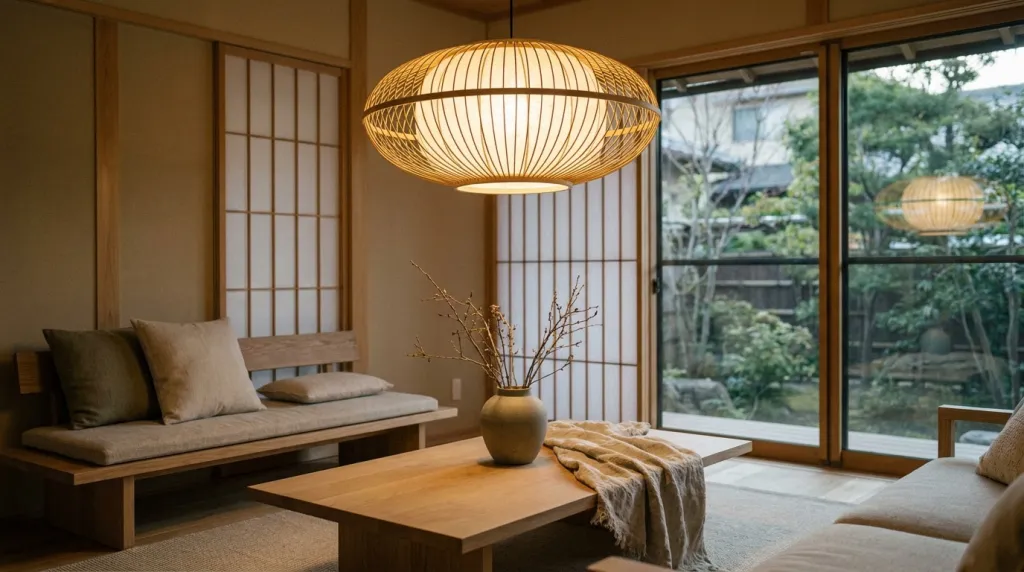
You get home after a long day, but the harsh glare of your current ceiling light instantly shatters your quest for calm. By swapping that cold lighting for a Japandi ceiling light, you can turn your home into a sanctuary of serenity where natural materials immediately soothe the mind. This guide will help you balance your space and create a zen atmosphere with a minimalist, warm design.
Why choose a Japandi ceiling light over a classic pendant?
Choosing a light fixture isn't just about looks — it's about finding the right fit for the room's architecture, which brings us to the flush-mount versus pendant debate.
The advantage of flush-mount fixtures in small spaces
A flush-mount ceiling light attaches directly to the ceiling. Unlike a pendant, there's no cord dividing the space. This installation completely clears your horizontal line of sight. It's a bold, practical way to streamline the room's architecture.
The visual space you gain completely transforms the atmosphere. In an apartment with low ceilings, this type of fixture prevents that cramped, closed-in feeling. It's a pragmatic yet elegant choice. You'll finally feel like you can breathe in your own home.
Japandi Style offers compact models starting at €69. These pieces fit neatly into smaller spaces without crowding them. They help preserve the balance of your décor.
A softer, more even, more soothing glow
The absence of harsh cast shadows changes everything. Because the fixture sits close to the ceiling, light reflects off the surface. This creates a soft, even brightness. The whole room benefits from balanced illumination.
We favor the kind of eye comfort prized in Japanese design. The goal here is to mimic natural light. Your eyes are never assaulted by a harsh source. The mood instantly becomes more serene.
Here are the key benefits of this lighting solution:
3 standout materials for a truly zen mood
Now that we've covered the structural side, it's time to focus on the soul of the fixture — the materials that shape its hybrid design.
Bamboo and rattan for organic warmth
Bamboo and woven rattan capture the pure authenticity of Japandi style. These natural fibers add an essential woody touch. They guarantee a perfectly balanced look in your home.
These handcrafted materials bring warmth to modern interiors. They help avoid an overly cold, sterile feel. Every strand of woven rattan speaks to real craftsmanship and patience.
Choosing these materials means choosing durability. They fit into a more responsible approach to decorating. It keeps you connected to nature.
Japanese rice paper for a soft, diffused glow
Traditional washi paper offers a uniquely light, airy look. This material seems to float on the ceiling with quiet elegance. It echoes the poetic simplicity of Kyoto's traditional homes. It's a timeless classic.
Paper turns direct light into a soft, hazy glow. The lantern-like effect creates an intimate mood. Your room instantly feels cozier and more calming.
This choice appeals to fans of true minimalism. The frame often all but disappears. What's left is the delicate texture alone.
Minimalist black metal for Scandinavian contrast
Dark lines give the space real structure and rigor. Black metal traces the outline of the fixture with precision. It adds character without ever weighing down your décor.
Here, Nordic rigor meets Japanese softness. This contrast is what gives Japandi Style its visual energy. The balance between the two worlds is fully respected.
Metal remains endlessly versatile. It pairs beautifully with light wood. It also looks stunning against clean white walls.
How to choose your fixture based on the room
With the materials settled, the next step is figuring out how these ceiling lights suit the specific function of each room in the home.
Functional, streamlined lighting for the kitchen
In the kitchen, stick to understated models. Choose easy-to-clean materials like metal or glass. Hygiene remains a top priority in this prep zone.
Lighting needs to be effective so you can cook safely. You need clear, bright light over your countertops. Even so, it should never be glaring during mealtimes.
Here are the key points to keep in mind for this space:
Creating a cozy, serene cocoon in the bedroom
The bedroom calls for a look that instantly invites rest. We recommend rounded shapes and natural materials like wood. The fixture then becomes a true object of relaxation. Favor enveloping designs for your ceiling.
Use low-output bulbs to reinforce that cocoon-like feel. A warm color temperature between 2700K and 3000K is ideal. The goal is to help the body wind down for sleep in a softly lit setting.
A ceiling light centered above the bed creates a harmonious focal point. This layout feels reassuring and grounding.
Technical criteria for a durable, beautiful choice
To finish your project, a few technical details will help your Japandi ceiling light reach its full potential once installed.
Choosing the ideal color temperature
Go for warm white. A temperature between 2700K and 3000K is perfect. It evokes candlelight or a setting sun, true to the zen aesthetic.
Light that's too cool will make wood look gray and flat. Warm white brings out natural fibers and sandy tones beautifully. It supports a relaxing, serene mood.
Size and proportions relative to floor space
A fixture that's too small will look lost. On the other hand, an oversized model will overwhelm the space. The diameter should be proportional to the room's volume.
The ceiling light should align with the lines of your table or bed. This creates immediate visual harmony.
Getting the sizing right ensures lasting visual balance. Your lighting then becomes a calming architectural element.
Elevate your home by combining space-saving design, natural materials, and soft, diffused light. Choosing a Japandi ceiling light instantly turns your room into a serene, harmonious retreat. Don't wait to bring this zen elegance into your home: your future wellness cocoon starts with perfectly balanced lighting.
FAQ
What's the technical difference between a flush-mount ceiling light, a pendant, and a recessed fixture?
Your choice of lighting depends above all on your ceiling's structure. A Japandi ceiling light mounts as a "flush" fixture, meaning it attaches directly to the surface — ideal for freeing up visual space in rooms with low ceilings. A pendant, by contrast, hangs from a cord or chain, acting as a central decorative element in larger spaces.
Recessed lighting, meanwhile, is built entirely into a false ceiling for a completely hidden look. At Japandi Style, we favor flush-mount ceiling lights for their practicality on concrete ceilings and their ability to spread even light without cluttering your zen interior.
How do I choose the right color temperature for my zen ceiling light?
To create a genuine sense of serenity inspired by Japan, we recommend choosing warm white (below 3500K). This slightly amber tone beautifully highlights natural materials like bamboo or rattan and encourages relaxation in a living room or bedroom.
Light that's too cool (above 5000K) risks dulling the organic fibers of your fixture. For workspaces or the kitchen, a neutral temperature around 4000K offers an excellent balance between visual clarity and eye comfort, while still respecting the minimalist look of your décor.
What size ceiling light should I choose based on my room's floor space?
Visual harmony comes down to balanced proportions. To find the ideal diameter for your fixture, a simple rule is to add your room's length and width in meters, then multiply the result by 10 to get a value in centimeters. For example, for a 4m by 3m bedroom, a 70 cm diameter model would be perfectly proportioned.
It's important that the ceiling light neither looks lost in the space nor feels so large it overwhelms the room. Also be sure to leave a comfortable clearance height: we generally recommend at least 2.15m (about 7 feet) between the bottom of the fixture and the floor for comfortable, worry-free movement underneath.
Why choose a ceiling light made from natural materials like wood or paper?
Organic materials are the very essence of Japandi style. A ceiling light made from rice paper or woven fibers turns a direct light source into a soft, calming glow. These textures add tactile warmth and handcrafted authenticity that stand in contrast to the coldness of modern interiors.
By choosing materials like light wood or rattan, you invite nature into your home. These durable pieces, available in our collection starting at €69, don't just light a room — they create a true sensory retreat that supports mindfulness and everyday well-being.