
Japandi Chandelier Guide: Best Lighting for a Zen Living Room
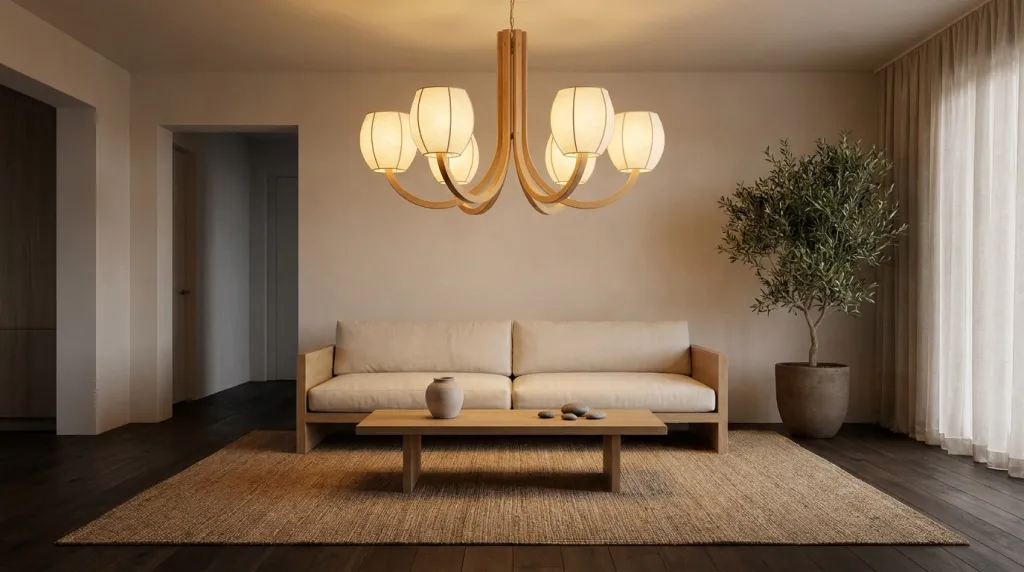
You dream of a home where every ray of light invites serenity and a perfect balance between Nordic simplicity and Japanese tradition. Here, you'll discover how to choose the ideal Japandi chandelier by pairing natural materials like bamboo or rice paper with the exact proportions of your room. We'll guide you through transforming your living room into a sanctuary of well-being with a curated selection that combines lasting design with soft, diffused lighting.
Japandi Chandeliers: Choosing Natural, Raw Materials
Now that we've covered the appeal of this hybrid style, let's look at the crucial choice of materials that define its identity.
Wood and Bamboo for Warmth
Light oak and ash dominate Nordic-style frames. These neutral wood tones instantly calm your living space, bringing a welcome clarity to modern interiors.
Woven bamboo forges the connection to Asia. Its fibrous texture adds authentic depth to a living room. It's a material that's both lightweight and visually rich.
Mixing textures creates balance. Raw wood remains the foundation of a serene interior.
Rice Paper for Soft, Diffused Light
Washi paper lanterns have a unique visual lightness. This handcrafted Japanese paper turns a simple bulb into a poetic light source, casting an even glow across the whole room. It's the soul of Japanese-inspired lighting.
The mood should stay soft and dim to encourage relaxation. The light never strains the eye. It wraps Japandi-style furniture in gentle warmth, creating a cocoon-like feel.
Skip the cold plastic diffusers. Paper offers an organic texture nothing else can match. It's the secret to a truly zen atmosphere in your home.
Dimensions and Placement for Perfect Visual Balance
Once you've chosen your materials, the next step is making sure the fixture fits harmoniously within the room.
Calculating the Right Diameter for Your Space
Add together the length and width of your living room. Multiply that total by eight. The result is the ideal diameter, in centimeters, for your Japandi chandelier.
For smaller spaces, choose airy structures with open negative space. This preserves a sense of spaciousness even with a ceiling fixture in place. The eye should be able to look through the piece without obstruction.
Visual balance is the key to a restful, well-designed interior. Getting the scale right prevents any feeling of the room closing in.
Adjusting Hanging Height Above Furniture
The ideal height above a dining table matters a great deal. A distance of about 80 centimeters (roughly 31 inches) is generally recommended. This keeps the light from glaring in diners' eyes.
A pendant fixture shouldn't block foot traffic through the living room. Always check the clearance for taller people. As a rule of thumb, keep the base at least 2.15 meters (about 7 feet) from the floor.
3 Aesthetic Variations to Transform Your Space
Japandi style isn't one-size-fits-all — it offers several looks depending on your decorating preferences.
The Radical Minimalism of Black Metal
Contrast is a powerful design tool. Black metal lines stand out beautifully against white walls. It's a direct nod to Scandinavian industrial design, and this crispness brings an instantly modern touch.
Look for slim, geometric frames. These shapes define the space without weighing it down, echoing the precision of traditional Japanese joinery.
Pair with filament bulbs. The black finish highlights the warmth of the light they emit.
The Sculptural Look of Organic Shapes
Embrace asymmetrical designs. Nature rarely produces a perfectly straight line. These fixtures often echo the shapes of clouds or polished river stones.
Create an artistic focal point. A sculptural light fixture becomes a genuine piece of art, catching the eye the moment you walk into the room.
To soften your space even further, here are the key elements to prioritize:
How to Get Zen Living Room Lighting Right
Finally, getting the mood right depends as much on the bulb you choose as on the fixture itself.
Choosing the Right Color Temperature
Always favor warm tones for your living spaces. A warm white, ideally around 2700 Kelvin, instantly transforms the atmosphere. This soft, amber-toned light promotes deep relaxation every evening.
Steer clear of cold white or bluish lighting. These clinical tones strain the eyes and disrupt the cozy intimacy you're going for. Blue light, in particular, is the enemy of relaxation in a zen living room.
Here are our recommendations for optimal visual comfort:
Prioritizing Artisanal, Lasting Quality
Durability is a core pillar of Japandi style. Investing in high-quality materials, like solid wood, ensures your Japandi chandelier will last for years. Wood ages far better than flimsy composites — it's the responsible choice.
Authenticity often lies in handmade finishes. Every piece carries slight imperfections that give it its unique charm, reflecting a respect for traditional craftsmanship far removed from smooth, mass-produced goods.
So take a look at the Japandi Style catalog. Their carefully curated selection always strikes that subtle balance between clean aesthetics and real durability.
Elevate your home with a Japandi chandelier in natural materials or minimalist metal, starting at $79. By hanging it between 24 and 31 inches above your table and choosing warm lighting, you'll instantly turn your living room into a lasting sanctuary of calm. Start building that perfect balance of beauty and well-being today.
FAQ
What's the ideal height to hang my chandelier above the dining table?
To create a warm, shared space, we recommend hanging your fixture between 24 and 31 inches (60 to 80 cm) above your tabletop. This distance lights your meals generously while keeping sightlines clear between guests, avoiding any uncomfortable glare.
If you have a large rectangular table, consider lining up multiple Japandi pendants spaced about 28 inches (70 cm) apart. The goal is finding the right balance between function and the visual lightness that defines zen design.
How do I calculate the perfect diameter for my living room light fixture?
For your Japandi chandelier to fit naturally within your space, use this simple rule: add the length and width of your room (in meters), then multiply the total by 8. The result gives you the ideal diameter in centimeters. For example, in a 5m x 4m (about 16 x 13 ft) living room, a 72 cm (28 inch) fixture would be perfectly proportioned.
For a fixture placed directly above furniture, make sure the diameter never exceeds three-quarters of the width of your table or island. At Japandi Style, we offer models starting at $79, suited to every layout — from radical minimalism to airier, more open structures.
What color temperature should I choose for a truly zen ambiance?
The secret to a calming atmosphere lies in the warmth of the light. We strongly recommend bulbs producing a warm tone between 1500 and 3000 Kelvin. This slightly amber light encourages deep relaxation and turns your living room into a genuine sanctuary of calm.
To round out your decor, steer well clear of cold or clinical white lighting, which breaks the sense of intimacy you're after. You can also layer the mood by adding a dimmable Japandi ceiling light to adjust brightness for different moments of the day.
What materials should I look for in an authentic Japandi-style chandelier?
Authentic Japandi design relies on noble, durable materials. Light woods (oak, ash) and bamboo are essential for that sought-after organic warmth. Rice paper, inspired by traditional lanterns, remains a favorite for its unique ability to cast a soft, poetic glow.
If you prefer a more contemporary touch, minimalist black metal offers an elegant contrast that highlights the clean lines of your interior. Whichever you choose, always prioritize artisanal quality: the slight imperfections found in natural materials are a mark of character and a nod to time-honored tradition.