
Japandi Living Room: 10 Ideas for Designing Your Space
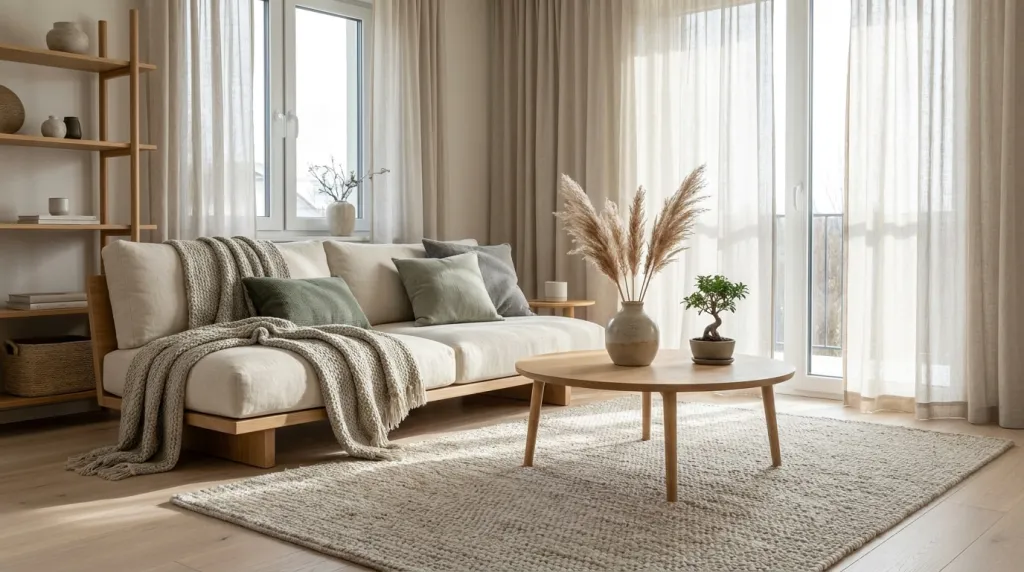
After a long day, you step through your front door and sigh at the visual clutter crowding your thoughts. We'll guide you through transforming that chaos into a sanctuary of calm with a Japandi living room, the ideal fusion of Scandinavian comfort and Japanese minimalism. Discover our ten inspiring ideas for cultivating balance and mental clarity right at the heart of your home.
Why a Japandi living room transforms your home
The living room is no longer just a room you pass through, it's a genuine retreat where you seek to disconnect from outside noise and find your calm.
Balancing Nordic comfort with Japanese aesthetics
Japandi living room style blends Scandinavian hygge with Japanese wabi-sabi. This pairing celebrates cozy comfort alongside the beauty of imperfection. Japandi Style perfectly embodies this pursuit of balance between Japanese serenity and Nordic warmth.
We favor raw, natural materials like light wood, bamboo, and stone. These organic textures bring an essential tactile quality. The atmosphere instantly feels warmer and more authentic.
This blend creates a visual harmony that soothes the eye. Clean lines pair with soft materials. Your home finally radiates a quiet, natural elegance.
The impact of empty space on everyday well-being
Embracing minimalism dramatically reduces your mental load. By clearing out the excess, you free up space to breathe more easily. Fewer objects means fewer visual distractions in daily life.
The layout follows the concept of "Ma," the Japanese art of empty space. Movement through the room should stay fluid, with no unnecessary obstacles. Moving freely through your living room supports a better flow of energy.
Here are the concrete benefits of an uncluttered space:
The low fabric sofa with clean lines
To anchor this feeling of serenity, choosing the right main furniture piece is essential, starting with seating.
The low sofa stands out as the centerpiece of the living room. Its horizontal profile creates an immediate closeness to the floor. This design draws directly on Japanese tradition. It visually opens up the space for a lighter, airier feel.
We recommend natural fabrics like cotton or linen. The lines should stay straight, with no unnecessary flourishes.
Neutral tones, such as light gray or beige, work best. They keep your space from feeling overwhelming while staying elegant.
The solid light-wood coffee table
Around the sofa, the supporting furniture should echo that same pursuit of natural materials and solid craftsmanship.
Choosing light wood, like oak or ash, brings instant brightness. This wood perfectly embodies the Scandinavian heritage. It warms the atmosphere without ever weighing down the decor.
We favor solid wood for its superior quality and durability. A well-built piece stands the test of time. It keeps its original charm despite the years and everyday use.
The shape should stay simple and clean. Opt for rounded or rectangular lines. This visual restraint preserves the zen balance that defines Japandi style.
Rattan or washi paper pendant lights
Once the furniture is in place, it's the lighting that shapes the atmosphere and gives depth to the room.
Rattan brings an organic texture and casts woven shadows. Washi paper, by contrast, offers an airy lightness. Both materials filter light with remarkable delicacy. Together, they create a calming environment.
At Japandi Style, we offer fixtures designed to blend seamlessly into this decor. Our handcrafted pieces respect the visual balance you're aiming for.
It's best to avoid harsh, direct lighting. Always favor soft, diffused light to preserve the zen spirit.
A jute rug to warm up the space
Underfoot, texture plays a key role in bringing that signature thermal and visual comfort.
Jute stands out as the natural fiber of choice for a Japandi living room. Its earthy, organic tone instantly warms up your living space.
This noble material is prized for its remarkable everyday durability. It handles heavy foot traffic beautifully while keeping an authentic, pleasant texture.
We suggest choosing a generously sized rug, such as a 200 x 300 cm (roughly 6.5 x 10 ft) format. This helps neatly define the space and anchor your furniture with elegance.
Ceramic vases with organic shapes
The devil is in the details, and decorative objects are what finish telling your home's story. Here, we favor handcrafted ceramics, whose imperfect shapes celebrate the human touch. These one-of-a-kind pieces bring a vital fluidity that contrasts beautifully with straight, rigid lines.
Restraint remains your best ally for a successful Japandi living room. One or two well-chosen pieces are more than enough.
A sand and warm gray color palette
All these textures only work if they're carried by a cohesive, calming color scheme.
We favor shades of beige, sand, and warm gray. These neutral tones serve as the foundation. They let the natural materials fully shine. The atmosphere instantly feels serene and elegant.
Contrast comes in through small touches. A few charcoal black accents add precise structure.
Steer clear of bright colors entirely. Loud tones disrupt the sense of calm you're after. We recommend sticking to matte finishes.
Decluttering to free the mind
Embracing Japandi also means letting go of the excess to keep only what truly matters.
Decluttering is a radical but necessary step. Every remaining object should serve a purpose or hold sentimental value. We favor quality over quantity.
Use closed storage to hide everyday clutter. The eye should be able to glide across your surfaces without interruption. Visual flow is your top priority here.
An open, uncluttered space fosters clearer, calmer thinking. You finally find your sense of calm again.
Linen textiles for softness
To complete that cocoon-like feeling, textiles add an essential layer of softness.
Linen reigns supreme as the fabric of choice for your curtains and cushions. Its naturally rumpled look beautifully reinforces the wabi-sabi aesthetic. This fiber brings raw authenticity to your living space.
We recommend choosing lightweight curtains. They let soft light filter through while preserving your everyday privacy.
Layer in textures like linen or bouclé wool. This adds tactile comfort without ever visually overloading your decor.
Houseplants as a connection to nature
A zen home wouldn't be complete without a touch of greenery to evoke the natural world outside. We recommend adding a few well-chosen houseplants. A bonsai or a cherry blossom branch in a vase is enough.
To round out your Japandi living room, consider these plant varieties:
Plants bring life into the room and help purify the air. They strengthen the balance between aesthetics and everyday well-being.
The Scandinavian-style accent chair
Finally, to complete the room, a second seat rounds out the space's geometric balance.
An accent chair should feel visually light. Models with an exposed wood frame are perfect for this style. We favor oak or walnut. These light woods offer lasting durability.
It creates a cozy, intimate reading nook. Linen or beige velvet upholstery invites you to unwind right away.
It's the finishing touch that seals the bond between design and well-being. Your space becomes truly zen.
Embracing a Japandi living room means blending hygge comfort with wabi-sabi authenticity to free your mind. Simplify your space with our light-wood furniture and natural textiles to turn your home into a sanctuary of calm. Start now to bring that lasting sense of well-being into your home. Your zen retreat awaits.
FAQ
How do I actually define Japandi style for my living room?
Japandi style is a harmonious fusion of Scandinavian hygge, focused on comfort, and Japanese wabi-sabi, which celebrates the beauty of imperfection. This aesthetic favors a warm minimalism where every object serves a clear purpose within a clean, uncluttered look.
To embrace it, we recommend leaning into natural materials and a neutral color palette. The goal is to turn your living space into a sanctuary of calm, away from outside noise, by striking a perfect balance between function and beauty.
What are the essential furniture pieces for a Japandi space?
The centerpiece is, without question, the low sofa in natural fabric, which creates a soothing closeness to the floor. It pairs ideally with a solid light-wood coffee table, such as oak or ash, for a touch of organic sturdiness.
We also recommend adding a Scandinavian-style accent chair with an exposed wood frame. These pieces, with their straight, understated lines, give structure to the space without visually cluttering it, honoring the Japanese concept of empty space, or "Ma."
Which materials and colors work best for a zen atmosphere?
Favor natural textiles like linen for your curtains and cushions, and cotton for your seating. For the floor, a jute rug is ideal for warming up the atmosphere while offering an earthy, hard-wearing texture.
As for color, lean into a palette of sand, beige, and warm gray tones. These shades create a neutral, light-filled backdrop. You can punctuate the space with a few touches of charcoal black for contrast, while steering clear of bright colors that would disrupt the room's calm.
How do I choose lighting and decor to complete the look?
Lighting should be soft and diffused to shape the atmosphere. We suggest opting for rattan or washi paper pendant lights, which add lightness and a natural feel. Avoid harsh, direct light sources.
For decor, restraint is the golden rule. A few handcrafted ceramic vases with organic shapes and one or two houseplants, like a bonsai or eucalyptus branches, are enough to bring life and harmony into your home.
What impact does minimalism have on everyday well-being?
Embracing minimalism in your living room significantly reduces mental load by limiting visual distractions. An uncluttered space, where every object is chosen with care, encourages clearer thinking and a greater sense of spatial freedom.
By opening up the space, you support a better flow of energy and make your home easier to maintain. It's a radical but rewarding approach that turns your home into a genuine tool for stress management and deep relaxation.