
Japandi Pendant Lights: A Complete Guide to Choosing the Right Fixture
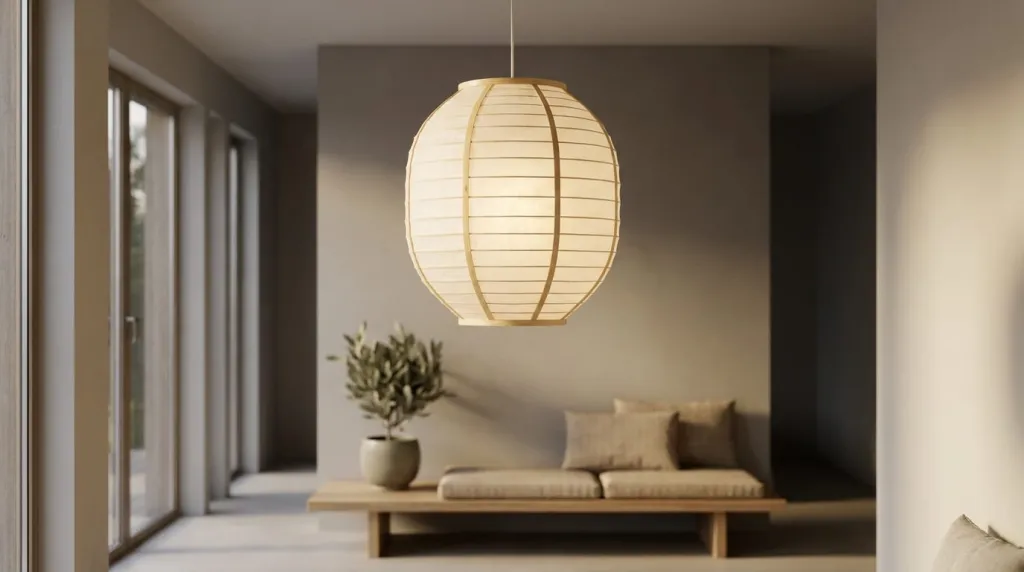
You walk in the door after a long day, but the harsh overhead light instantly shatters your need for calm. To transform that mood and reclaim a sense of serenity right away, installing a Japandi pendant light offers a soft, natural glow perfectly suited to your quest for well-being. We'll help you balance shapes and materials to create a true zen cocoon at the heart of your home.
Japandi Pendant Lights: The Organic Materials to Choose
Now that we've set the stage on why lighting matters in a hybrid interior, let's get to the heart of the matter: choosing the right natural materials.
The Lightness of Rice Paper and Woven Bamboo
Washi paper stands out for its uniquely fibrous texture. It filters light with remarkable softness, creating a dim, soothing glow that feels distinctly Japanese.
Woven bamboo, on the other hand, relies on its natural sturdiness. Its tight weave casts captivating shadow patterns across the walls, making it a durable choice for lighting with real character.
These pendants retain a remarkably airy quality. They never visually clutter the ceiling, even in small spaces, so the visual balance stays perfectly intact.
The Contrast of Light Wood and Mineral Finishes
Light woods like oak or ash are essential here. These species instantly warm up a living room's atmosphere, adding an immediate sense of organic warmth.
For a more modern anchor, mineral finishes are making their way into the design. Lightweight concrete or stone lend a raw touch, grounding the Scandinavian aesthetic with real presence.
Matte black metal often outlines the edges. These dark accents give the piece structure without ever breaking the natural harmony of the whole.
This mix of textures strikes a perfect balance. The contrast between warm and cool is what truly defines the Japandi identity.
3 Fixture Silhouettes That Define the Zen Aesthetic
While materials give an object its soul, its shape is what structures the space and directly shapes how calm the room feels.
Geometric Minimalism and Scandinavian Lines
The globe is the reigning shape. Its perfect sphere softens a room's hard angles and diffuses light evenly everywhere without casting harsh shadows. It's the ideal choice for instant visual balance.
Nordic design prioritizes utility. Clean lines strip away unnecessary flourishes, staying true to the "less is more" ethos. Every curve serves a clear function in lighting your everyday life.
These geometric silhouettes fit naturally into a modern decor. They bring a restful visual clarity, making the space feel more orderly. You get a clean structure that calms the mind the moment you walk into the room.
Organic Asymmetry Inspired by Wabi-Sabi
We celebrate the imperfection of handmade pieces. Every irregularity becomes a unique signature, giving the owner a precious object that resists industrial standardization.
Wabi-sabi doesn't chase mathematical perfection. It favors a visual harmony that echoes nature, where asymmetry creates a living, dynamic balance in your home.
An object that seems to have a soul brings a deep sense of serenity. That authenticity turns your living room into a sanctuary.
Choose pebble- or cloud-shaped fixtures. Their soft contours break away from the rigidity of overly angular furniture.
How to Adjust Your Lighting to Fit the Scale of Your Space
Choosing a beautiful fixture is one thing, but installing it with precision so it truly complements your furniture is another.
Calculating Pendant Diameter Relative to Your Furniture
The proportion rule is simple. Your fixture's diameter should be about a third of the table's width. That's the secret to a perfectly balanced look.
In a large living room, don't be afraid to go XXL. These statement pieces create a strong focal point and immediately give structure to the whole volume of your living space.
That said, keep foot traffic in mind. The fixture should never extend beyond the edges of the furniture below it — essential for keeping the space open and clutter-free.
Determining the Right Drop Height for Visual Comfort
The ideal distance is precise. Leave about 28 to 32 inches (70 to 80 cm) between the bottom of the pendant and the surface of your dining table.
Keeping the bulb out of direct line of sight is crucial. It prevents glare, so your guests can enjoy the meal without being bothered by the light.
For high ceilings, use longer cords to lower the fixture. This creates a true protective bubble of light around the table.
Do a quick practical test: sit down and check that your view stays clear. Make sure you can see your guests comfortably before fixing everything in place.
The Art of Combining Light Sources in a Hybrid Interior
To round out the mood, the pendant shouldn't stand alone — it benefits from company to create a true landscape of light.
Layering in Additional Light with Accent Lamps
Pair your main pendant with wooden table lamps. Place them on sideboards or nightstands. This coordination of natural materials strengthens the visual unity of the room.
Layering multiple light sources literally sculpts your living space. It creates subtle, enveloping pockets of shadow, giving your interior a striking sense of depth and dimension.
In the evening, turn off your central fixture and let the accent lamps take over to soften the space. Your living room then becomes a true cocoon of relaxation, perfect for winding down.
Matching Your Fixture to the Textures of Japandi Style Furniture
Pair your lighting with pieces from the Japandi Style collection for a perfectly cohesive look. Match your pendants to your nightstands or low stools for instant visual balance.
Echo natural fibers throughout the room. Pair the rattan or linen of your lampshade with your rugs and curtains — this repetition of texture creates a beautifully organic harmony.
Stick to a palette of neutral, earthy tones. Favor beige, gray, or off-white. These shades guarantee a calm, unified atmosphere.
The balance between light and material shapes your sense of well-being. This aesthetic choice turns your home into a lasting sanctuary.
Elevate your interior by pairing organic materials with clean lines for a perfectly balanced look. Install your Japandi pendant now at 30 to 35 inches (75-90 cm) above your table to create a warm, soothing atmosphere. Turn your home into a true sanctuary of lasting serenity.
FAQ
Why choose a rice paper or bamboo pendant light for my home?
These organic materials are central to the Japandi aesthetic. Rice paper, or washi paper, is prized for its ability to filter light into a soft, diffused glow that creates a calming mood. Woven bamboo, meanwhile, adds natural structure and casts geometric shadow patterns that enrich your decor while staying visually light and airy.
We recommend these materials for their handcrafted look and durability. They help set a serene mood without overwhelming the space, making them ideal for a zen bedroom or living room. You'll find a wide selection of these styles in our Japandi pendant light collection, starting at $59.
What's the ideal height to hang my pendant light above a table?
For optimal visual comfort and smooth circulation, we recommend leaving 28 to 32 inches (70 to 80 cm) between the bottom of your fixture and the tabletop. This height lights your meals effectively while keeping direct glare out of your guests' eyes.
It's important that the light source stays out of your direct line of sight while seated. If your home has high ceilings, don't hesitate to use longer cords to lower the fixture and create a cozy, protective bubble of light around your dining area.
How do I choose the right diameter for my fixture based on my table size?
Choosing the right diameter is key to keeping the proportions balanced. A simple rule of thumb: pick a pendant whose diameter doesn't exceed half the width of your table. For example, for a 32-inch (80 cm) wide table, a fixture up to 16 inches (40 cm) will keep the proportions harmonious.
For larger tables around 6 to 8 feet (180 to 240 cm), you can go bolder with larger formats or add multiple light sources to create a strong focal point. The goal is visual consistency: the fixture should highlight the furniture without ever overshooting its edges.
How do I combine my pendant with other light sources?
In a hybrid interior, we suggest not relying on a single light source. The art of lighting lies in layering multiple sources to add dimension. You can pair your main pendant with wooden or ceramic Japandi table lamps on your sideboards and nightstands.
This layering lets you play with pockets of light and shadow, turning your room into a true cocoon of relaxation once night falls. For a cohesive feel, be sure to match textures — like rattan or linen — with the rest of your furniture and textile accessories.
What are the benefits of a minimalist, geometric light fixture design?
Minimalism, inspired by Scandinavian lines, prioritizes function and clarity. Spherical shapes and globes are especially effective at softening a room's angles and diffusing light evenly. It's the direct application of the "less is more" philosophy that defines our approach to well-being at home.
These clean silhouettes fit seamlessly into a modern decor, adding a restful sense of structure. If you're after a bolder statement piece for an entryway or a large living room, a Japandi chandelier with understated lines will catch the eye while preserving your home's zen harmony.