
Japandi Rugs: How to Choose the Perfect Rug for a Zen Home
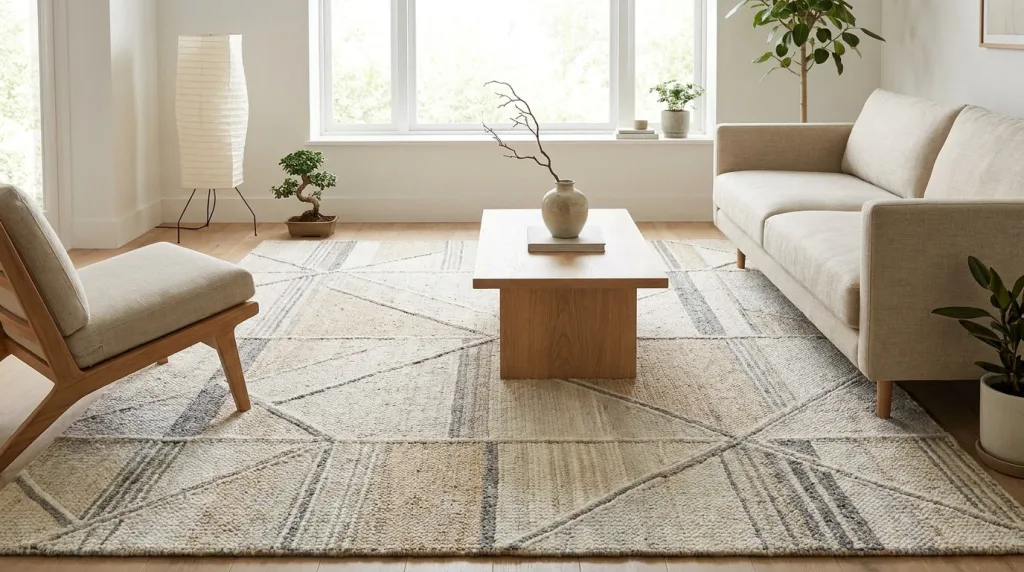
Did you know that 80% of how a space feels comes down to how well the floor ties everything together? We're here to help you transform your home with a Japandi rug, a signature piece that blends Scandinavian comfort with Japanese simplicity starting at $39. By choosing the right dimensions and natural materials, you'll create a perfectly balanced sanctuary of calm.
Japandi Rugs: The Secret to a Balanced Atmosphere
Japandi decor isn't just about furniture — it's built on the harmony of your floors.
Where Scandinavian Comfort Meets Japanese Aesthetics
The Japandi style blends Scandinavian hygge with Japanese wabi-sabi. This pairing brings together cozy warmth and an appreciation for natural imperfection. It's the heart of our design approach.
A rug's texture softens the clean lines of Japanese-inspired furniture. Fabric adds essential warmth to a minimalist room. It brings coziness to the space without overwhelming your decor.
We think of the rug as a major visual anchor. It defines a space with subtlety. That way, you can structure your rooms without relying on heavy, opaque partitions.
Natural Fibers for a Healthier Home
Virgin wool offers unmatched softness underfoot. Organic cotton brings a welcome lightness. These wholesome materials help preserve the air quality in your home.
Jute reinforces the organic character of your decor. Its irregular texture and raw look highlight the authenticity you're going for.
Durability is central to every Japandi Style product. A good rug stands the test of time. It keeps its beauty despite daily foot traffic.
3 Rules for Choosing Your Rug's Dimensions
Picking a quality material like jute is only the first step. The exact size of your rug actually determines the visual balance and structure of your room.
Matching the Size to Your Room's Layout
For a small living room, go with a compact size like 120×180 cm (about 47×71 in). A narrower rug keeps everyday traffic flowing easily. The goal is to maintain a smooth walkway without cluttering the space.
Use your window alignment as a visual guide. This trick avoids an unnecessary feeling of emptiness. It grounds your Japandi decor with a soothing geometric precision.
Hallways call for a long, narrow runner. An 80×300 cm (about 31×118 in) size elegantly stretches the space. It turns a simple passageway into a welcoming zone.
The Art of Placement Under Your Main Furniture
Set your sofa's front legs on the rug to create instant visual unity. Your lounge area becomes a warm, serene retreat.
Centering the rug under the coffee table effectively anchors the living room. It's the secret to a well-organized, inviting space.
Your rug should align vertically with your pendant lights. This alignment with your fixtures strengthens the overall coherence of your interior design.
Which Textures Work Best for a Calming Floor?
Once you've settled on dimensions, it's time to focus on the sensory and visual feel of the rug itself.
The Simplicity of Neutral, Organic Tones
Let's explore a soft color palette here. Beiges, pearl grays, and off-whites dominate the Japandi style. These shades immediately evoke nature.
Visual clarity is essential to a calming atmosphere. We steer clear of bold colors that overwhelm a space. A neutral tone supports lasting balance in your everyday life at home.
Pair these tones with your Japanese-style curtains for total harmony. This color continuity between floor and walls makes the space feel larger. You end up with an enveloping bubble of serenity.
The Understated Charm of Minimalist Geometric Patterns
Simple lines and asymmetrical patterns are a smart choice. These motifs echo calligraphy or traditional zen gardens. They add subtle structure.
Empty space matters just as much as filled space. A rug that's too busy overwhelms the room. It breaks the visual harmony you're after.
Textured surfaces work better than bold, contrasting prints. The interplay of light and shadow creates subtle depth. That's the very essence of understated refinement.
For your future projects, we recommend these specific elements:
The Art of Pairing Textiles with Minimalist Furniture
A rug doesn't exist in isolation — it needs to work with the furniture around it to create a cohesive look.
Pairing with Light Wood Tones
We recommend coordinating your rug with oak or ash wood. Light wood nightstands pair beautifully with natural fibers nearby. The whole ensemble gains in visual cohesion.
Wood grain, sometimes seen as rigid, is softened by the touch of a plush textile. A thick rug creates a gentle contrast. This pairing brings the warmth your minimalist interior needs.
Celebrating craftsmanship overall becomes a natural next step. A ceramic vase or a Japanese bowl placed nearby reinforces that authentic feel. Every detail counts in elevating your serene living space.
Balancing Accessories and Textile Surfaces
It's a good idea to match your rug's style with your low seating. Poufs and stools pair perfectly with a textile floor surface. Here, we're aiming for total harmony of shapes.
Use the rug to define zones without walling them off. It's a gentle way to separate a reading nook from the rest of the living room. The space stays open but perfectly structured.
Soft, warm lighting will bring out every fiber of your new rug. We suggest paying attention to your light fixtures to complete this calming atmosphere.
For a successful setup, prioritize these elements:
By combining natural fibers with precise dimensions, you create a lasting sanctuary of calm. Choose a wool or jute Japandi rug today to anchor your furniture and turn your home into a balanced haven of peace. Give your floor the minimalist elegance it deserves.
FAQ
What's the ideal size for a Japandi living room rug?
To create perfect harmony, we recommend choosing a size that structures your space without overwhelming it. In a medium-sized living room, a 200×300 cm (about 79×118 in) rug is an excellent starting point. The goal is for the front legs of your sofa and armchairs to rest on the rug, visually anchoring the furniture.
If you have a large living space, you can go with more generous dimensions like 250×350 cm or 300×400 cm (roughly 98×138 in or 118×157 in). To add a touch of softness and break up straight lines, a round rug with a diameter of 150 to 250 cm (about 59 to 98 in) is also a very elegant option.
How do you properly position a rug under furniture?
Placement is the secret to a balanced interior. We recommend leaving about 20 to 30 cm (roughly 8 to 12 in) of space between the rug's edge and your walls. Under a coffee table, the rug should be perfectly centered to create an inviting focal point. In the bedroom, place your rug so it covers about two-thirds of the way under the bed, or opt for a larger size that also includes the nightstands.
For a successful minimalist look, make sure the rug extends slightly beyond the furniture on each side. This technique helps define living areas, like a reading nook or a low-seating zone, without resorting to physical partitions, preserving both flow and openness in the room.
What materials work best for a Japanese-style rug?
At Japandi Style, we favor natural fibers that bring an organic, sensory quality to your floor. Virgin wool is ideal for its unmatched softness, while organic cotton offers a lightness and suppleness that's highly prized. These wholesome materials directly contribute to your sense of well-being at home.
For a rawer, more authentic look typical of wabi-sabi, jute and sisal are excellent choices. Their irregular texture and impressive durability pair beautifully with oak or ash furniture. These quality materials ensure your rug will remain a centerpiece of your decor for years to come.
What patterns and colors work best for a zen atmosphere?
Simplicity is the guiding principle of our selection. We encourage you to favor calming neutral tones like beige, pearl gray, cream, or earthy shades. These colors avoid visual clutter and pair harmoniously with your curtains to make the space feel larger through color continuity.
As for patterns, less is more. Favor minimalist geometric lines, fine strokes inspired by calligraphy, or tone-on-tone textured effects. These subtle details catch the light without disrupting the room's balance. A solid-colored rug with an interesting texture is often the safest bet for elevating minimalist furniture.
How do you care for and extend the life of your Japandi rug?
The longevity of our products is central to what we do. To preserve the beauty of natural fibers, regular care is essential. Using a rug pad is highly recommended: it keeps the rug in place, improves acoustic comfort, and protects the fibers from premature wear caused by friction against the floor.
Keep in mind that materials like wool have natural stain resistance, which makes daily use easier. For high-traffic areas like hallways or kitchens, we offer specific sizes and sturdy weaves, like our natural-fiber runners, designed to combine elegance and practicality for the long haul.