
Japandi Style: The Complete Guide to Decorating Your Home
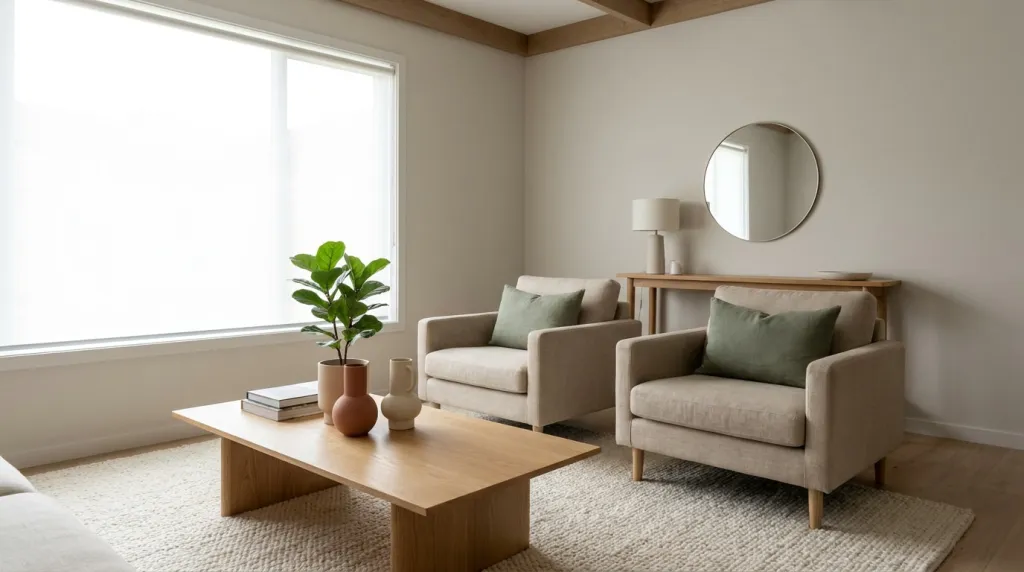
Do you want to turn your home into a sanctuary of serenity that blends Nordic comfort with zen aesthetics? We've put together this guide to help you embrace Japandi style, a harmonious fusion that puts well-being and authenticity first. By exploring the balance between functional minimalism and the quiet elegance of natural materials, you'll discover how to create a calming, long-lasting living space. Our expertise will help you choose handcrafted pieces and earthy tones to enhance every room with subtlety.
Origins and Philosophy of Japandi Style: The Perfect Balance
Today's growing appetite for calming interiors is pushing us to rethink the home as a bubble of well-being. This search for serenity finds its answer in the historic fusion between Japan and Scandinavia.
Where Scandinavian Minimalism Meets Zen Aesthetics
Japandi style unites Danish "hygge" with Japanese "wabi-sabi." This pairing creates a space that feels warm yet pared back. Here, Nordic comfort mingles with the beauty of Japanese imperfection. It's a uniquely balanced look.
The home becomes a refuge from outside chaos. A simplified structure brings the mind to rest almost instantly. Here, we prioritize clarity and spatial calm.
Functionality remains at the heart of this approach. Every object serves a precise purpose. A calm visual aesthetic ensures everyday harmony without any unnecessary clutter.
Where Two Geographically Opposite Cultures Converge
A deep respect for nature unites these two worlds. We value raw materials like wood and linen. Craftsmanship here celebrates the natural life cycle of objects.
An economy of means defines this rigorous approach. We believe that "less is more" for the mind. Empty space finally allows the architecture to breathe.
Sustainable craftsmanship takes precedence over mass consumption. We favor handmade work and quality finishes. These pieces are built to last and stand the test of time.
3 Natural Materials for a Warm, Zen Atmosphere
Now that the philosophy is set, let's look at exactly which tactile elements bring this balance to life in your home.
Light Wood and Plant Fibers as a Decorative Foundation
Oak and bamboo dominate this world. These woods bring the Scandinavian brightness the style needs. They also lend furniture Asian-inspired sturdiness.
Organic textures matter enormously here. Mixing these fibers creates visual depth. This keeps the overall decor from feeling heavy.
Stone and Ceramics to Ground the Space
Mineral elements stabilize the mood. Raw stone or polished concrete add a welcome sense of solidity. They offer an essential visual freshness.
Handcrafted ceramics celebrate imperfection. Vases with irregular shapes embody the wabi-sabi spirit. They're the perfect finishing touch for a living room or kitchen.
How to Arrange Your Living Spaces the Hybrid Way
Now that you've chosen your materials, it's time to find their logical place in every corner of your home to transform the atmosphere.
The Living Room: A Relaxing Sanctuary with Clean Lines
Low furniture defines the space. Sofas set close to the floor echo the Japanese way of living. This layout instantly opens up the sightlines for a greater sense of space.
The layout should encourage smooth movement. Arrange your furniture so natural light can flow through unobstructed. Energy should move freely between your coffee table and seating.
Embrace strict decorative minimalism. Keep only a few strong, authentic pieces. A solid wood coffee table or an understated rug is enough to anchor the room.
The Bedroom: Creating a Cocoon for Total Rest
Choosing the right bedding is essential. Opt for solid-colored bedding in neutral tones. These shades soothe the eye and prepare your mind for restful sleep.
Managing light transforms the mood. Use Japanese-style curtains or bamboo blinds. They gently filter outside light to create a softly lit cocoon.
Radical decluttering remains the golden rule. Limit furniture to the essentials, like the bed and nightstand. This helps free the mind before drifting off to sleep.
The Home Office: Boosting Focus Through Visual Clarity
How you organize your desk shapes your productivity. A natural wood desk without visible drawers is ideal. This simplicity helps you stay focused on what matters.
Managing clutter prevents visual noise. Use closed storage to hide cables and supplies. A clean space reduces stress and supports clear thinking.
Add a final touch to make the space feel human. A discreet green plant or a paper lamp adds softness. This balances out the focus the workspace demands.
The Art of Accessorizing: Choosing the Right Decor
Once the furniture is in place, it's the details that give a room its soul and bring the decor together with subtlety.
Lighting and Textiles: Warmth Without Clutter
Soft, diffused lighting transforms the mood. Washi paper pendant lights cast a gentle glow. They elegantly evoke traditional Japanese interiors.
Floor textiles play a major role. Wool or jute rugs in neutral tones help define different areas. They give structure to a room without ever closing it off.
Understated patterns remain the golden rule. Favor rich textures to add depth. This keeps the eye from being overwhelmed by overly busy prints.
Mirrors and Wall Decor: Expanding the Space with Subtlety
Mirrors are an effective trick. Choose organic shapes to soften rigid lines. They beautifully reflect natural light.
Japanese-style wallpaper offers an interesting alternative. Understated, self-adhesive designs create an elegant accent wall. It's an ideal solution for adding interest without overwhelming the space.
To complete your wall, we recommend these pieces:
3 Common Mistakes to Avoid for a Harmonious Home
Finally, it's easy to overdo it when decorating; here's how to stay on track for harmony.
Avoid Excessive Clutter and an All-in Themed Look
Too much stuff smothers serenity. Piling up trinkets overwhelms the space and breaks the zen mood. Every object needs room to breathe. Leave empty space around your decorative pieces.
Balance remains the top priority. Don't turn your living room into a cold Scandinavian catalog. Also avoid a rigid Japanese-temple look. Blend the two influences subtly.
Regularly practice selective editing. Remove one object from a shelf to test the mood. Often, the space feels clearer without that last accessory. Quality wins out.
Keep a Consistent, Natural Color Palette
Steer well clear of loud colors. Bright red and neon blue are out. These colors overstimulate the eye. They instantly shatter the calm you're going for.
Favor a soft, harmonious color scheme. Use gradients of beige or muted gray. Add touches of terracotta or sage green. Always stay within the natural palette.
Visual unity makes your rooms feel larger. Consistency from one space to the next creates smooth flow. This produces a greater sense of space. Your home becomes one calming whole.
Adopting Japandi style turns your home into a calming sanctuary that pairs Scandinavian functionality with zen minimalism. Prioritize noble materials like oak or ceramic to anchor this serenity for the long haul. Start decluttering your space today to let your home breathe and cultivate lasting well-being every day.
FAQ
What Is Japandi Decorating Style?
Japandi style is the harmonious fusion of Scandinavian functional minimalism and Japanese zen aesthetics. This meeting of the hygge concept (cozy comfort) and wabi-sabi philosophy (the beauty of imperfection) creates interiors that feel calm, clean, and warm.
To bring this style into your home, we recommend favoring natural materials like light wood, linen, or handcrafted ceramics. You'll find a dedicated selection in our shop to elevate your Japandi decor with authentic pieces.
Which Colors Work Best for a Japandi Interior?
We recommend a palette of neutral, muted colors to create a sense of serenity. Lean into gradients of beige, off-white, and gray, punctuated with earthier touches like terracotta or a subtle sage green.
The goal is to maintain visual unity between your rooms to make the space feel larger. Avoid bright or neon colors, which would break the calm of your sanctuary. For an elegant accent wall, a self-adhesive Japanese-style wallpaper with understated patterns is an excellent solution.
How Do You Choose the Right Furniture for This Hybrid Style?
Japandi furniture stands out for its clean lines and strong functionality. We suggest choosing low furniture close to the floor, like a Japandi nightstand in natural wood, to open up the sightlines and let light move freely through the room.
Quality should always come before quantity. Every piece, whether it's a wooden shelf or an armchair, should serve a clear purpose while staying true to a minimalist aesthetic. The goal is an airy space where the mind can rest, free from unnecessary clutter.
What Accessories Complete a Zen Atmosphere?
To finish your decor with subtlety, turn to objects with real character. A Japandi washi-paper pendant light casts an ideally soft glow, while a Japandi ceramic vase with an irregular shape perfectly captures the wabi-sabi spirit.
Don't forget natural textiles: a jute rug or linen curtains add texture and softness without visually overwhelming the room. You can also add an organically shaped Japandi mirror to reflect natural light and make your home feel larger.
What Are Common Mistakes to Avoid in Japandi Decorating?
The most common mistake is piling up too many small objects. Japandi style is built on the concept of "empty space" (Ma), which lets every element stand out. We recommend regularly editing down to keep only what's essential.
Also avoid an all-in themed look that turns your home into an impersonal showroom. The success of Japandi lies in striking a subtle balance between Japanese craftsmanship and Nordic comfort. Keep that balance in mind to maintain a home that feels both modern and deeply human.