
Japandi Wall Art: A Guide to Minimalist Japanese Wall Decor
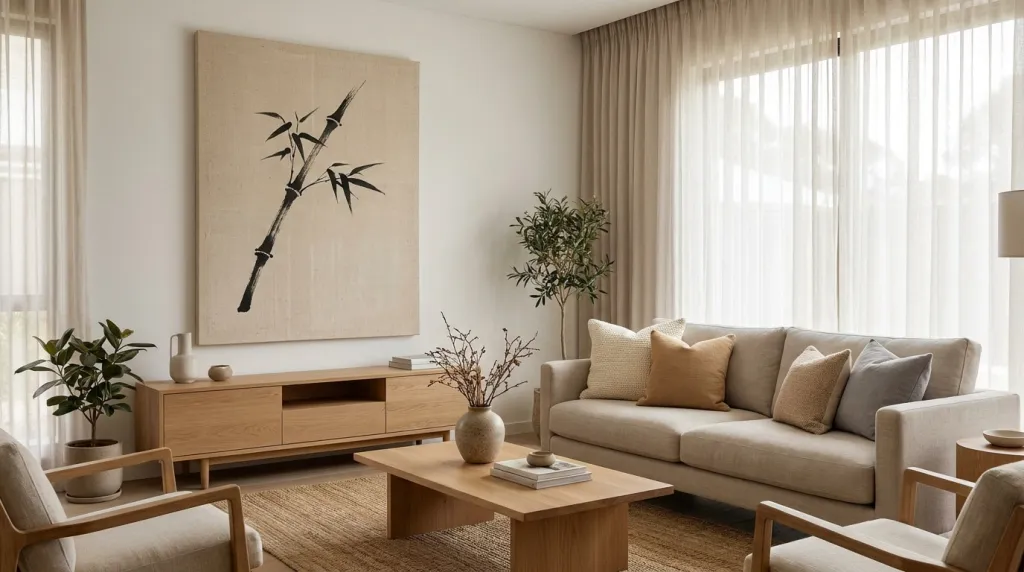
Contrary to popular belief, empty space on a wall isn't an absence but a necessary breathing room that brings your space to life. We'll show you how the balance between the strength of ink and the softness of wood can transform your home with a carefully chosen piece of Japandi wall art. This blend of Japanese aesthetics and Nordic design creates an atmosphere that's serene, authentic, and built to last.
The pillars of Japandi wall art for balanced decor
Now that we've explored the essence of this hybrid style, it's time to focus on what really brings a wall to life: choosing the artwork itself.
The simplicity of sumi-e and the power of the ink stroke
Sumi-e is an art of the single, deliberate gesture. It seeks essence, not unnecessary detail. The contrast between deep black and white creates an immediate visual impact in a living room.
In Japanese decor, empty space isn't an absence. It's a necessary breathing room. It finally lets the mind rest.
The ink stroke guides the eye. It structures the space without ever overwhelming it.
Embracing this style means choosing calm. Your wall becomes an open window onto serenity.
Natural motifs, between symbolism and soft geometry
Cranes and cherry blossoms carry messages of longevity and renewal. These symbols fit seamlessly into a modern, understated interior.
Mount Fuji remains an enduring icon. Its natural geometric form is instantly soothing. It's often paired with clean Scandinavian lines for an interesting organic contrast.
The idea is to blend Japanese tradition with Nordic functionality. It's a subtle yet powerful visual balance.
3 frame styles to elevate your minimalist posters
You've chosen the visual, but without the right frame, the effect can fall flat. Let's look at how to dress your walls just right.
The understated charm of the kakemono for fluid verticality
The kakemono is a graceful alternative to the rigid frame. This hanging scroll adds instant softness. It sways gently with the air currents in the room.
Its wooden rods hold the print delicately in place. This avoids the bulky look of glass. It's the ideal solution for a lighter, airier visual effect.
The fabric offers an elegant, matte texture. It absorbs light rather than reflecting it the way plain plastic does.
Hanging a kakemono breaks with the conventions of the classic frame. Its bold verticality makes ceilings feel higher.
The importance of natural materials like oak and bamboo
Light wood is a signature of the Japandi aesthetic. It evokes Nordic forests and Kyoto temples. We favor these soft, organic finishes.
A solid oak frame highlights the artwork without overpowering it. It's a lasting choice. Bamboo adds a more exotic, airy touch.
How to harmonize your art with lighting and furniture
A lone poster is a voice in the wilderness; it needs to converse with the objects around it to truly come alive.
Creating a visual dialogue with pendant lights and vases
Lighting is your wall art's best ally. A washi paper pendant light casts a soft, diffused glow over the piece. This brings out the grain of the paper and the subtle shades of the ink.
Place a minimalist vase with a cherry blossom branch nearby. The echo between the motif in the artwork and the real object is striking. This is how you create a cohesive mood.
Colors should speak to each other in subtle touches. A shared shade of gray between a rug and a print is often all it takes.
Don't chase absolute perfection. Harmony often comes from a deliberate imbalance between round shapes and straight-edged frames.
Mastering negative space to avoid visual clutter
Too many frames kill the style. Walls need room to breathe so each piece can truly stand out. The empty space around a piece of art matters just as much as the art itself. That's the key to minimalism done right.
Position your artwork above a low sideboard or a Japanese stool. This creates a focal point without cluttering the view. The eye should be free to move around the room.
A mirror placed opposite can double the visual impact. It reflects the art and makes the space feel larger.
The less you add, the more what remains stands out. That's the whole philosophy behind hybrid design.
The exclusive Japandi Style wall art collection
To turn these tips into reality, all that's left is to browse a collection curated for lovers of beautiful design.
A collection blending Japanese craftsmanship and functional design
Our prints are produced on high-quality materials. The color rendering is rich and true to life. Every piece is selected for its pure, timeless Japandi aesthetic.
We offer a range of sizes to suit any interior. From small, understated frames to grand, statement kakemonos, there's plenty to choose from. Here, craftsmanship meets modern design.
You can feel the quality in the texture. Our papers have a grain reminiscent of traditional workshops.
What you can expect from a hybrid decor specialist in France
Ordering from Japandi Style means fast delivery across France. Your artwork arrives well protected and ready to hang.
Our expertise means we can offer you the best guidance. We know every product and the cultural story behind it.
Trust a specialist. Your home deserves this level of care and this unique craftsmanship.
Elevate your home by pairing the serenity of sumi-e with the warmth of oak frames. Choosing Japandi wall art means bringing lasting balance between Japanese tradition and Scandinavian minimalism into your space. Start transforming your walls into a haven of peace today, for a little more clarity of mind in everyday life. Understated elegance awaits.
FAQ
What are the characteristics of traditional Japanese-style wall art?
Japanese wall art stands out for its pursuit of essence and its masterful use of empty space. You'll mainly find sumi-e, black ink painting that captures the spirit of its subject, along with the famous ukiyo-e prints. These works favor natural themes like Mount Fuji, cranes, or cherry blossoms, symbolizing serenity, loyalty, and renewal, respectively.
For a seamless fit in your home, we recommend choosing pieces with confident brushwork and an authentic surface. Whether it's canvas or textured paper, the goal is to create an open window onto calm and contemplation, far from the bustle of city life.
How do you choose the ideal frame for Japandi decor?
Japandi style, a harmonious fusion of Japan and Scandinavia, calls for noble, organic materials. Opt for natural wood frames, such as light oak or ash, which add subtle warmth without weighing down your walls. Bamboo is also an excellent alternative for highlighting a minimalist poster with lightness and authenticity.
We recommend clean lines and careful finishes, with no unnecessary ornamentation. A solid wood frame, left in its natural tone or lightly smoked, will showcase your Japandi prints beautifully while preserving the visual balance of your living space.
What is a kakemono, and how do you hang one at home?
A kakemono is a traditional Japanese artwork presented as a hanging scroll. Unlike a rigid frame, this fabric or paper support offers fluid verticality and elegant softness. It typically consists of wooden rods that hold the print in place, making it easy to hang and giving it an airy look that sways gently.
It's the ideal way to dress a wall with originality while keeping a minimalist feel. Its lightweight structure absorbs light with a matte finish, avoiding the glare of ordinary glass, and pairs beautifully with low furniture to make a room feel more expansive.
How do I coordinate my wall art with the rest of my decor?
To pull off great wall decor, it's essential to create a dialogue between your artwork and your other pieces. We suggest placing a Japandi mirror across from your artwork to reflect the piece and make the space feel bigger. Washi paper light fixtures also help diffuse a soft glow that brings out every detail in the ink and paper.
Don't forget to master negative space: let your walls breathe. By setting a standout piece above a wooden sideboard or an artisan stool, you highlight the artwork while avoiding visual clutter. It's in this deliberate emptiness that the true elegance of hybrid design lives.
What symbols commonly appear in Japanese wall art?
Every motif in Japanese art carries deep meaning tied to virtue and nature. The Japanese crane represents longevity and loyalty, while the Seigaiha wave symbolizes resilience and tranquility. Flowers, like cherry blossoms, evoke the fleeting beauty of life, inviting us to savor the present moment.
When you choose a piece from Japandi Style, you're not just buying a decorative object — you're bringing home a piece of cultural history. These symbols, whether geometric like Asanoha or drawn from nature, add a spiritual, protective dimension to your home, turning your space into a sanctuary of well-being.