
Japandi Wedding Kimono Guide: How to Choose Your Ceremonial Kimono
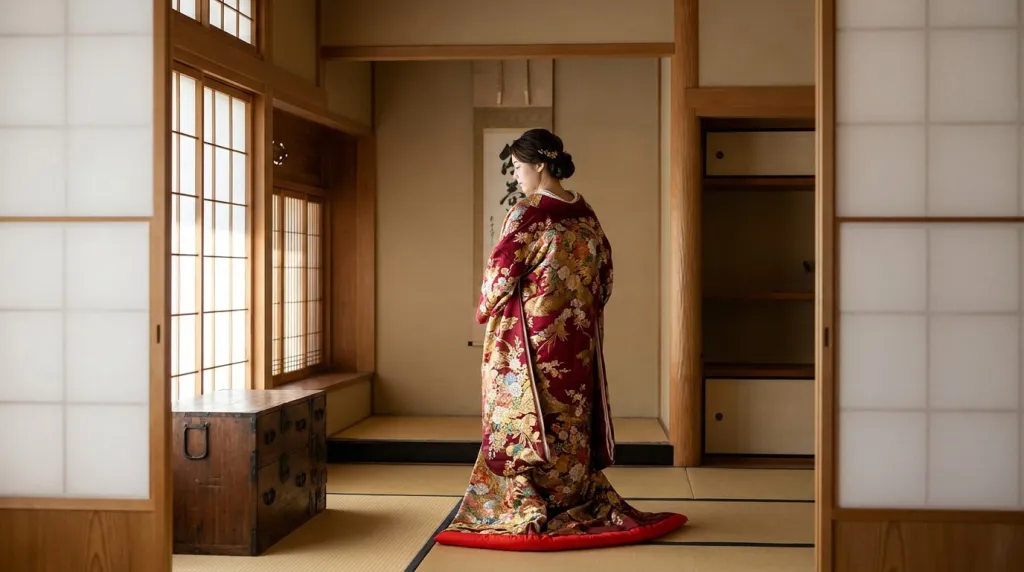
Picture yourself draped in immaculate silk, ready to honor a sacred union through ancestral rites where every fold tells your story. You're about to discover how to choose the ideal wedding kimono, from the shiromuku symbolizing absolute purity to the dazzling embroidery of the iro-uchikake. We'll guide you through the codes of the furisode for young women and the understated elegance of the montsuki haori hakama for the groom, while helping you harmonize your traditional accessories. This read gives you the keys to turning your ceremony into a living tableau, perfectly balancing cultural prestige and modern comfort for this once-in-a-lifetime day.
Wedding Kimono: The Shiromuku and Other Sacred Garments
Having introduced the world of Japandi Style, let's get straight to the heart of the matter with the most sacred pieces of the Japanese bridal wardrobe, where everything begins with white.
The Absolute Purity of the White Shiromuku
Head-to-toe white symbolizes death to one's family of origin. It then marks rebirth into the new lineage. It's a deeply spiritual choice for the bride.
The bride layers several thicknesses of heavy silk. Each layer adds a unique structure to the silhouette. The final effect is truly majestic and solemn.
This garment is reserved exclusively for Shinto rites. It marks the most sacred moment of the wedding.
The Iro-Uchikake for a Spectacular Entrance
The raised embroidery uses gold and silver thread. Cranes symbolize the couple's longevity. It's an incredible piece of craftsmanship, worn over the white kimono for the reception.
This robe doesn't close with a belt. It trails gracefully along the floor as the bride moves.
The burst of vivid color catches every eye. Red often dominates, believed to bring good luck.
The Furisode and the Elegance of Long Sleeves
The furisode is the ultimate garment for an unmarried woman. The sleeves nearly touch the floor. It's a visual farewell to single life before the union.
The visual impact is striking in photos. The movement of the sleeves is graceful and fluid.
3 Essential Accessories for the Perfect Bridal Silhouette
But a kimono is nothing without the details that sculpt the silhouette, the accessories that turn a garment into ceremonial dress.
The Art of the Obi Knot and the Role of the Hakoseko
The obi keeps your posture perfectly upright throughout the ceremony. This wide, rigid sash structures the bridal silhouette. It absolutely requires outside help to be tied with precision.
The hakoseko is a small decorative pouch tucked into the collar. Historically, it held a mirror or handkerchiefs useful to the bride. It's a genuine jewel of precious fabric.
Play with contrast. The obi should stand out boldly to set off the wedding kimono.
Kanzashi Combs and the Tsuno Kakushi Headpiece
Kanzashi are delicate, handmade floral ornaments. They gleam elegantly in the bride's elaborate hairstyle. They're chosen according to the current season. They add a touch of refinement that's absolutely essential to the overall look.
Legend surrounds the tsuno kakushi. This symbolic white headpiece hides the "horns of jealousy." It represents the woman's transformation into a serene married life.
Coordinate your shironuri makeup. The harmony between the white-powdered face and the jewelry is essential.
Choosing Zori Sandals and Tabi Socks
Skip the geta for the big day. For a formal wedding, zori are a must. They are flatter, more refined, and more solemn than rustic wooden sandals.
Don't forget pristine white tabi socks. They cleanly separate the big toe from the rest. Total comfort is essential for walking gracefully to the altar.
Here are the key elements for your feet:
How to Choose Your Outfit Based on the Mood of the Celebration
Once the key pieces and accessories are chosen, all that's left is to match the whole ensemble to the context of your celebration.
Favoring Tradition for a Shinto Ceremony
At the shrine, absolute restraint is the rule. The immaculate shiromuku dominates the scene here. Overly flamboyant patterns are avoided before the gods, out of respect for purity.
The weight of the fabric imposes a particular bearing. Walking slowly takes real practice. The multiple layers of silk can weigh several kilograms on the shoulders.
Follow the codes scrupulously. It's a matter of ancestral dignity.
Choosing Photogenic Patterns for a Photo Shoot
Favor vivid colors for your outdoor photos. The green of Japanese gardens naturally sets off intense red. Look for contrast. Lustrous silks capture natural light beautifully.
Use a washi paper parasol. It's the perfect prop for posing with elegance.
Choose bold, large-scale patterns. They read far more clearly in your wedding photos.
Matching Fabrics to the Wedding Season
Favor heavy silks in winter. They provide effective warmth during long ceremonies. Thermal comfort is a point you shouldn't overlook.
Consider breathability. Under-layers absolutely must wick away moisture.
The Montsuki Haori Hakama: The Groom's Understated Elegance
Let's not forget the other half of the couple, since Japanese menswear elegance follows its own codes.
Understanding the Hierarchy of Kamon Family Crests
The five family crests define the groom's prestige. These emblems are placed on the black jacket. They mark the highest degree of formality for men.
The placement of the crests follows a precise rule. They appear on the chest, back, and sleeves. They proudly display the clan's identity.
Black is mandatory. It's the color of authority.
The Structure of the Hakama Trousers and Haori Jacket
The hakama is a very wide, pleated trouser. It gives the groom an imposing stance. The haori jacket is worn over it. It doesn't overlap in front but simply fastens with a cord.
Balancing proportions is essential here. The silhouette should look square and stable, embodying strength.
The pleats matter. They symbolize moral virtues.
Coordinating the Couple's Styles for the Big Day
We recommend matching textures precisely. If the bride wears matte silk, the groom should follow suit. Visual harmony is the ultimate goal for your union.
Always check that the patterns are consistent. The groom's accessories can echo the colors of the bride's kimono. It's a subtle but effective touch for your photos.
The couple's unity comes first. Their outfits tell a shared story.
Elevate your union by choosing an exceptional wedding kimono, somewhere between the purity of the shiromuku and the brilliance of the iro-uchikake. Coordinate your accessories with care to sculpt a majestic, timeless silhouette. Shine now in ancestral attire that will turn your ceremony into an everlasting memory.
FAQ
What Is the Difference Between a Shiromuku and an Iro-Uchikake?
The shiromuku is the pure white wedding kimono, a symbol of purity and new beginnings. It's traditionally reserved for the solemnity of the Shinto ceremony. Its name evokes the bride's readiness to be "colored" by her new family, marking a profound spiritual transition.
The iro-uchikake, by contrast, is a sumptuous, colorful outer robe, often adorned with gold and silver thread. Generally worn at the reception or for photos, it symbolizes joy and prosperity. If white embodies the rite, the uchikake's vivid colors celebrate the festive entry into married life.
Why Does the Bride Wear a Tsuno-Kakushi Headpiece?
The tsuno-kakushi, or "horn concealer," is an accessory laden with powerful symbolism. According to tradition, this white headpiece hides the "horns of jealousy," or impure thoughts. It's a visual promise of serenity and devotion to the new family.
By wearing this accessory with her ceremonial kimono, the bride expresses her intention to build a harmonious household. It's a finishing touch that lends architectural elegance to the bridal silhouette while honoring ancestral codes.
What Role Does the Furisode Kimono Play at a Wedding?
The furisode stands out for its very long sleeves that nearly brush the floor. It represents the ultimate garment of prestige for an unmarried woman. During wedding festivities, it marks a graceful farewell to youth and single life before taking on a new social status.
For keepsake photos, the movement of the sleeves on a high-quality silk furisode creates a strikingly poetic visual effect. It's a favorite choice for those who want to combine tradition with dynamic aesthetics through dense, refined floral patterns.
How Does the Groom Dress for a Traditional Ceremony?
Men's elegance centers on the montsuki haori hakama. This outfit consists of an understated black kimono, wide pleated trousers called hakama, and a haori jacket. The whole ensemble bears five family crests, the kamon, which display the groom's identity and authority.
This rigorous structure creates a square, stable silhouette, perfectly coordinated with the majesty of the bride's kimono. To complete the look, white tabi socks and zori sandals are essential to honor ceremonial etiquette.
What Accessories Complete the Japanese Bride's Outfit?
Beyond the kimono, several elements sculpt the perfect silhouette. The obi, a wide, rigid sash, ensures an upright, dignified posture. The hakoseko, a small decorative pouch once used to hold a mirror or handkerchiefs, is often tucked inside it, like a jewel made of precious fabric.
The hairstyle is enhanced with kanzashi, handcrafted floral ornaments chosen to suit the season. Finally, for walking, brides favor platform-soled zori sandals worn with breathable cotton tabi, ensuring optimal comfort throughout the day.