
Japanese Art of Living: Wabi-Sabi, Ma, and Ikigai for Everyday Life
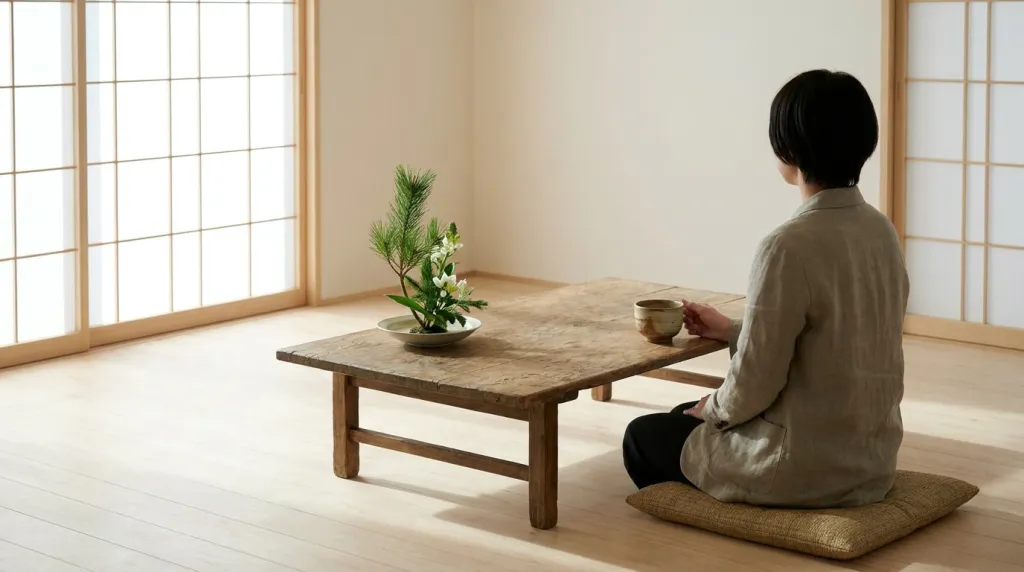
Unlike our Western standards, perfection isn't an ideal but a lack of soul to Japanese tea masters. We invite you to discover how the Japanese art of living can transform your everyday life by celebrating the marks of time and the breathing space of emptiness. Through Wabi-Sabi, Ma, and Ikigai, you'll learn to cultivate a serene home where every imperfection tells a unique and meaningful story.
The Beauty of Imperfection Through Wabi-Sabi
Having explored the idea of overall harmony, let's turn to the singular beauty of Wabi-Sabi.
Valuing the Authenticity of Natural Materials
Wabi-Sabi has its roots in the tea ceremony. This Japanese philosophy favors the beauty of simple things. We set aside artificial perfection in favor of a return to the essential. It's a genuine source of spiritual renewal.
Everyday objects remind us that nothing is permanent. Let's accept this natural cycle with serenity. Every piece in your home tells a unique story through its wear. Time becomes a precious ally.
The irregularities in materials forge a strong identity. An asymmetrical vase carries far more character than a mass-produced item. Imperfection then becomes an authentic and touching signature.
Choose rough textures and natural fibers. From the very first glance, these elements bring real soul to your home. They create a warm, soothing atmosphere.
Embracing the Patina of Time as Decor
Craftsmanship offers objects that age with rare elegance. Wood develops a natural patina while metal takes on new sheens. These changes speak to a lasting nobility and quality.
Cracks and marks of wear act as poetic scars. They reflect the life lived within your home. Stop trying to hide these utterly charming little flaws.
How the Concept of Ma Frees Up Your Space
If Wabi-Sabi elevates the object, the concept of Ma takes care of the space around it.
Mastering the Art of Constructive Emptiness
Ma represents an essential spatial breathing room. It isn't a useless or unsettling void. On the contrary, it's an interval that gives meaning.
Emptiness structures a space without cluttering it. It lets every piece of furniture breathe and exist fully. Without this space, the eye tires quickly. You gain mental clarity right away.
An uncluttered interior calms a restless mind. Fewer visual stimuli means less everyday stress. It's a simple way to find deep serenity at home.
Visual silence then becomes an attainable luxury. All it takes is leaving a few areas of your walls completely bare.
Organizing Flow for Lasting Serenity
Arrange your furniture to keep pathways clear. A smooth flow of energy transforms the atmosphere of a room. Avoid blocking windows or main walkways with heavy objects.
Create visual pauses between your key pieces. A nightstand shouldn't be pushed right up against the bed. Leave breathing room between each standout piece. This showcases the design of your furniture.
Use hidden storage solutions. Tuck away clutter to preserve clean, pure lines.
Japandi Style offers lightweight pieces that are perfect for this. Minimalism then becomes a natural, effortless habit.
4 Pillars of Ikigai for a Fulfilling Everyday Life
Beyond the physical layout, Ikigai gives deep meaning to your presence within the home.
Defining Your Purpose at the Heart of the Home
Identify the household activities you truly enjoy. Cooking or gardening can become a source of joy. Your home should support these small moments of simple happiness.
Set up a dedicated corner for your personal passions. A small desk or a meditation space is more than enough. This spot becomes your sanctuary for renewal. It should reflect your deepest values.
Aligning your environment with your needs changes everything. You finally feel like you're exactly where you belong. That's the secret to a home that nourishes the soul over the long term.
Turning Simple Tasks into Moments of Mindfulness
Practice gratitude during your daily rituals. Making tea becomes an exercise in presence. Watch the water pour and the aromas slowly unfold.
Care for your belongings with attention. This respect strengthens your grounding in the present moment.
Add soothing sensory touches throughout your home. A scented candle or a bamboo wind chime helps. These small details engage your senses and calm your nervous system.
Bringing Japandi Design Principles into Your Home
To put these philosophies into practice, Japandi style offers the ideal aesthetic framework for your quest for meaning.
Blending Scandinavian Warmth with Japanese Restraint
Pair light Nordic woods with minimalist Japanese lines. This combination creates a perfect, warm visual balance. It helps avoid the coldness of pure minimalism. It's an exemplary alliance of comfort and function.
Choose natural textiles like linen or hemp. They soften the atmosphere of your living room. These materials add an essential organic touch that breaks up straight lines.
Balance neutral tones with black. Charcoal adds contrast and depth.
Choosing Handcrafted Accessories for a Lived-In Decor
Favor paper or bamboo light fixtures. They cast a soft, diffused light. This cozy ambiance radically transforms how you perceive a space.
Use handcrafted tableware for your everyday meals. Japandi Style's creations combine beauty and function. Every bowl becomes a work of art you hold in your hands. It's a simple way to honor craftsmanship every day.
Add greenery to bring in a natural connection. Plants purify the air and bring vibrant life to a room.
A lived-in home is a home that breathes. Don't overfill it — choose every object with real intention.
Elevate your everyday life by blending the imperfection of Wabi-Sabi, the clarity of Ma, and the pursuit of Ikigai. Embrace this Japanese art of living now to turn your home into a lasting sanctuary of serenity. Cultivate this essential balance to root your well-being in a bright future.
FAQ
What is the philosophy of Wabi-Sabi and how do you bring it into your home?
Wabi-Sabi is an invitation to celebrate the beauty of imperfection. Rooted in the tea ceremony and Zen Buddhism, this philosophy teaches us to cherish authentic, well-worn objects over artificial perfection. It's a return to basics, where simplicity and modesty become vehicles for elegance.
To bring it into your home, we recommend favoring raw materials like weathered wood, unpolished stone, or handcrafted ceramics. By embracing irregularities and rough textures, you give your home real soul, turning every small crack into a poetic trace of your personal story.
How can the concept of Ma transform your living space?
The concept of Ma represents what we call "constructive emptiness," or spatial breathing room. Far from being a useless void, it's an essential interval that lets your furniture — and your mind — breathe. By creating visual pauses, you arrange your decor so that every element can exist fully without clutter.
In practice, this means simplifying your walkways and leaving certain wall areas completely bare. This approach reduces visual stimuli and promotes immediate mental clarity. A home that respects Ma becomes a sanctuary of serenity, where minimalism is no longer a constraint but a daily release.
What are the principles of Ikigai for a fulfilling home?
Ikigai is your "reason for being," and applying it to your home means aligning your environment with your deepest values. It involves creating spaces that support your passions, whether that's a light-filled reading nook or a creative workshop. Your home should be the engine of your personal fulfillment and joy in life.
We encourage you to turn simple tasks into moments of mindfulness. Whether it's preparing matcha tea with a traditional whisk or tending to your plants, these rituals strengthen your sense of grounding. By choosing objects that hold meaning, you create a home that nourishes the soul over the long term.
How do you achieve a harmonious Japandi-style decor?
Japandi style is the perfect fusion of Scandinavian warmth (the "cozy" factor) and Japanese aesthetic restraint (the "zen" factor). To pull off this pairing, combine light Nordic woods with minimalist, low-profile Japanese lines. The goal is to strike a balance between exemplary function and organic comfort.
Use natural textiles like linen or hemp, and punctuate your decor with deeper contrasts, such as touches of charcoal black. To complete the look, add handcrafted accessories like paper light fixtures or stoneware dishes. The result is a space that feels modern, soft, and deeply lived-in.
What is the art of Kintsugi and what does it symbolize?
Kintsugi is the Japanese art of repairing broken ceramics by highlighting the cracks with gold-dusted lacquer. Rather than hiding the break, this technique elevates it into a feature of value. It's a powerful metaphor for resilience: the object becomes more beautiful and more precious precisely because it was broken.
In everyday life, this practice invites you to look on fragility with kindness. Adding Kintsugi-inspired pieces to your decor is a reminder that hardship and the passage of time add nobility to our existence. It's a celebration of durability and the deep respect we owe the objects around us.