
Japanese Bag Guide: Furoshiki and Japandi Tote Bags
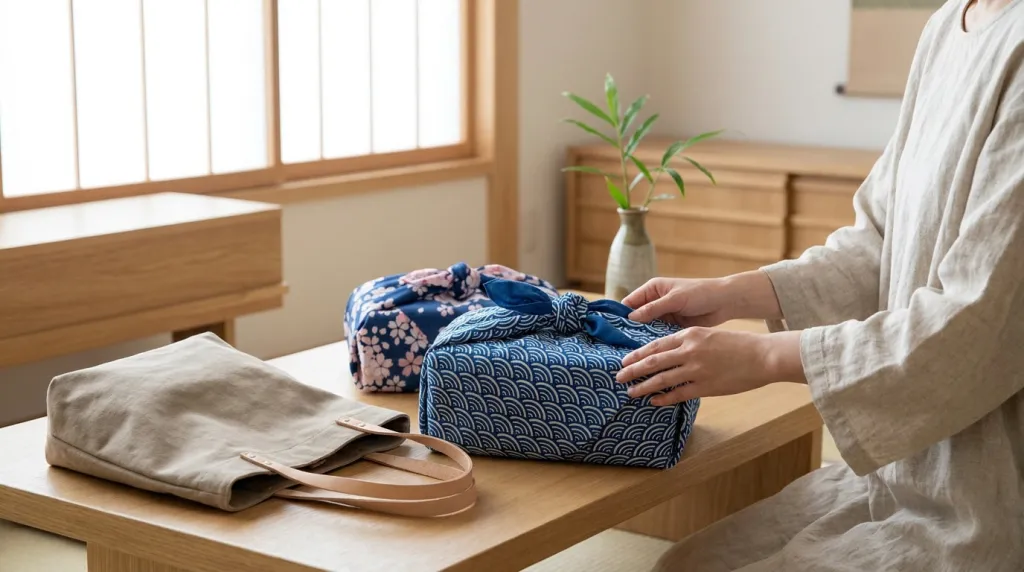
Would you like to combine the finesse of centuries-old craftsmanship with the practicality of everyday city life? Let us guide you in choosing your next Japanese bag, an accessory in which every fold of linen or indigo cotton reflects a perfect balance of durability and elegance. Discover how these pieces, adorned with Seigaiha or Sakura motifs, elevate your everyday life while honoring a philosophy of serene, minimalist living.
Japanese Bags: The Most Iconic Styles
After exploring the world of Japandi Style, it's clear that the accessory often defines the overall look, especially through these historic pieces.
The Furoshiki, or the Elegance of Knotted Cloth
The furoshiki is, at its core, a simple square of traditional cloth. Its origins trace back to Japan's traditional bathhouses, where it was used to protect clothing. It's minimalism at its finest, and today it perfectly embodies the zero-waste philosophy.
The folding and knotting techniques require no stitching whatsoever. Each knot transforms the fabric into a sturdy container, an ingenious way to carry your everyday belongings.
This cloth bag champions an eco-friendly, reusable approach. It stylishly replaces disposable packaging.
The Cotton Tote Bag for Everyday City Life
The heavy-duty cotton used for these bags guarantees remarkable durability. This natural material withstands the demands of daily city life while offering a wonderfully organic feel in the hand.
The classic rectangular shape is ideal for folders or groceries. Long handles allow for a comfortable shoulder carry, making it the perfect companion for busy days.
This understated style is perfectly suited to urban, everyday use. It works just as well in the office as on a casual outing, and its clean design never goes out of style.
This soft, flexible bag is easy to store. Empty, it tucks away almost anywhere.
3 Traditional Patterns and Their Meanings
Beyond the shape, it's the fabric's pattern that truly tells a story.
The Symbolism of Seigaiha Waves and Cherry Blossoms
The Seigaiha pattern depicts concentric waves symbolizing peace. These arcs evoke a calm, eternal sea, a wish for happiness bestowed on whoever wears it. The design is geometric and deeply soothing.
Cherry blossoms, or sakura, embody spring's renewal. They mark the fleeting nature of human beauty. This motif brings an instant touch of softness to your accessory and stands as a powerful emblem of Japanese philosophy.
Each design carries its own deep spiritual resonance. Your choice will depend on the intention you want to carry with you each day.
The Authenticity of Linen and Indigo Dye
Linen fiber offers exceptional durability for your Japanese bag. This natural textile grows more beautiful with time, offering the raw texture so typical of today's Japandi style.
Natural indigo dye, known as aizome, has protective properties. This deep blue evolves uniquely with everyday use, gaining character the more you carry it, month after month.
Natural textiles develop a unique patina over the months. The bag becomes softer and gains an authentic charm, the luxury of mastered imperfection known as wabi-sabi.
These materials are especially gentle on your skin. No harsh chemicals are used in traditional production methods.
How to Match Your Bag to the Japandi Style
Owning a beautiful object is one thing, but knowing how to work it into your wardrobe is truly an art of living.
Pairing the Accessory with Clean, Simple Lines
Harmonize your Japanese bag with minimalist cuts. Favor fluid, logo-free silhouettes. The accessory should naturally extend your body line, a visual balance rooted in restraint.
Play with contrasting textures. Pair linen with raw cotton. Matte materials create a sophisticated look, and richness comes from the grain of each fabric.
Create an overall visual cohesion. Your style should mirror your interior decor. Japandi is a complete way of life.
Pairing Your Bag with Reimagined Traditional Garments
Coordinate your bag with a structured haori. These jackets call for softer accessories, and the contrast between structure and fluidity always works. It gives your look added visual depth.
Add tabi socks to complete the look. These details guarantee an authentic feel, while fitted cuts keep things looking modern. Every element matters for the overall balance.
Choose earthy tones like ochre. These natural colors reinforce the organic feel and evoke nature's raw elements, giving your outfit a calming quality.
Comfort remains the guiding principle. Clothing should let your body breathe, and a lightweight bag moves with that same sense of freedom.
Buying Criteria for a Long-Lasting Accessory
For your new favorite piece to last for years, a few technical details deserve close attention before you check out.
Storage Capacity and Sturdy Craftsmanship
Determine the ideal size based on how you'll actually use the bag day to day. A bag that's too large quickly becomes bulky and heavy, while one that's too small will limit what you can carry. Ask yourself what's truly essential to bring along.
Carefully inspect the stitching quality at stress points. Handles should be securely attached to bear weight, and neat finishing guarantees the item will last a long time.
Choose your bag based on your own body shape. Strap length affects your walking comfort, so try it on to avoid any unnecessary back strain.
Check for interior pockets for better organization, a practical detail that's often overlooked but essential.
Caring for the Fibers for Greater Longevity
Hand-wash in cold water. Use a mild, neutral soap so you don't damage the natural fibers; a gentle touch preserves the original vibrancy of the colors.
Never machine-dry, as it breaks down the fibers. Instead, dry flat, away from direct sunlight, to prevent the fabric from warping or yellowing.
Treat stains locally without rubbing the fabric too hard. Use a damp cloth with a little baking soda; this gentle method protects the dye's natural pigments.
Iron your bag while it's still slightly damp to make smoothing easier. Steam restores loft to cotton or linen fibers, instantly bringing your accessory back to its like-new look.
Choosing a Japanese bag means choosing the perfect balance of durability, time-honored patterns, and minimalist elegance. Pick your linen or indigo piece today to bring a lasting touch of serenity to your everyday life, and shine with an accessory that tells a story of wisdom and style.
FAQ
What Is a Furoshiki Bag, and How Do You Use It Every Day?
The furoshiki is a traditional Japanese square of cloth that embodies minimalist elegance and a zero-waste approach. A true art of folding, it turns a simple piece of fabric into a sophisticated container for carrying personal items or wrapping gifts with a uniquely authentic touch.
To use it, we recommend simple techniques like yotsu-musubi for gifts or tesage-bukuro to create a handled bag in seconds. Its versatility is limitless, adapting to the shape of whatever you're carrying, whether that's a bento box, a book, or even a bottle of sake.
What Size Cloth Should I Choose for My Japanese Bag?
The right size mainly depends on how you plan to use your accessory. For small items like jewelry or an individual bento box, an 18- to 20-inch (45 to 50 cm) square is ideal. If you want to carry books or standard boxes, we recommend a mid-size option of about 28 inches (70 cm).
For bulkier needs, such as a laptop or clothing, opt for cloth measuring 35 to 47 inches (90 to 120 cm). A good rule of thumb: the item you're wrapping should measure roughly a third of your cloth's diagonal to ensure a secure, well-balanced fold.
Which Traditional Patterns Should You Choose for an Authentic Style?
Every Japanese pattern, or wagara, carries deep symbolism. The Seigaiha pattern, with its concentric waves, evokes peace and eternal good fortune. If you're drawn to themes of renewal and the poetry of passing time, sakura (cherry blossom) is a wonderful choice that brings incomparable softness to your look.
Other designs, like asanoha (hemp leaf) or tsuru (crane), a symbol of longevity, are perfect for expressing your appreciation of Japanese culture. These patterns are far more than decoration; they act as good-luck charms and reflect a genuine spiritual refinement.
How Do I Care for My Linen or Indigo Cotton Bag?
To preserve the beauty of natural fibers and the vibrancy of dyes like indigo (aizome), we recommend hand-washing in cold water or a delicate machine cycle at no more than 86°F (30°C). Always use a gentle detergent, such as Marseille soap, and avoid bleach entirely, as it can dull the depth of the pigments.
Drying should always be done outdoors, laid flat and away from direct sunlight, to prevent any fading. For a flawless finish, we suggest ironing your bag while it's still slightly damp, using your iron's steam function to restore softness to the linen or cotton fibers.
How Do I Style My Japanese Bag with a Japandi Outfit?
Japandi harmony rests on the balance between clean lines and organic materials. We recommend pairing your bag with minimalist pieces, like wide-leg linen pants or a simple dress. The idea is to let the accessory extend your silhouette without visually overwhelming it, favoring earthy tones like beige, ochre, or gray.
To complete your look, coordinate your bag with a modern haori or a pair of tabi socks. This blend of matte textures and reimagined traditional details creates a direct dialogue between contemporary comfort and Japanese heritage, turning your style into a true art of serene living.