
Japanese Bathroom Design: How to Create a Zen Retreat
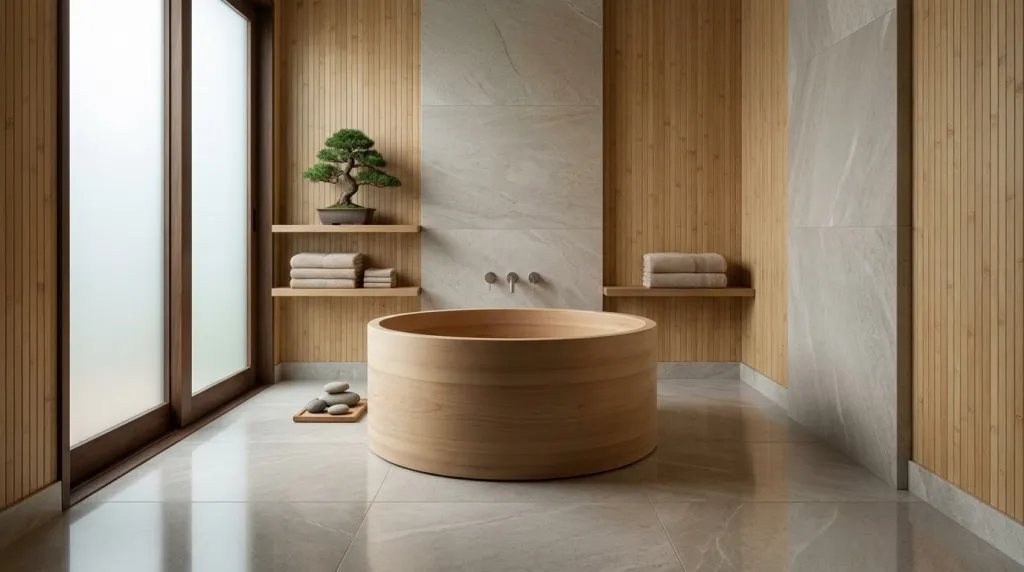
Ready to turn your daily routine into a true moment of absolute serenity? We're here to help you design a Japanese bathroom where the harmony of natural materials and the deep soak of an ofuro bath bring lasting calm to your mind. Discover how to arrange this sacred space to create an authentic, zen atmosphere in your own home.
The foundations of an authentic Japanese bathroom
Now that we've touched on the growing appeal of at-home wellness, let's look at the concrete basics of Japanese-style layout.
The ofuro bathing ritual for total disconnection
In Japan, cleansing the body is kept distinctly separate from the pursuit of serenity. The ofuro bath isn't meant for hygiene — it's a sanctuary for calming the mind.
The tub, deep and often crafted from hinoki wood or acrylic, allows for full-body immersion. The water should stay very hot to release muscle tension and encourage complete relaxation.
This enveloping warmth effectively melts away accumulated stress. Submerging your body in this thermal cocoon naturally primes it for deep, restorative sleep.
Organizing the space by separating functions
We recommend a strict separation between the wet zone and the dry zone. This layout is essential for keeping the space clean, orderly, and free of lingering moisture.
Minimalist glass partitions or light dividers help structure the room. These elements define each function without ever blocking natural light or the visual flow of the space.
Minimalism remains our guiding principle for avoiding clutter. A pared-back layout frees up visual space, which brings immediate mental clarity — perfect for rest and daily meditation.
Which materials work best for a natural atmosphere?
Once the space is structured, texture choices become the main driver of the mood.
Light wood and bamboo as organic pillars
We recommend using cedar or light-toned wood. These species naturally resist water. They give off a soothing woody scent. It's a truly authentic choice for your space.
Wood warms up the overall look of the room. Unlike cold tile, its grain adds visual softness. You'll immediately feel a sense of thermal comfort.
Don't forget bamboo accessories. Adding bath ladders or soap dishes strengthens the connection to nature. It's the perfect finishing touch for your Japanese bathroom.
Natural stone and soothing mineral surfaces
Slate or dark shale are excellent options. These materials work well for shower floors. They're slip-resistant and elegant. They provide a solid visual base.
The sensory contrast here is key. The roughness of stone underfoot creates balance. It plays off the fluidity of hot water. The experience becomes complete.
These mineral materials offer outstanding durability. They're timeless. They age beautifully in a humid environment. It's an investment in your own serenity.
Choosing accessories for a successful Japandi look
But materials aren't everything — it's the finishing details that truly define the Japandi style.
The Japandi mirror: amplifying light and space
We recommend mirrors with slim wooden frames for their natural warmth. The soft geometric shapes from Japandi Style fit perfectly on an uncluttered wall.
The impact on your room's sense of volume is immediate. A well-placed mirror reflects light and creates the illusion of a larger, airier space.
Always favor matte finishes for your accessories. Avoiding glossy frames helps preserve a soft, cozy atmosphere free of harsh reflections in your space.
How textiles and rugs shape sensory comfort
We favor rugs made from natural fibers like jute or thick cotton. They soften the feel underfoot the moment you step out of the bath.
A harmony of neutral tones is essential here. Beige, sandy gray, or cream unify the overall look of your Japanese bathroom.
Perfecting the lighting and greenery
To round out this atmosphere, all that's left is to shape the light and welcome in a bit of plant life.
Japandi lighting for a soft, diffused glow
We recommend installing rice-paper pendant lights or very understated ceiling fixtures. The Japandi Style collection offers pieces perfectly suited to casting a gentle glow. These pieces bring structure to the space with elegance.
Always favor indirect lighting for visual comfort. It helps avoid harsh shadows on your walls. This approach preserves a feeling of total calm in your bathing space.
Installing dimmer switches is a smart move. It lets you adjust the brightness to suit the moment. Go from an energizing morning to a relaxing evening with a single, simple adjustment.
Bringing in greenery for a touch of life
Greenery has a direct effect on your everyday psychological well-being. Its mere presence visibly eases anxiety during your rituals. What's more, these plants naturally purify the surrounding air.
Choose handcrafted ceramic vases to showcase your plants. They beautifully hold a few branches of cherry blossom. It's the elegant finishing touch for your decor.
By bringing together the ofuro ritual, the elegance of light wood, and the strength of stone, you can turn your bathroom into a true sanctuary of serenity. Embrace these principles of Japanese design today and enjoy a moment of pure well-being every single day. Your future Japanese bathroom is waiting to immerse you in tranquility.
FAQ
What is the ofuro ritual, and how can I bring it into my home?
Ofuro is an age-old Japanese way of life that turns bathing into a genuine ritual of spiritual purification. Unlike Western habits, you only soak in the tub to relax, after thoroughly washing yourself outside of it. To recreate this experience, we recommend installing a deep tub — ideally made of hinoki wood or modern acrylic — that allows for full-body immersion in very hot water.
This moment of deep meditation encourages total disconnection and primes your body for restorative sleep. It's an invitation to slow down and honor water as a sacred part of your daily well-being.
How should I organize the space for a truly zen bathroom?
The layout of a Japanese bathroom relies on a strict separation between the wet zone and the dry zone reserved for getting dressed. We recommend minimalist glass partitions or sliding dividers, inspired by traditional shoji screens, to structure the space without ever blocking natural light.
Minimalism is your best ally: by limiting visual clutter and favoring built-in storage, you promote immediate mental clarity. This smooth, orderly layout is the key to turning your bathroom into a genuine haven of peace.
Which natural materials work best for a Japandi feel?
To create a warm, organic atmosphere, we suggest pairing light wood with mineral elements. Wood adds visual softness and a soothing woody scent, while natural stone — such as slate or dark granite — offers a refined, slip-resistant contrast underfoot.
These materials, chosen for their durability and timeless look, age beautifully. You can round out the look with pieces from our Japandi decor collection to perfect the balance between nature and design.
What accessories should I choose to finish my Japanese-style decor?
The details you choose are what really define your style. We recommend a Japandi mirror with clean lines and a matte wood frame to enhance the room's sense of volume. For textiles, opt for natural materials like a thick cotton or jute-fiber Japandi rug for sensory comfort the moment you step out of the bath.
Don't forget the lighting: Japandi light fixtures made of rice paper or bamboo cast a soft glow, essential for creating a cozy, relaxing mood at the end of the day.
Which plants are suited to the humidity of a zen bathroom?
Bringing in plants is key to purifying the air and easing anxiety. For a humid environment, we recommend hardy varieties such as ferns, orchids, bamboo, or sansevieria. These plants add a touch of life and strengthen the connection to the natural world.
To showcase these green touches, arrange them in handcrafted ceramic vases or Japanese-style bowls. This plant life, paired with beautiful natural materials, completes the transformation of your bathroom into a true space for renewal.