
Japanese Bonsai: How to Style It Into Your Japandi Decor
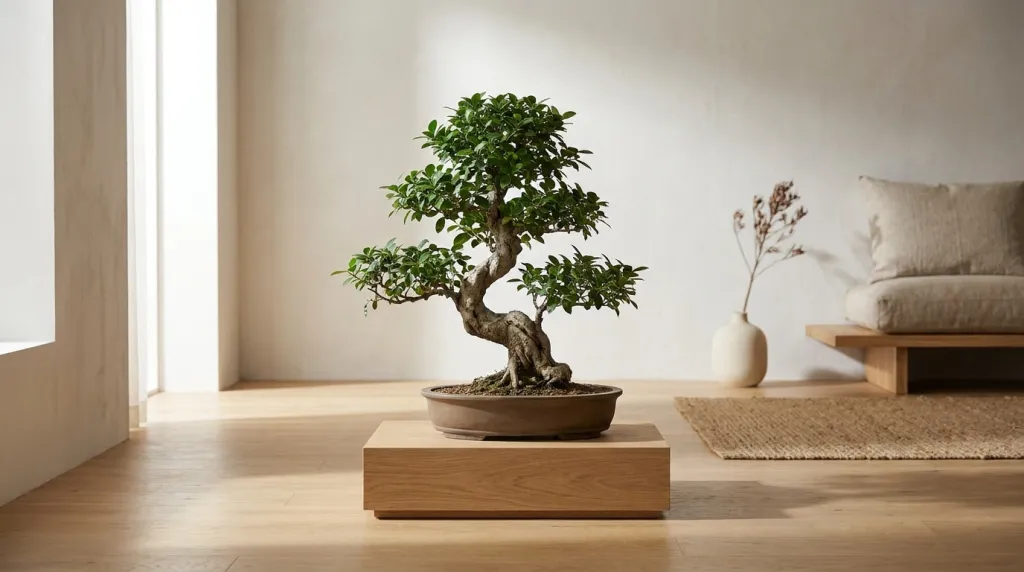
Contrary to popular belief, a miniature tree doesn't require complex expertise, just a genuine attentiveness to its natural needs. By bringing a Japanese bonsai into your home, you create the perfect balance between Scandinavian structure and Japanese serenity. This article guides you in choosing the ideal species and elevating your decor with elegance and simplicity.
Choosing the right Japanese bonsai for a clean, minimalist look
Once you've laid the foundations of Japandi style in your home, introducing a living element like bonsai calls for a thoughtful selection so as not to disrupt the visual balance.
Choose hardy species like the Ficus Ginseng
The Ficus Ginseng stands out for its resilience. This specimen tolerates mistakes and temperature swings with ease. It's the perfect companion for a modern apartment, easily withstanding the dry air of our heated homes.
Its branching aerial roots create a uniquely gnarled look. This organic form pairs beautifully with the clean lines of Scandinavian furniture. It's a contrast in texture that's especially appealing.
At Japandi Style, we love this blend of nature and control. This bonsai embodies wisdom. The contrast between its thick trunk and dense foliage quietly energizes your space.
Opt for the Carmona or Serissa for their delicate look
The Carmona has small, dark, glossy leaves. Its natural elegance never overwhelms a living room's visual space. It's a species that favors discretion and clarity.
The Serissa, nicknamed the "snow rose," stands out for its fine, delicate structure. Its white blooms evoke a constellation of tiny stars.
These flowers bring a welcome softness to a minimalist decor. This touch of poetry keeps the space from feeling too cold, preserving the overall visual balance.
Your choice will depend on the mood you're after. Choose the strength of the Ficus or the delicacy of the Serissa to elevate your interior.
Styling your plant on minimalist furniture
Once you've chosen your species, the real challenge lies in positioning it strategically to showcase its curves without cluttering your living space.
Showcase the tree on a natural wood Japandi shelf
Using a light wood shelf lets you elevate your Japanese bonsai. This material echoes the purity of Nordic forests. The added height offers an ideal view of the trunk and gives structure to your wall.
The Japandi Style collection offers pieces with clean, understated lines. These stands favor simple finishes, letting the fixture recede so the plant's sculptural silhouette can shine.
Create a focal point on a nightstand or a stool
Setting up a meditation corner in your bedroom encourages calm. Place a specimen on a minimalist nightstand. The tree becomes the first thing you see each morning.
Vary your surfaces with wooden stools to create visual rhythm. A low stool gives a distinctly traditional Japanese feel, grounding the plant firmly in its surroundings.
Harmonizing planters with decorative accessories
You've chosen your furniture, but the devil is in the details: matching the pot with the surrounding objects is what completes the visual unity.
Pair the pot with stoneware vases or Japanese bowls
Pairing the pot's ceramic with stoneware vases creates visual resonance. Choosing similar textures establishes a subtle echo. Japandi Style vases offer ideal matte finishes.
Placing artisan bowls nearby reinforces the authentic feel. A Japanese bowl can serve as a catch-all or a decorative object. The idea is to create a small, cohesive scene.
The balance between a rectangular pot and round vases energizes the space. This contrast enriches the decor without weighing it down. Leaving empty space around the objects preserves the sense of calm.
Play with mineral textures and neutral tones
Choosing pots with matte finishes avoids unwanted glare. Earthy colors like gray, beige, or black work best.
Avoiding bright colors preserves the overall harmony. Bright red or blue draws too much attention, undermining the soothing effect of Japandi style.
The planter should feel like a natural extension of the plant, subtly echoing the color of the trunk and foliage.
Keeping your miniature tree thriving day to day
A beautiful setup means nothing if your tree withers; diligent care is the price of this lasting serenity.
Adjust light exposure and watering
Place your bonsai in front of a south-facing window. Bright light is essential. That said, avoid harsh direct sun, which can damage delicate foliage.
Watering calls for constant attention to the soil. Touch the soil to check its actual moisture level. Water as soon as the surface feels dry, and never let water sit in the saucer.
Winter heating dangerously dries out indoor air. This dryness is especially harmful to tropical species. Mist the leaves regularly to maintain the humidity they need to thrive.
Prune regularly to maintain its shape
Trim young shoots to preserve the tree's aesthetic structure. Use perfectly sharp, clean tools. Regular pruning encourages smaller, denser foliage.
Repotting is generally needed every two to three years. It replenishes the soil's nutrients and offers the perfect chance to refresh the tree's root system.
Watching your bonsai grow and evolve brings deep satisfaction. This daily commitment brings precious calm and lasting harmony to your living space.
Elevate your home by pairing the elegance of a Japanese bonsai with the simplicity of light wood furniture. Start practicing regular pruning and watering now to sustain this balance of stone and greenery. Turn your home into a sanctuary of serenity, where every leaf tells a story of patience.
FAQ
Which bonsai species work best for Japandi-style decor?
To strike the right balance between Scandinavian minimalism and Japanese aesthetics, we recommend the Ficus Ginseng for its hardiness and sculptural aerial roots. Its high tolerance for indoor environments makes it a great choice for beginners looking for a raw, organic touch.
If you're after something more delicate, consider the Carmona (Fukien tea tree) with its glossy leaves, or the Serissa, nicknamed the "tree of a thousand stars." These species add quiet poetry through their delicate blooms, keeping the decor from feeling too stark while maintaining clean lines.
How do I style my bonsai on minimalist furniture?
Japandi design is all about showcasing empty space and structure. We suggest placing your tree on a light wood Japandi shelf to create a focal point at eye level. The natural wood will echo Nordic forests and highlight your plant's silhouette.
For a more intimate feel, place your bonsai on a low stool or a simple nightstand. This arrangement creates an interesting visual rhythm and turns your plant into a true object of daily meditation, seamlessly woven into your interior decor.
How do I match my bonsai pot with my decorative accessories?
Visual harmony comes from playing with mineral textures and neutral tones. Choose planters with matte finishes in shades of charcoal gray, sandy beige, or off-white. These tones highlight the color of the trunk without drawing attention away, preserving the calming effect you're going for.
You can pair the pot's ceramic with stoneware vases or handcrafted Japanese bowls placed nearby. Just be careful not to overcrowd the surface: leave open space around your objects so the composition can breathe, in keeping with Japandi design principles.
What are the essential steps for caring for my indoor bonsai?
Your miniature tree's health depends on plenty of bright, indirect light, ideally near a window without direct sun. As for watering, moderation is key: water as soon as the soil surface starts to dry out, and make sure water never sits in the saucer, as it can harm the roots.
Regular pruning is also necessary to maintain the tree's clean silhouette and encourage fine, dense foliage. Finally, don't forget repotting, typically every two years in spring, to refresh the soil and give your bonsai the room it needs to thrive long-term.
How do I know when it's time to repot my bonsai?
Several signs indicate your tree needs fresh soil: roots circling the root ball, water no longer soaking into the soil properly, or growth that seems to have stalled. Early spring is the ideal time for this, just before active growth resumes.
When repotting, use a well-draining mix like akadama to ensure good aeration. This step is crucial for replenishing nutrients and keeping your bonsai a vigorous, central feature of your Japandi space for years to come.