
Japanese Ceramic Bowls: History and Buying Guide
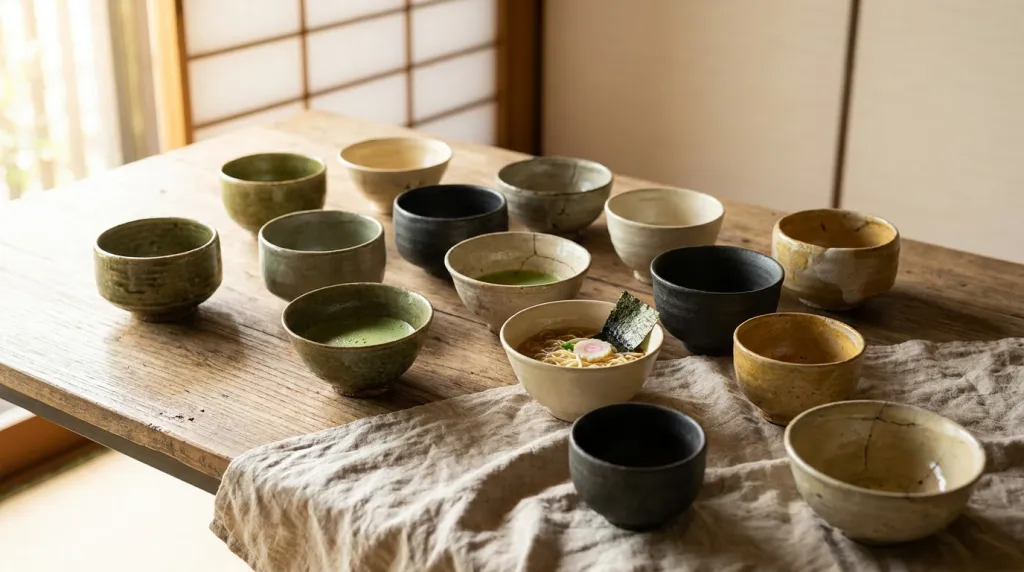
The art of the Japanese table is experiencing a renewed surge of interest, driven by a growing desire for authenticity and serenity in our modern homes. This guide will help you choose the ideal Japanese bowl by exploring its ancestral roots, from Jomon-era earthenware to the refined finishes of the Edo period. By mastering the codes of this centuries-old craft, you'll learn to turn every meal into a unique sensory experience defined by balance and refinement.
The centuries-old legacy of the Japanese ceramic bowl
Japanese tableware has aged gracefully through the centuries, pairing a timeless aesthetic with the demands of contemporary living. The bowl you hold in your hands isn't just a simple vessel — it's the product of a thousand-year-old tradition.
From ancient kilns to the modern table
The art of pottery evolved from early Jomon-era wares to the refined finishes of the Edo period. These ancestral techniques have survived the centuries. Today they find their way onto our tables, elevating every everyday meal.
Geography shapes style. Regions like Seto, the historic heart of Japanese ceramics, or Bizen, famous for its wood-fired kilns, leave their mark on each piece. Local clay determines the nuances and natural textures.
The craftsmanship of old remains the absolute benchmark. It still sets the standard for modern gastronomy today — expertise that guarantees rare authenticity.
The beauty of imperfection and the natural
The artisan favors deliberate simplicity. Rather than chasing a flawless finish, they seek the raw truth of the material. This is where the true nobility of handmade work and one-of-a-kind objects lies.
Fired clay acts as a spiritual link. It extends the surrounding natural world into your home. The object becomes a tangible bridge between humankind and the elemental forces of nature.
Here's what defines this pursuit of visual harmony:
A size guide for every culinary specialty
Now that we've explored the history, let's turn to the practical side, since every Japanese dish calls for its own specific, well-suited vessel.
The large ramen bowl for generous broths
A Japanese ramen bowl typically measures about 20 cm (8 inches) in diameter. This width lets you arrange the pork and egg harmoniously. Its 1000 ml (34 oz) capacity holds the broth generously, so you avoid any unwelcome spills.
A depth of 8 cm (about 3 inches) proves essential — it keeps the broth hot throughout the meal, so your complex flavors stay well protected.
The weight of the piece provides real stability. Thick ceramic also shields your hands from the heat — an indispensable comfort.
Rice bowls and miso soup bowls for everyday use
The rice bowl is typically flared and light, while the miso soup bowl stays narrow. This shape keeps the liquid nice and hot. Together, the two vessels complement your table perfectly.
At a family meal, the arrangement is precise — bowls are set out with meticulous care, and each person often has their own set. This reinforces a sense of belonging.
Lacquered wood is often used for soup, while ceramic — like the Mino-yaki style — dominates for rice. These materials create an interesting tactile contrast.
The distinctive chawan for the tea ceremony
The chawan has a wide, low shape. This structure makes it easier to whisk with the bamboo chasen. Its flat base allows the matcha to be blended perfectly — it's above all a technical tool.
Touch defines the entire sensory experience. You cradle the bowl in both hands to feel the glaze — a physical connection with this work of art. The moment becomes suspended in time.
Every piece tells a story through its crackling. The symbolism lies in these unique imperfections. Your bowl becomes a witness to a precious moment.
How to recognize an exceptional handcrafted piece
So how do you tell mass production apart from a true potter's work? Here are the clues to look for.
Examining glazing and firing techniques
The glaze reveals an inimitable depth of color. Admire the deep green of Oribe ware or the softness of celadon. These nuances shift depending on the piece's position in the kiln.
A drip or an ash mark is not a flaw — it's proof of authentic wood firing. These unpredictable touches reflect the object's one-of-a-kind character.
Look closely at the sheen. A handcrafted piece has a vibrant depth that mass production simply cannot replicate.
Assessing ergonomics and the density of the material
The bowl should feel natural in hand. The foot, called the kodai, provides perfect stability and lets you lift the piece with elegance.
Check the density of the clay. Quality ceramic rings when tapped and offers optimal heat resistance for your drinks.
Creating a serene atmosphere with Japandi style
Once you've chosen your bowl, the next step is bringing it into a decor that lets it shine — namely, through the Japandi aesthetic.
Pairing neutral tones with raw materials
Pair textured ceramics with your furniture. Light Scandinavian wood pairs beautifully with darker pottery. Clean lines create a soothing visual balance.
Play up the contrasts. Use soft colors like beige or charcoal gray. Natural materials like linen round out the look with a gentle touch.
Avoid clutter. The space needs room to breathe so the object can fully express itself.
Featured pieces from Japandi Style
Highlighting our signature pieces: glazed ceramic bowls with floral motifs bring a touch of poetry, evoking the gardens of Kyoto while staying thoroughly modern and functional.
Spotlighting wabi-sabi: these bowls, with their natural colors and free-form shapes, guarantee an authentic, welcoming table.
Elevate your everyday life with a genuine Japanese ceramic bowl — a true bridge between ancestral tradition and Japandi design. Choose your favorite piece now from our ramen or matcha bowls and turn every meal into a serene ritual. Your table deserves this imperfect, enduring elegance.
FAQ
Why choose a ceramic bowl over porcelain or plastic?
Choosing ceramic — especially for our ramen bowls — comes down to a pursuit of authenticity and thermal performance. Unlike plastic, fired clay is a noble material that holds the heat of your broths while offering excellent durability. Thick ceramic protects your hands from burns and provides a reassuring sense of softness and weight as you eat.
Aesthetically, handcrafted ceramics celebrate wabi-sabi, the Japanese philosophy that values natural imperfection. Where mass production chases a smooth, uniform look, our ceramic pieces reveal unique glaze variations and textures that turn every meal into a moment of connection with the material.
What are the characteristics of Seto and Bizen pottery styles?
The Seto style, originating from one of Japan's "Six Ancient Kilns," is renowned for its historic mastery of glazing. It's a refined pottery style that uses ash- or iron-based glazes to create elegant finishes. Bizen style, by contrast, stands out for its raw, earthy look. These pieces are unglazed and get their reddish-brown color from extended wood firing, letting nature draw organic patterns onto the clay.
These two traditions showcase the richness of Japan's heritage. At Japandi Style, we draw on this legacy to offer pieces that balance Seto's sophistication with Bizen's rustic strength — perfect for a serene, authentic interior.
How do you tell a rice bowl apart from a miso soup bowl?
Although they look similar, these two vessels serve distinct purposes. The rice bowl is generally more flared and lightweight, making it easy to hold up to your mouth. The miso soup bowl is typically narrower and deeper, designed to keep the liquid hot for as long as possible.
In Japanese table culture, material matters too: ceramic tends to dominate for rice, while lacquered wood is often favored for soup. For a harmonious table, we recommend pairing these textures with neutral tones like beige or charcoal gray, typical of Japandi style.
What is a chawan, and how do you use it for tea?
The chawan is a bowl specifically designed for the tea ceremony. Its shape is wide with a flat base, which allows you to whisk matcha vigorously with a bamboo chasen without obstruction. It's a work of art, held in both hands so you can feel its heft and the texture — rough or smooth — of the glaze.
Using a handcrafted chawan means embracing a moment of pause. Each piece tells a story through its crackling or irregularities. To round out your ritual of serenity, check out our matcha sets in our shop dedicated to Japandi decor.
How can you recognize the quality of a handcrafted Japanese bowl?
To spot an exceptional piece, start by examining the kodai (the bowl's foot). A well-shaped, stable foot is a sign of skilled handiwork. Tap the wall gently — dense, high-quality ceramic should produce a clear ring. Finally, look at the glaze: unpredictable drips or color variations are proof of authentic kiln firing, unlike the uniformity of factory-made products.
At Japandi Style, we value these details that give an object its soul. Whether it's a bowl with a floral motif or a piece in natural tones, we make sure every product brings that essential touch of poetry and durability to your everyday life.