
Japanese Coffee Table: The Complete Japandi Style Buying Guide
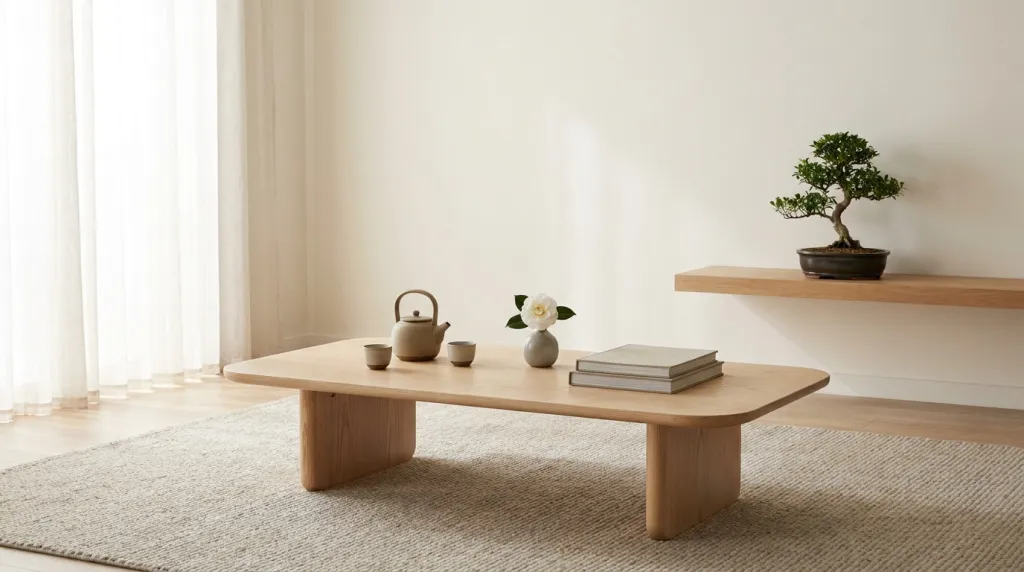
The growing appeal of minimalist interiors has put low furniture at the center of our wellness priorities. We've found that choosing a Japanese coffee table redefines the visual horizon of your living room while encouraging a natural, grounded posture. This guide walks you through selecting authentic materials like bamboo or solid wood to turn your everyday routine into a serene experience.
What to Look for When Choosing a Japanese Coffee Table
Now that we've introduced the Japandi Style world, let's get into the essentials of a well-designed Japanese-inspired living room.
The Ideal Height for a Low-to-the-Ground Living Room
A traditional Japanese table typically stands between 8 and 16 inches (20 to 40 cm) tall. This is a golden rule for keeping an open, uncluttered horizon in your living space. This choice structures the room with a sense of lightness.
The ergonomics are designed around the use of floor cushions called zabuton. A table that's too tall would throw off the line of your back. This low seating position encourages a natural, relaxed posture. It's the very essence of comfort.
This close proximity to the floor radically transforms how you perceive the space. You instantly feel more grounded. A sense of calm settles naturally into the room.
Natural Materials Favored in Japanese Style
We favor light wood species like ash or oak. These woods bring a soft, soothing luminosity. They fit perfectly into an interior seeking absolute clarity.
Touch plays a key role in your everyday experience. Natural materials aren't just about looks. They offer a warm, living texture under your fingertips.
3 Japanese Table Styles to Transform Your Space
Now that we've covered the technical criteria, let's look at which specific style can elevate your living room.
The Solid Wood Coffee Table for Authenticity
Solid wood has a raw, noble quality. The visible grain tells a unique story in every piece. Every knot becomes a striking decorative detail in a minimalist living room.
"Live edge" models keep the tree's natural, irregular edges. These tables preserve the trunk's original curve. They bring an immediate organic character to the space. It's a statement piece that draws every eye.
The Kotatsu, or the Art of the Traditional Heated Table
The kotatsu is an ingenious, convivial concept. It's a hybrid between a localized heater and a dining table. A heating element is fixed beneath the tabletop to warm your legs. It's the heart of the home in winter.
Using one requires a thick blanket called a kakefuton. It's placed between the frame and the tabletop. This creates a cozy, welcoming pocket of warmth that's also very economical day to day.
The Clean Design of Japandi-Inspired Models
This style blends Scandinavian and Japanese lines. The structures are straight, understated, and functional. Only the essentials remain, calming the mind and freeing up visual space.
The absence of superfluous ornamentation defines this aesthetic. Beauty comes from structure and just the right proportions. This creates a restful visual clarity. Your living room becomes a sanctuary of tranquility, far from outside noise.
How to Incorporate a Coffee Table into a Japandi Decor
Choosing the piece is one thing, but where you place it matters just as much for the overall harmony.
The Importance of Empty Space and Spatial Minimalism
Are you familiar with the concept of "ma"? This emptiness isn't an absence but a necessary presence. It allows furniture to fully breathe.
Smooth traffic flow should remain your top priority. Leave at least 24 inches (60 cm) of clearance around your coffee table. Open space reinforces that feeling of inner freedom.
Avoid overloading the tabletop. A single vase or a beautiful book is enough.
Pairing Textiles and Lighting for a Zen Atmosphere
Coordinate your table with a jute rug or tatami mats. These natural fibers complement solid wood beautifully. They help define the relaxation zone.
We suggest using washi paper pendant lights. Filtered light softens the furniture's edges. This soft, diffused ambiance is essential for an authentic feel in the evening.
To complete your living room, we recommend these pieces:
Why Choose an Artisan-Quality Coffee Table?
Beyond style, questions of durability and craftsmanship matter for a lasting investment.
Durability and the Aesthetics of Ceramic Finishes
We recommend tabletops with mineral or ceramic inlays. These materials offer incredible resistance to everyday scratches. It's the perfect blend of durability and visual elegance.
Wood brings its natural warmth, while ceramic offers a cool, mineral touch. This mix of textures is typical of high-end design. It creates a fascinating, modern visual balance.
Maintenance is easier too. A simple wipe with a sponge is enough to keep the tabletop looking flawless for years.
Choosing Furniture Suited to Small Urban Spaces
Look for nesting or foldable formats. These solutions are ideal for city apartments where every square foot counts.
Opt for multifunctional models. A table can serve as a desk in the morning and a dining table in the evening. That's the ingenuity of Japanese design applied to modern life. You optimize your space without ever sacrificing that zen aesthetic.
Choosing a solid wood or bamboo Japanese coffee table instantly turns your living room into a sanctuary of serenity. By favoring a low height and natural materials, you ground your everyday life in authentic, lasting comfort. Redefine your space now and enjoy a truly harmonious visual experience.
FAQ
What Is the Standard Height of a Traditional Japanese Coffee Table?
The height of an authentic Japanese coffee table is intentionally low, typically ranging from 8 to 16 inches (20 to 40 cm), with about 12 inches (30 cm) being a common standard. This specific dimension is designed for floor-level use, helping to keep an open horizon and a heightened sense of space in your living room.
This closeness to the floor is ideal for settling in comfortably on zabuton-style cushions or a floor rug. It encourages natural posture and a deep sense of calm — both defining traits of Japanese aesthetics.
What Materials Are Best for a Japanese-Style Coffee Table?
To stay true to the zen spirit, we recommend favoring natural, noble materials. Solid wood remains the top choice, especially light species like oak, ash, or walnut, which bring organic warmth and exceptional durability to your interior.
Bamboo is also a popular option for its lightness and eco-friendly appeal. For a more modern, sophisticated contrast, you can choose models with ceramic or stone tabletops, which offer remarkable scratch resistance while staying easy to maintain day to day.
What Is a Kotatsu Table and How Does It Work?
The kotatsu is a traditional heated coffee table, the true heart of a Japanese home in winter. It consists of a wooden frame fitted with an electric heating element mounted beneath the tabletop. A thick blanket, called a futon or kakefuton, is tucked between the frame and the tabletop to trap the heat.
It's an incredibly versatile piece of furniture: in winter, it creates a cozy, welcoming spot for reading or having tea. Once warmer weather arrives, simply remove the blanket to turn the kotatsu into an elegant, functional coffee table for everyday use.
How Do You Incorporate a Coffee Table into a Japandi Decor?
Successful integration comes down to balance and minimalism. We recommend pairing your table with a Japandi rug made of natural fibers or wool to help define the space. Be sure to honor the concept of "ma" by leaving about 24 inches (60 cm) of open space around the piece to allow for easy movement and let your decor breathe.
To round out the atmosphere, add Japandi lighting, like washi paper pendant lights, to cast a soft, diffused glow. A few carefully chosen accessories, such as a handcrafted ceramic vase or dried branches, are all it takes to elevate the tabletop without cluttering it.
Are There Models Suited to Small Urban Apartments?
Absolutely — Japanese design excels at optimizing space. For city living, we offer clever solutions like nesting tables or foldable models that tuck away in seconds. These pieces let you free up floor space whenever you need to.
You can also look at multifunctional tables with discreet storage drawers or lift-top surfaces. These smart pieces adapt to your changing routines, doubling as a desk for remote work or a dining table, all without ever sacrificing the minimalist elegance of your Japandi furniture.