
Japanese Futon: The Complete Guide to the Traditional Floor Bed
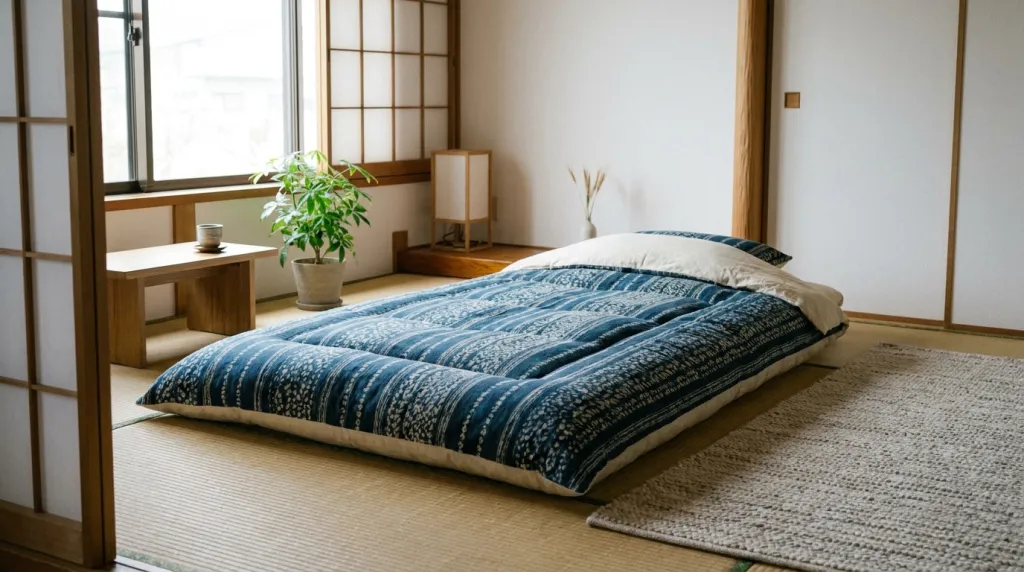
As interest in minimalist interiors and postural wellness grows, floor sleeping is moving to the center of new lifestyle habits. We're seeing the Japanese futon emerge as a healthy way to align the spine while making the most of your available space. This guide walks you through its traditional structure and helps you choose the natural materials best suited to your everyday comfort.
Understanding the structure of an authentic Japanese futon
A futon is more than just a thin mattress. Let's look at the precise assembly of natural elements designed with the body in mind. Here's what makes up this traditional bedding.
The shikibuton as the base of the floor mattress
The shikibuton is the heart of Japanese sleeping arrangements. It's traditionally filled with pure cotton. You place this mattress directly on a tatami mat. Its design promotes the firmness the body needs.
The layering of fibers is deliberate. This dense filling provides even, consistent support. It helps avoid the sagging you get with synthetic foams.
That density keeps its shape over time. Your shikibuton stays compact night after night, which supports a healthy sleeping posture.
Kakebuton and accessories for a complete set
The kakebuton is the traditional comforter. It's often filled with silk or cotton and its job is to regulate temperature.
The makura is a pillow filled with buckwheat hulls. This natural material molds to the shape of your neck, keeping your cervical spine properly aligned.
Together, these pieces create a breathable, healthy cocoon. Each element enhances the benefits of the others. We recommend the full set for the most authentic experience.
3 real benefits for your back and posture
Beyond the aesthetics, it's your spine that will thank you. Sleeping closer to the floor genuinely changes the game for chronic pain.
Firm support and spinal realignment
The floor offers a resistance that soft mattresses simply can't match. Your back settles into its natural curve without effort, and vertebral alignment happens naturally on this flat surface.
Cotton distributes weight more evenly than traditional springs. You avoid unnecessary tension when you wake up, and your shoulders no longer bear painful pressure points.
The firm support keeps your body from sinking in. That stability is the key to lasting postural correction — a simple but remarkably effective solution for back pain.
Better circulation and deeper sleep
You can turn over more easily without being held back by plush padding, which cuts down on the micro-wakings caused by nighttime movement. Firmness genuinely frees up your mobility.
Cotton and buckwheat let air circulate freely, so you're never too hot or too cold. That thermal stability helps you fall asleep faster, and your deep sleep cycle becomes more regular as a result.
An uncluttered space calms the mind before sleep. Fewer visual distractions means your brain is more ready for real recovery. The simplicity of the setup supports total rest.
How to choose the thickness and material of your mattress
Now that the benefits are clear, how do you avoid making the wrong purchase? The materials you choose determine how long your investment will last.
Organic cotton or latex for the filling
Organic cotton is the traditional choice for its breathability. It wicks away body moisture with surprising efficiency, making it the go-to option for purists.
Modern variations with coconut fiber add welcome rigidity. Natural latex offers a touch of give for those with more sensitive backs. It's an excellent compromise between tradition and comfort.
Natural materials free of chemicals reduce the risk of allergies, protecting sensitive sleepers from skin reactions. We recommend these healthy plant-based fibers.
Dimensions and weight for easy handling
The 90x200 cm and 140x200 cm sizes are the most common in Europe. They fit easily into bedrooms without crowding the space, and these dimensions offer solid, standard comfort.
A futon should be easy to fold away to free up the room. Choose a model that's manageable enough to fold daily without hassle — weight has a direct impact on how easy that is.
Heavier users need a thicker mattress for proper support, while lighter frames will be more comfortable on a thinner model. The right balance keeps you from feeling the floor underneath.
Bringing your futon into a Japandi decor
A futon isn't just a wellness tool — it's a centerpiece of design. Let's look at how to work it into a space that blends Japanese and Scandinavian style.
Choosing minimalist, functional furniture
We recommend pairing it with light wood furniture. Low nightstands or clean, simple shelving pair beautifully with a Japanese futon. Ash wood brings just the right warmth to a Japandi look.
Make the most of washi paper lighting. Pendant lights and table lamps cast a soft glow that creates a calm, muted atmosphere perfect for relaxation.
Leave some visual breathing room to encourage a sense of calm. Japanese minimalism means not overloading your walls — let the space around your sleeping area breathe. An open, uncluttered room clears the mind before bedtime.
The role of textiles and curtains in a zen atmosphere
Use curtains to soften incoming light. Natural materials like linen are the best choice — they protect your privacy while still letting in a soothing, gentle glow.
Pair your setup with natural-fiber rugs on the floor. Jute or sisal insulate the surface beneath the mattress beautifully, adding organic texture and visual warmth to the room.
Stick to neutral tones for balance. Beige, light gray, and off-white dominate this palette, tying the bedding together with the rest of the decor for a calming, cohesive look.
Caring for your futon to make it last
A Japanese futon can last for years, but it does need a bit of attention. It's not a chore, just a simple routine to keep your bed healthy.
Sun exposure and airing-out techniques
Airing your futon out in the sun is an age-old practice. UV rays naturally disinfect the cotton fibers deep down, keeping the futon consistently fresh.
Dry heat is an effective way to get rid of household pests. It's the most eco-friendly way to maintain perfect hygiene, with no need for chemical products.
Beating the mattress redistributes fibers that have become compacted, keeping the cotton from getting too dense. Your bedding regains its original softness after each session.
Protecting against moisture from Western-style floors
Floors in Western homes tend to be colder than those in Japanese homes. Without precautions, moisture can build up underneath the mattress, and that condensation can degrade the quality of the cotton over time.
A rice-straw tatami mat lets air circulate underneath. A low bed frame with closely spaced slats also works well. The key is avoiding any permanent direct contact with the floor.
Use breathable covers to protect your futon from dust, and avoid plastic entirely, since it traps moisture. This goes a long way toward preventing mold from forming.
Choosing a Japanese futon means optimal spinal alignment and natural breathability thanks to cotton. To transform your sleep, pair your shikibuton with a tatami mat and air it out regularly. Give yourself this minimalist rest today for calm mornings in a zen, lasting interior.
FAQ
What is a traditional Japanese futon?
A futon is a traditional bedding set made up mainly of the shikibuton (the floor mattress) and the kakebuton (the comforter). Unlike Western-style beds, this minimalist setup is designed to be placed directly on a tatami mat or on the floor, offering a firm, healthy sleeping surface.
We particularly love its foldable design, which frees up floor space during the day. Traditionally made with layers of pure cotton, it provides even support and excellent temperature regulation throughout the night.
What are the real benefits of a futon for back pain?
Sleeping on a futon promotes natural spinal alignment thanks to the resistance the floor provides. This firmness prevents the hips from sinking in, a common cause of lower back tension on mattresses that are too soft. By engaging your deep stabilizing muscles, it helps correct your posture over time.
Organic materials like cotton or coconut fiber distribute your body weight evenly. This reduces nighttime pressure points, which in turn limits micro-wakings and improves the quality of your deep sleep.
How do you choose the right thickness for a Japanese mattress?
The right thickness mainly depends on your body type and personal sensitivity. A traditional futon typically measures between 6 and 15 cm (about 2.5 to 6 inches) thick. We recommend thinner models for lighter frames or children, while a heavier adult will want a thicker option to avoid feeling the hardness of the floor beneath.
For a more personalized feel, you can opt for modern fillings that include natural latex for extra give, or coconut fiber for added firmness. The goal is finding the perfect balance between tradition and contemporary support.
How do you incorporate a futon into a Japandi-style decor?
To create a calm, uncluttered atmosphere, we suggest pairing your futon with minimalist light-wood furniture. A low Japandi nightstand and a washi-paper Japandi lamp will cast the kind of soft light that's perfect for winding down.
Round out the look with natural textiles like a linen Japanese-style curtain. Favor neutral tones like sandy beige or charcoal gray, and you'll turn your bedroom into a true wellness sanctuary true to the Japandi furniture aesthetic.
What are the best tips for maintaining a futon and making it last?
Regular care is the key to longevity. We recommend folding your futon every morning to let the floor breathe, and using a tatami mat to prevent condensation. Airing it out in the sun once a week naturally disinfects the fibers and removes residual moisture.
To keep it plush, be sure to beat your mattress and flip it regularly (about once a month). Using a washable protective cover is also essential to shield the filling from stains and allergens without compromising its breathability.