
Japanese Lamp Guide: How to Choose the Perfect Japandi Light Fixture
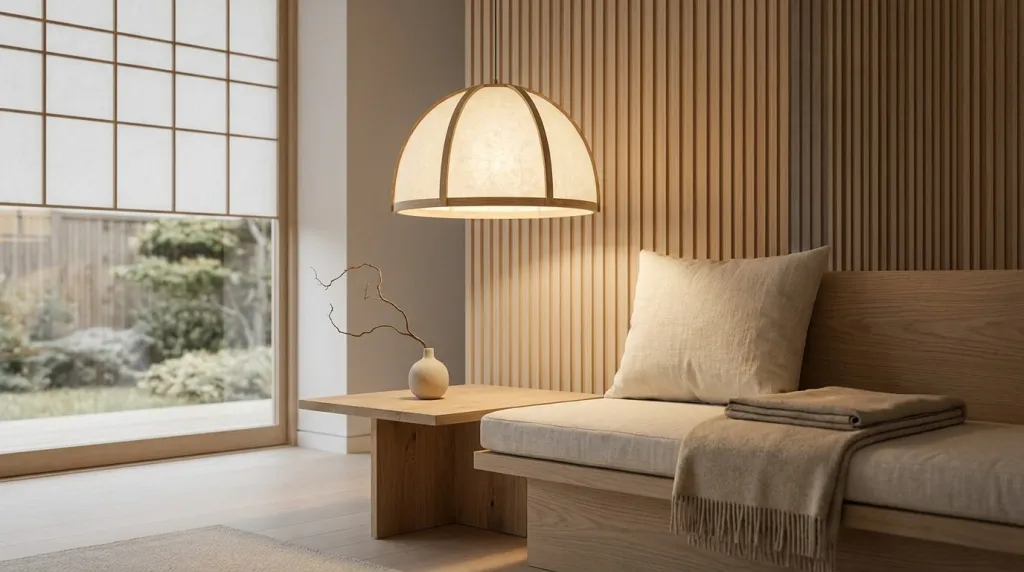
You want to turn your home into a sanctuary of calm, where every shadow and reflection contributes to your everyday sense of well-being. In this guide, you'll discover how a Japanese lamp can bring together Scandinavian minimalism and Japanese elegance to create a warm, soothing atmosphere. We break down the authentic materials and ideal color temperatures to help you get your living space just right.
The Role of the Japanese Lamp in Japandi Style
Lighting is never just a utilitarian feature. In a hybrid interior, it sets the soul of the space, orchestrating an atmosphere built for calm.
Balancing Scandinavian Minimalism and Wabi-Sabi Philosophy
Japandi style skillfully blends Nordic simplicity with Japanese warmth. The result is a design where function finally meets a kind of visual poetry.
The concept of wabi-sabi celebrates the beauty of natural, imperfect objects. Our paper lamps embody this pursuit of authentic simplicity, bringing an organic texture that's essential to any home.
Clean, simple shapes instantly calm the mind. We favor a rigorous restraint that lets every volume in your room breathe.
The visual harmony this creates transforms your interior. This subtle blend becomes a genuine peaceful retreat, far removed from the noise of the outside world.
The Sculptural Role of Lighting in Your Living Space
A lamp stands as a true work of art at the heart of your decor. It becomes the focal point, its design instantly drawing the eye of anyone who walks in.
Geometric lines lend your living room a reassuring structure. They foster a sense of order and deep calm, giving the eye clean, precise contours to rest on.
Even when switched off, a Japanese lamp keeps its natural elegance. It decorates the space with a quiet but confident presence, a testament to rare craftsmanship.
A beautiful light fixture radically shifts the energy of a room. It actively contributes to your everyday well-being by elevating your immediate surroundings.
3 Authentic Materials for a Long-Lasting Lamp
Now that we've covered the aesthetics, let's look at the raw materials that bring these exceptional pieces to life.
The Organic Lightness of Washi Paper and Light Wood
Traditional washi paper, made from natural fibers, casts a soft, diffused glow. Its unique fibrous structure turns lighting into a soothing clarity, eliminating harsh contrasts in the room.
Light wood stands out as a valuable ally for your interior. Here are its main strengths:
The pairing of wood and paper creates a direct connection to the natural world, fostering a serene atmosphere.
These noble materials age gracefully. They gain character over time without losing their beauty or their durability.
The Mineral Presence of Ceramic and Sculpted Resin
At Japandi Style, we offer models in sculpted resin. This material allows for bold, modern shapes, offering a durable and stylish alternative to the classics.
Ceramic is ideal for lamp bases. Its density brings important physical and visual stability, and its rough or smooth textures add depth to the decor.
These material choices guarantee remarkable durability. These lamps are built to last.
Mastering the Mood Through Kelvin Warmth
You've chosen your material, but it's the color of the bulb that will really transform how a room feels.
Choosing Warm Tones for a Serene Atmosphere
We recommend color temperatures between 2200K and 2700K. This range mimics candlelight and encourages relaxation after a long day. It's the secret to a truly welcoming home.
Harsh, bright light breaks the cozy mood you're after. It tends to evoke offices or hospitals. We steer clear of cold white lighting to protect your sense of calm.
The brain naturally associates these warm, orange-toned hues with rest. That warm glow invites instant, absolute calm.
Opt for LED filament bulbs. They combine energy efficiency with a wonderfully retro look.
Why Lampshades Matter for Even Light Diffusion
Cylindrical shades project light both upward and downward, creating a restful, indirect glow. The cast shadow then becomes a decorative element in its own right.
Beige or cream shades filter the light to soften harsh shadows. Your room feels larger and gentler as a result, which is essential for optimal everyday visual comfort.
Here are our recommendations for extra comfort:
A good lampshade protects your eyes. It also decorates your space with elegance.
Bringing Your Lighting Into Harmony With Furniture and Textiles
Once you've mastered the lighting, the last step is weaving it seamlessly into your furniture and favorite pieces.
Pairing Table Lamps With Wood Furniture
Place a Japanese lamp on your minimalist nightstand. Japandi Style's light wood pairs beautifully with rice paper, and this duo creates instant visual cohesion.
Bring your shelves to life by placing a lamp among your books. This light source breaks up the monotony of flat, horizontal surfaces. Vary the heights to subtly shape the depth of your room.
Color unity reinforces the feeling of calm. Choosing the same wood tone for the lamp base and your furniture creates a perfect blend.
Avoid unnecessary clutter around your light sources. Give the object room to breathe so its glow can fully express itself in the room.
Punctuating the Space With Textiles and Accessories
Play with subtle color echoes. A beige lampshade can quietly pick up the weave of a rug or the tone of natural linen curtains.
Pair your lamps with ceramic vases or understated frames. These elements round out the scene without ever overwhelming the eye. Favor organic shapes to keep that Japanese sense of balance.
Don't forget cushions and poufs. These textiles bring the Scandinavian softness needed to balance out the crispness of Japanese lines.
Every detail finally finds its place. Your home becomes a true haven of softness, perfect for rest and quiet reflection.
Elevate your home by pairing noble wood, washi paper, and ceramic for a perfect wabi-sabi harmony. Choose your Japanese lamp at Japandi Style today and turn your living room into an absolute sanctuary of calm. Treat yourself to this sculptural, long-lasting clarity before our exclusive designs sell out.
FAQ
Why Choose a Japanese Lamp for a Japandi Interior?
A Japanese lamp captures the very essence of Japandi style, fusing Nordic functionality with the poetry of Eastern minimalism. It does more than light your room; it acts as a true sculptural centerpiece, striking a visual balance between simplicity and warmth. By choosing a fixture with clean, geometric lines, you foster a sense of order and deep calm throughout your home.
Whether lit or unlit, this light source transforms the energy of your living space. Natural materials like washi paper or light wood celebrate wabi-sabi philosophy, prizing authenticity and simplicity. It's the essential piece for creating a peaceful retreat away from the daily rush.
What Materials Should You Choose for a Long-Lasting Japanese Lamp?
To ensure your decor's longevity and beauty, we recommend noble, authentic materials. Washi paper is an exceptional traditional option, offering soft, diffused light that eliminates harsh contrasts. For a sturdy structure, light wood is ideal thanks to its natural durability and unique grain, which brings an immediate feeling of warmth.
If you're after a more mineral or modern presence, our sculpted resin or ceramic models offer sophisticated alternatives. Ceramic's density ensures perfect stability for lamp bases, while resin allows for bold shapes. These organic materials create a direct link to nature and grow more characterful with age.
What Color Temperature (Kelvin) Should You Choose for Your Lamp?
Choosing the right bulb is key to setting the mood of your space. We recommend sticking to temperatures between 2200K and 2700K. A 2200K bulb gives off a very warm, yellow glow similar to candlelight, perfect for an intimate, relaxing mood. 2700K, meanwhile, offers a more versatile, golden warm white, ideal for welcoming everyday use.
Psychologically, these warm tones signal to the brain that it's time to unwind, encouraging calm and relaxation. By contrast, avoid cold white light, which can feel harsh and break the cozy feel you're going for. LED filament bulbs are a great way to combine energy savings with a retro look.
How Does the Lampshade Affect Light Diffusion?
The lampshade plays a crucial technical role in achieving even lighting. Cylindrical shapes, for example, project light both upward and downward, creating a restful, indirect glow. We favor beige or cream shades, since these tones filter the light to soften harsh shadows, making your room feel visually larger and gentler.
The choice of fabric, such as linen or cotton, ensures optimal eye protection while adding a touch of sophistication. For the best visual comfort, we suggest paying attention to the fabric's opacity and the lamp's placement to avoid any direct glare in your field of view.
How Do You Coordinate Your Japanese Lamp With Your Furniture?
Successfully integrating a light fixture comes down to creating visual echoes. Pairing a light-wood table lamp with a minimalist nightstand creates a natural, cohesive look. You can also punctuate your space by echoing your lampshade's tone in linen curtains or a neutral-toned rug, tying every element of the room together.
To liven up your shelves, place a small lamp among understated objects and organic vases; this breaks up the monotony of flat surfaces by playing with height. We recommend not overcrowding the space around your lamp so it can shine fully, turning your home into a true haven of softness.