
Japanese Noren Curtains: The Complete Guide to This Traditional Door Curtain
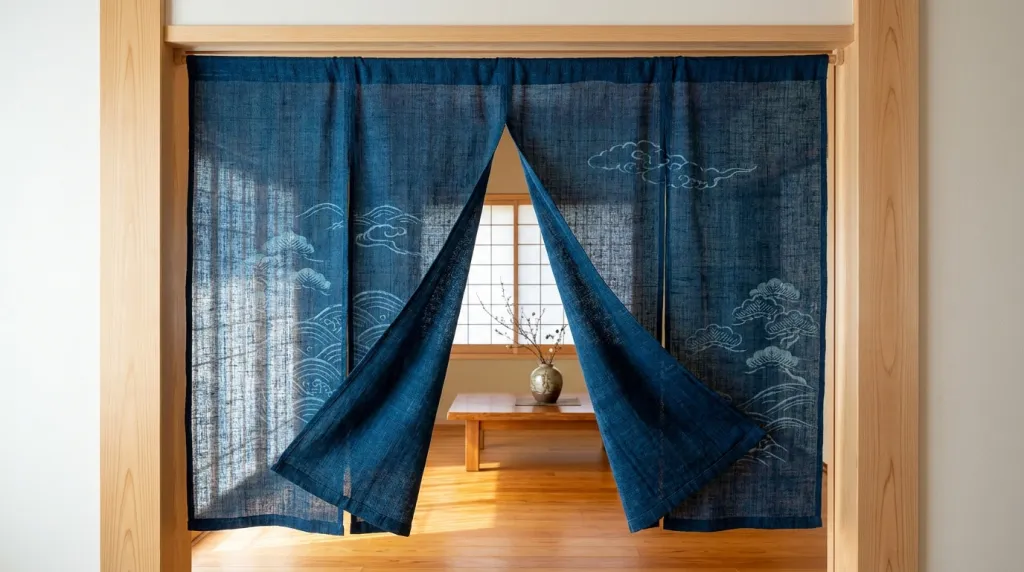
You want to define your kitchen space without cutting off airflow or natural light between your living areas. Installing a Japanese noren gives you a fluid textile divider that structures your home with artisanal elegance while still preserving your privacy. Let us guide you through this traditional accessory so you can bring authentic character to your decor.
Understanding the Heritage and Purpose of the Traditional Japanese Noren
After a quick look at Japandi aesthetics, let's dive into the fascinating history behind this curtain.
A Symbolic Threshold Between Commerce and Privacy
Originally, the Japanese noren served as a distinctive sign for Japanese shops. Hanging one at the entrance clearly signaled to customers that the establishment was open and ready to welcome them.
This sturdy textile also played an essential protective role in daily life. It effectively blocked dust from the street and shielded interiors from direct sun. It also kept prying eyes from passersby out of the home.
Beyond its practical uses, it establishes a very gentle symbolic boundary. Passing through its panels lets you leave the public world behind and step into a private one. You shift from one world to another in an instant.
Today, this centuries-old tradition hasn't lost any of its relevance. It lives on gracefully in modern homes, marking out living spaces with the same quiet elegance.
Defining Space Without Closing It Off
The split-panel structure of this curtain is a feat of ancestral ergonomics. The vertical panels let you move through freely without using your hands. Air flows through unobstructed.
Unlike a swinging door, a noren never takes up floor space. It brings refined verticality to an opening that would otherwise sit bare. It's a lightweight solution for organizing a small city apartment.
The decorative effect is immediate as soon as the textile is hung. It instantly dresses up a bare doorframe or a nook. It becomes a graceful stand-in for any rigid partition.
Here are some of the benefits we especially value for your interior design:
Choosing Noble Materials and Motifs Rich With Meaning
But beyond its function, it's really the quality of the craftsmanship that makes an authentic noren special.
Cotton and Linen for a Flawless, Natural Drape
Heavy cotton offers perfect opacity to preserve your privacy. Linen, on the other hand, brings a rawer, airier texture. Both natural fibers *hold up beautifully over time*. It's a choice with real character.
At Japandi Style, we favor organic fibers. They honor traditional Japanese weaving methods. The feel is incomparable. You'll notice the difference in quality the moment you touch it.
A quality textile should hang nice and straight. Natural fibers respond well to ambient humidity. They don't wrinkle easily. Your curtain keeps its elegant look without any daily effort.
These materials age beautifully. They develop a lovely patina over the years.
The Meaning Behind Traditional and Contemporary Motifs
The koi carp represents strength and perseverance. Bamboo evokes flexibility and purity. Every design tells a specific story. Your choice becomes a powerful personal symbol.
Geometric patterns blend more easily into today's interiors. Clean lines or zen circles bring a sense of calm. The choice depends on the energy you want in the room. It's a matter of visual balance.
Understated tones like indigo or beige are always safe bets. They work anywhere.
Bringing a Japanese Curtain Into a Polished Japandi Space
Once you've settled on the material and pattern, the next step is knowing how to work it tastefully into your hybrid decor.
Balancing Scandinavian Simplicity With Eastern Craftsmanship
The Japandi style embodies the fusion of Nordic comfort and Zen aesthetics. We see the noren as the perfect bridge connecting these two distinct yet complementary worlds.
This textile softens the sometimes-cold rigor of minimalist furniture. It adds an essential tactile warmth to your home. Its neutral tones pair beautifully with light Scandinavian wood.
Choosing linen or raw cotton reinforces the organic feel. This approach creates a soothing, authentic atmosphere in your home. That sense of well-being becomes immediate.
Visual harmony is achieved. Simple shapes are all it takes.
Strategic Placement to Elevate Every Room
Hanging a noren between the kitchen and living room is a genuinely smart move. It hides dishes or passing clutter. It's a far lighter solution than a swinging door.
We also recommend using these textiles on walls. A beautiful noren makes a wonderful substitute for a traditional frame. It adds depth and unique texture to bare walls.
Consider the entryway or a closet. The curtain conceals your shelves with rare elegance. It defines the space without ever making it feel closed in.
Here are a few ideal setups:
Mastering Installation and Care for Your Handcrafted Textiles
A few simple steps at hanging and cleaning time will keep your noren looking beautiful.
Simple Hanging Techniques for a Professional Finish
A tension rod is the ideal solution for renters. It installs without drilling a single hole in the wall. Its pressure system keeps your surfaces intact.
Take your measurements carefully. The curtain should end a few inches below the top of the frame. Double-check the width of your opening before buying. Good alignment guarantees a flawless look.
Choose a traditional wooden rod for a more authentic look. Use a bamboo branch to hang your textile. It reinforces the handcrafted feel of your decor.
Installation takes less than five minutes. It's a simple step that transforms your space.
Cleaning Tips to Protect Natural Fibers
We recommend hand washing whenever possible. Use lukewarm water and a mild soap. This prevents damage to delicate cotton or linen fibers.
Watch out for artisanal dyes. Washing on too hot a machine cycle could cause your precious patterns to bleed. Use a cold, delicate cycle if needed. Never put it in an electric dryer.
Lay the noren flat on a clean towel to dry. Avoid direct sunlight entirely to protect the vibrancy of the original colors.
A true bridge between tradition and modernity, the Japanese noren shapes your spaces with natural elegance while preserving your privacy. Bring home this traditional cotton or linen door curtain today to add lasting Zen serenity and aesthetic harmony to your space. Elevate your everyday with exceptional craftsmanship.
FAQ
What Is a Japanese Noren and What Was Its Traditional Purpose?
A noren is a traditional Japanese door curtain, easily recognized by its split structure made up of several vertical panels. First used as far back as the Heian era, it originally protected against wind, dust, and sun while preserving the privacy of homes. In commerce, it functions as a sign: its presence at an entrance signals that a business is open and ready to welcome customers.
Beyond its practical role, this textile embodies the reputation and identity of a shop or family. At Japandi Style, we carry on this tradition with pieces that blend that ancestral heritage with a contemporary look, helping you shape your spaces with natural elegance.
What Sizes Do Japanese Door Curtains Come In?
There's a *wide variety of sizes* suited to every use. The Han-noren, roughly 22 inches long, is the most common style for shop and restaurant entrances. For greater light-blocking or to fully screen a view, the Naga-noren, at around 5 feet 3 inches, is the better choice. On the other end of the spectrum, the Mizuhiki noren is a very short style, used mainly for decoration.
Our collections offer standard sizes such as 33 x 59 inches or 33 x 35 inches. Some of our styles feature a fine center seam, letting you split the fabric at the height you need for a perfect fit to your doorframe.
How Do You Choose a Noren Pattern Based on Its Symbolism?
Choosing a Japanese motif is never just a style decision, since every design carries a specific meaning. The koi carp symbolizes strength and perseverance, while bamboo represents purity and flexibility. For good luck, look to the Seigaiha wave pattern, or choose cherry blossoms if you want to celebrate renewal and fleeting beauty.
For a more minimalist look that fits a Japandi style, we recommend simple geometric patterns or Zen characters. These clean, understated designs bring a sense of absolute calm to your home, whether you're dividing a kitchen from a living room or dressing up a closet.
What Are the Best Ways to Hang and Secure a Noren?
Installing a noren is remarkably simple and requires no heavy-duty work. The most common method is to use a tension (expandable) rod slid through the top hem of the curtain. This solution is ideal for renters since it requires no drilling and can be set up between two walls in under five minutes.
For a more authentic, handcrafted look, you can opt for a wooden rod or a bamboo branch mounted on standard curtain rod brackets. This approach highlights the natural character of the textile and plays up the organic feel of your decor.
How Do You Care for and Wash a Cotton or Linen Noren?
To preserve the beauty of the natural fibers and the vibrancy of the colors, we recommend hand washing in cold or lukewarm water with a mild detergent. If using a machine, be sure to select a delicate cycle at 86°F (30°C) or lower. Never use chlorine bleach or an electric dryer, as intense heat can damage the patterns and shrink the fabric.
Dry the curtain flat, ideally on a clean towel, avoiding direct sunlight to protect the pigments. A light ironing on the reverse side at a low temperature will restore the cotton or linen's flawless drape and original structure.