
Japanese Pants: Styles and How to Wear Them
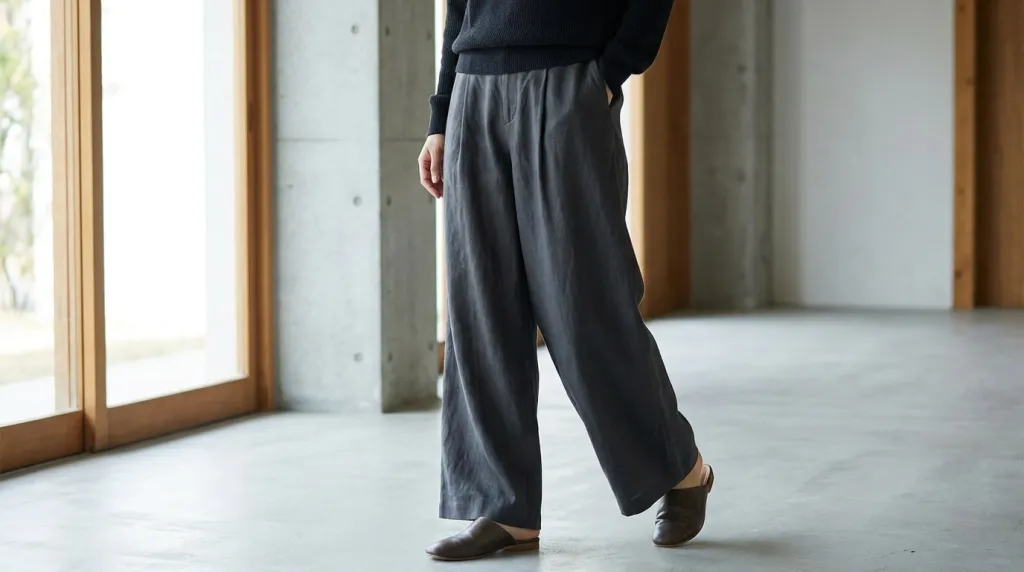
Contrary to popular belief, the rigid structure of the hakama isn't about aesthetics at all — it embodies seven ancient moral virtues. Our guide reveals how the modern Japanese pant reconciles this spiritual heritage with absolute urban comfort. You'll discover natural-fiber cuts designed to flatter your silhouette while honoring a philosophy of sustainable, calming fashion.
Heritage and structure of classic Japanese cuts
Having explored the broad appeal of Japanese style, let's dig into the historical roots that still shape these cuts today.
The hakama and its pleated geometry
The hakama originally protected the legs of samurai horsemen. This imposing garment signaled high social rank. Today, it remains a centerpiece of traditional ceremonies and martial arts. Its wide cut is instantly recognizable.
The symbolism behind the hakama's seven pleats is fascinating. Each pleat represents a specific bushido virtue, such as courage or loyalty. This rigid structure gives the pant a unique, majestic drape.
The visual effect of this geometry is striking. The pleats hold a perfectly structured silhouette despite the substantial volume of fabric used.
The monpe, or the aesthetics of workwear
The monpe stands out as the utilitarian pant of Japanese farmwomen. Its design once prioritized freedom of movement in the fields. It's considered the direct ancestor of the modern casual pant.
Its distinctive structure tapers at the ankles to keep tools out of the way. This billowy cut offers exceptional thermal comfort. The sturdy fabric is built to last. Today, its vintage, authentic look is what people love most.
This piece has become a true symbol of resilience. It champions practical fashion, free of unnecessary frills, favoring function over appearance.
The waist, often elasticized or tied, plays a major role. It allows the pant to adapt perfectly to any body type, with zero effort.
3 modern takes on the Japanese pant worth adopting
These ancestral cuts have evolved into urban styles that fly off the shelves in specialty shops.
The wide-leg cut for freedom of movement
Today's urban fashion is all about oversized silhouettes. The wide-leg Japanese pant fits perfectly into this trend. It breaks away from the classic fitted silhouette.
Visual balance is key here. A well-defined high waist structures the whole look without ever appearing sloppy.
The Japandi-inspired sarouel
Japandi style blends Nordic minimalism with Japanese aesthetics. The sarouel embodies this fusion through its simplicity and comfort. Busy patterns are avoided in favor of solid tones. It's the ultimate loungewear piece.
The low-slung crotch is its defining feature. It creates a relaxed vibe and a highly sought-after, unconventional silhouette.
This style works just as well at home as it does out in the city. The key is choosing the right fabric.
The elastic-waist linen pant
Linen is the go-to fabric for everyday wear. It lets skin breathe while staying elegant. It's a versatile choice for every season.
The adjustable waistband is a major plus. It guarantees total comfort no matter your body type or activity level.
Here are the notable benefits of this natural fiber:
How to style your Japanese pant with flair
Once you've chosen your pant, the real challenge lies in the art of pairing it with the right pieces for a cohesive look.
Pairing with a Japanese jacket or a haori
Layering volumes is a distinctly Japanese art form. Wearing an open haori over a wide-leg Japanese pant creates fluid movement. Playing with proportions and lengths adds dynamism to the silhouette. The overall effect radiates instant calm and confident style.
Stick to understated colors like navy, gray, or beige. These tones honor the zen spirit and make it easier to mix and match. Avoid excess to keep the visual balance intact.
A short hanten-style jacket also works well. It adds a more structured, cozy touch in winter, ideal for everyday wear.
The key is not to let the silhouette look bulky. Keep one close-fitting element if needed to structure the overall look.
The role of accessories and traditional geta
Shoes are what pull your look together with precision. Wooden geta are perfect for a fully traditional style. They force a slow, elegant gait, transforming your posture.
If wood feels intimidating, opt for minimalist sneakers instead. The goal is to maintain a clean line. Accessories should never overload the outfit if you want to keep it elegant.
Add a Japanese fabric bag, like a knot bag or a kinchaku pouch. This small detail reinforces the aesthetic coherence of your look. It's a practical, understated choice.
Also consider split-toe tabi socks. They're essential if you're wearing strappy sandals, to respect traditional Japanese style codes.
A commitment to ethical, sustainable fashion
Beyond aesthetics, adopting these Japanese-inspired garments is also a conscious choice for the planet.
Prioritizing natural, breathable fibers
Quality cotton and linen offer real thermal benefits. They keep you cool in summer and insulated in winter. These natural materials are gentle on sensitive skin. It's a simple luxury that's essential day to day.
These textiles hold up remarkably well over time. Unlike synthetics, they don't lose their shape after just a few washes. That's a mark of durability.
The Japandi Style shop favors these premium materials. That guarantees a product that's healthy and comfortable to wear.
Choosing natural fibers also means limiting microplastics. It's a concrete step for the environment.
The philosophy of clothing longevity
Investing in timeless pieces is a smart move. It breaks the cycle of disposable fashion. A Japanese-style pant never really goes out of style.
There's a strong link between well-being and simplicity. Owning less, but better, brings peace of mind. Your wardrobe becomes a sanctuary of calm. You feel lighter wearing clothes that actually mean something.
Quality construction ensures your clothes last a long time. That's the very essence of mindful consumption.
Adopting a Japanese-style pant means pairing the heritage of the hakama with the elegance of sustainable linen. Structure your silhouette with a haori for the perfect balance of comfort and distinction. Elevate your wardrobe now with these timeless cuts to embody everyday serenity and a truly one-of-a-kind style.
FAQ
What are the different styles of traditional Japanese pants?
The Japanese wardrobe offers a fascinating range of cuts, from the famous hakama — a pleated skirt-pant once worn by samurai — to the monpe. The latter, a true ancestor of the casual pant, was originally agricultural workwear designed for freedom of movement and durability.
Today, these traditions live on in modern versions like the high-waisted wide-leg pant or the Japandi-inspired sarouel. These pieces blend zen aesthetics with contemporary comfort, ideal for anyone seeking a distinctive, understated silhouette.
How do you wear a Japanese pant day-to-day?
To work a Japanese pant into your current wardrobe, the key is balancing proportions. You can pair a wide-leg linen style with a Japanese jacket or haori for a fluid look. For a more urban approach, a simple fitted t-shirt will structure your silhouette while showing off the pant's generous cut.
We recommend sticking to understated, natural tones to preserve that sense of serenity. Whether you go for a full Japanese look or mix in Western pieces like minimalist sneakers, the key is letting the garment express its own elegance.
What is the meaning behind the seven pleats on the hakama?
Each pleat on the hakama invites reflection, symbolizing one of the seven core virtues of bushido. These pleats represent benevolence (Jin), justice (Gi), courtesy (Rei), wisdom (Chi), sincerity (Shin), loyalty (Chugi), and honor (Meiyo). Wearing this garment means immersing yourself in a profound ethical and spiritual heritage.
This geometric structure isn't just symbolic — it also gives the pant a unique shape and presence. It's a reminder that Japanese fashion isn't just about appearance; it's rooted in a philosophy of life where every detail carries real meaning.
What shoes go best with a wide-leg Japanese pant?
Footwear is essential to completing your outfit. For total authenticity, traditional wooden geta are ideal, giving you an elegant, rhythmic gait. They pair perfectly with tabi socks to honor the classic codes.
If you prefer a more modern option for getting around the city, sleek sandals or minimalist flats will pair beautifully with the fluid lines of our Japandi clothing for men and women. The goal is to keep the overall silhouette light and clean.