
Japanese Socks: The Complete Guide to Tabi and Traditional Patterns
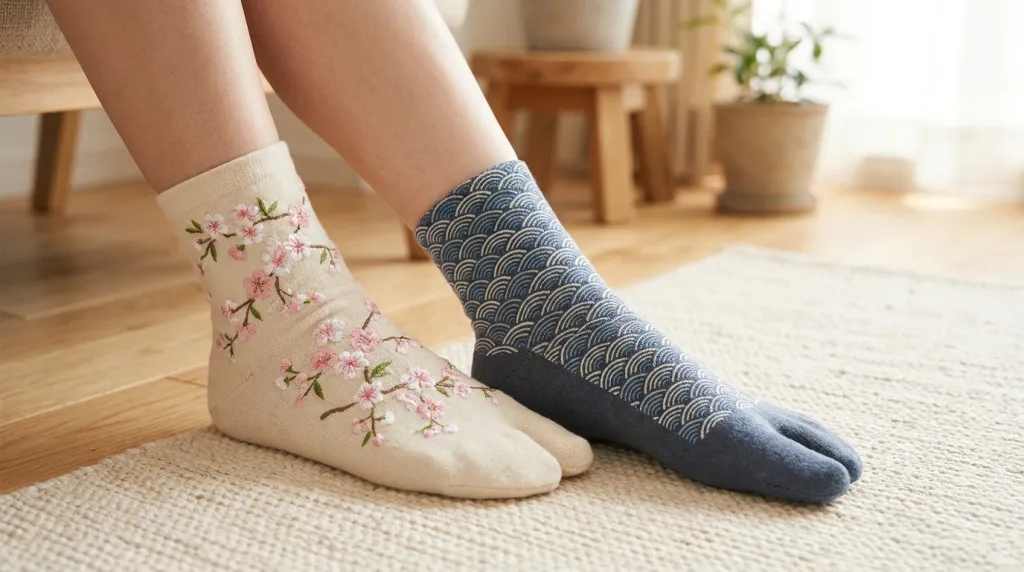
Nearly 600 years of history stand behind the unique design of tabi, born in the 15th century to fit perfectly with the straps of traditional sandals. We invite you to discover how these Japanese socks can transform your everyday posture by freeing the natural movement of each toe. Blending the elegance of ancestral patterns with modern ergonomics, this accessory becomes a true pillar of both your comfort and your style.
The Wellness Edge of Split-Toe Japanese Socks
After exploring the unique aesthetic of Japandi Style, let's get into the heart of the matter: the age-old comfort of your feet.
The Functional Origins of Traditional Tabi
Born around the 15th century, split-toe socks first met a practical need. They allowed both laborers and nobility to maintain a solid foothold.
These accessories were the perfect complement to zori sandals. The separated toe made it easy to slip the straps into place. Metal fasteners called kohaze ensured a precise, secure fit.
Immaculate white symbolized purity during Shinto rituals. This garment embodied a deep connection to the earth. Today, we carry that spiritual and practical heritage forward.
Ergonomic Benefits for Posture and Feet
Isolating the big toe radically transforms your overall stability. The foot regains its natural width. Contact with the ground becomes more intuitive and balanced.
This structure reduces trapped moisture between the toes. It also limits the friction responsible for irritation. It's a mark of impeccable hygiene for everyday life.
Split-toe walking actively stimulates the reflex zones on the sole of your foot. Every step encourages better blood circulation. Your feet regain lasting, natural vitality.
3 Ancestral Patterns to Elevate Your Style
But beyond ergonomics, these accessories are true canvases for Japanese artistry.
The Geometry of Seigaiha Waves and Sakura
The Seigaiha pattern symbolizes eternal peace and resilience through time. These concentric half-circles depict a calm ocean. They promise an unbroken flow of happiness for you.
Sakura embodies spring renewal and fleeting beauty. This cherry blossom evokes the gentleness of wabi-sabi. It celebrates impermanence with natural, poetic elegance.
Wear Seigaiha to add structure to your most understated outfits. Sakura brings a welcome lightness to your everyday looks. These patterns are perfect for brightening up a minimalist, polished style.
The Tsuru Crane and Koi Carp for Longevity
The Tsuru crane is a sacred symbol of fidelity and longevity. This majestic bird represents nobility in Japanese mythology. It accompanies your every step with a protective, serene presence.
The Koi carp illustrates quiet strength and remarkable perseverance. It swims upstream as a symbol of courage. It's an emblem of triumph over adversity.
These animals appear on the fabric in vivid, precise colors. The contrast instantly energizes your feet. These Japanese socks turn a simple functional accessory into a bold, authentic statement piece.
How to Style Your Tabi with a Modern Wardrobe
Wearing ancestral patterns is one thing; knowing how to work them into your everyday look is another.
An Authentic Pairing with Geta Sandals
Choosing geta calls for a certain consistency to pull off a traditional look. Opt for light-colored wood for a clean, calming style. Japandi Style's designs pair perfectly with this aesthetic. It's the classic historic duo.
The fit of the strap over the tabi sock needs to be precise. The thong should slide comfortably into the gap between the toes. This ensures optimal support while walking. Your foot finally gets to breathe.
Play up the wood's natural beauty by contrasting it with the sock's patterns. Mixing textures creates an interesting, warm visual depth. It's a bold choice that expresses your personality. That's how you strike the right balance.
The Stylish Contrast of Urban Sneakers
Dare to pair your tabi with low-top sneakers for a bold statement. This urban look breaks the classic rules with quiet confidence. It's a hugely popular trend in Tokyo right now. Comfort meets the avant-garde.
Use colorful patterns to liven up a simple outfit. A patterned pair of socks can instantly refresh a pair of raw denim jeans. Contrast is the key to a well-executed look. Don't be afraid to embrace these vibrant tones.
Build a visual bridge between Scandinavian minimalism and Japanese artistry. That's the very essence of the Japandi style we love. Simplicity meets originality in perfect harmony. Your wardrobe gains both depth and serenity.
Choosing Materials for Lasting Durability
For this style to last, it's worth paying close attention to the quality of the fibers used.
Choosing Combed Cotton and Natural Fibers
Combed cotton far outperforms ordinary synthetic blends. Its long fibers hold their shape through repeated washes. The result: your socks won't pill.
Premium materials offer ideal breathability for everyday wear. These natural fibers wick moisture away efficiently. Your feet stay *dry and perfectly comfortable*.
A tight weave provides welcome softness in high-friction areas. Sensitive skin notices this quality texture right away. Japandi Style favors these silky-smooth finishes for your comfort.
Spotting High-Quality Craftsmanship
Take a close look at the seam strength around the toe separation. That's the main stress point on Japanese socks. Reinforced stitching prevents premature tearing.
Check the elasticity of the ribbed cuff to ensure a secure fit without uncomfortable pinching. The sock should stay in place without digging into your ankle. That's the secret to comfortable everyday wear.
Dense knitting is the best defense against heel wear. This tight construction ensures greater longevity through every season. Quality is instantly apparent, both to the touch and to the eye.
Choosing our Japanese socks means combining the ergonomics of tabi with the rich symbolism of Sakura or Seigaiha patterns for lasting comfort. Add this touch of serenity to your modern wardrobe today by choosing the quality of combed cotton. Elevate your every step with the timeless elegance of Japanese style.
FAQ
Why do Japanese socks have a separated toe?
Traditional tabi were designed as early as the 15th century to meet a specific functional need: allowing the wearer to put on strapped sandals, such as geta or zori. This distinctive separation between the big toe and the other toes ensures optimal stability and a secure fit for the footwear while walking.
Beyond practicality, this structure promotes natural posture and better blood circulation. By freeing the movement of the toes, these socks turn every step into a moment of comfort, while respecting the foot's anatomy, which is often compressed in conventional socks.
What are the health benefits of split-toe socks?
Wearing split-toe socks offers a number of ergonomic benefits. They promote natural toe alignment, which helps prevent bunions (hallux valgus) and strengthens the muscles of the foot. The separation also reduces friction and moisture between the toes, lowering the risk of irritation or fungal infections.
With better ground feel, you gain improved balance and stability. This stimulation of reflex zones activates microcirculation, which can help people who are sensitive to cold maintain a more comfortable body temperature. It's a real boost to your everyday comfort.
What do the traditional patterns on the socks mean?
Each pattern on our Japanese socks tells an ancestral story. Seigaiha, with its concentric waves, symbolizes peace and resilience, while Sakura (cherry blossom) evokes renewal and the fleeting beauty of spring.
For those drawn to symbols of strength, the Koi carp represents perseverance and triumph over adversity. The Tsuru crane, meanwhile, is a sacred emblem of longevity and fidelity. These patterns turn a simple fashion accessory into a piece rich with meaning and values.
How can you incorporate Japanese socks into a modern look?
The most authentic pairing is to wear your tabi with wooden geta sandals for a clean, traditional style. That said, the current trend favors a stylish contrast: pairing colorful patterned socks with urban sneakers.
In true Japandi spirit, you can blend Scandinavian simplicity with Japanese artistry by letting a subtle pattern peek out from raw denim jeans or cropped pants. It's an elegant way to build a visual bridge between minimalism and tradition, all while enjoying exceptional comfort.
What material is best for durable socks?
For maximum longevity, we recommend choosing combed cotton or natural fibers like wool and silk. These premium materials offer excellent breathability, wick away moisture, and hold up better to repeated friction than purely synthetic blends.
Also check the density of the knit and the strength of the seams around the toe separation. High-quality craftsmanship ensures the sock will keep its shape and softness wash after wash, making it a durable investment for your Japandi wardrobe.