
Japanese Tenugui: The Versatile Handcrafted Cloth
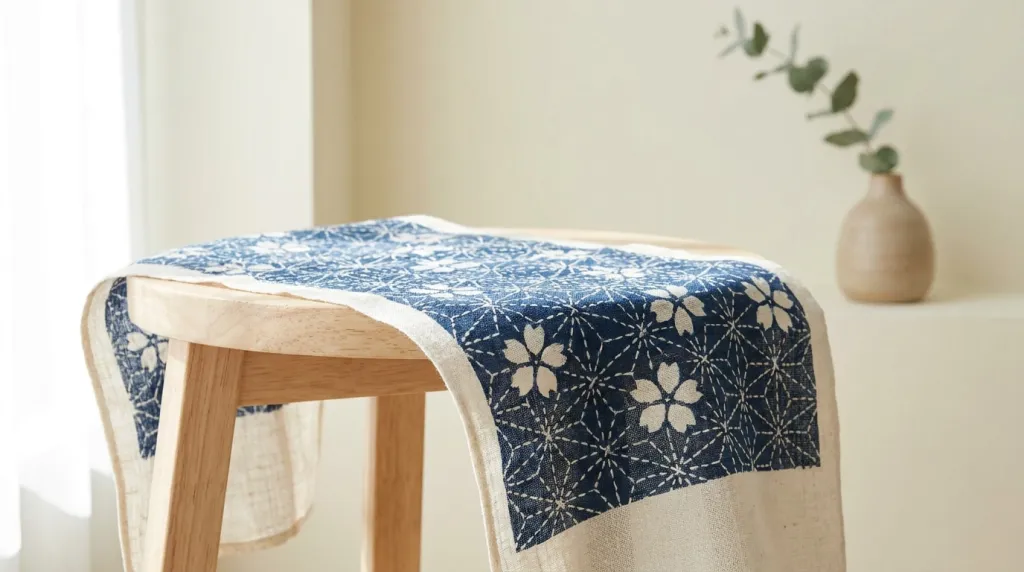
Are you looking for an accessory that can transform your daily life through sheer handcrafted versatility? We'll show you how the Japanese tenugui stands out as an elegant solution for organizing your home and meeting your everyday needs. This rectangle of fine cotton combines minimalist aesthetics with remarkable efficiency for sports, decor, or sustainable wrapping.
Origins and Manufacturing Secrets of the Japanese Tenugui
Having briefly introduced this iconic object, let's explore how this simple piece of cotton has traveled through the centuries to become a pillar of Japanese culture.
Edo-Period Heritage and Social Evolution
The Japanese tenugui first appeared during the Heian period. At that time, this cloth was used exclusively for Shinto religious rituals. It carried a strongly sacred character.
The Edo era marked a true explosion in its everyday use. Cotton finally became accessible to ordinary people. It was used as a towel, a headband, or even an advertising medium. This was a major social revolution.
The accessory then became a fashion item. City dwellers showed off their personal style, favoring increasingly sophisticated patterns.
Chusen Dyeing and the Specifics of Fine Cotton
The traditional Chusen technique defines the authenticity of the product. The dye is poured by hand through several folded layers of fabric, so the patterns appear identically on both sides.
We favor a cotton fiber that is especially light and soft. This natural material lets air circulate freely, making it a highly breathable fabric for everyday use.
The seasons dictate the fabric's aesthetic. Each design tells a specific story drawn from nature.
Everyday Uses and the Versatility of This Cotton
But beyond its fascinating history, it's the tenugui's ability to prove useful in any circumstance that still impresses today.
A Sports Accessory and Traditional Protection
The Japanese tenugui is essential in martial arts. Kendo practitioners tie it under their helmets, where it absorbs sweat and holds equipment in place with remarkable efficiency.
This fabric makes an excellent substitute for a travel towel. It's compact and fits anywhere, and thanks to its fine cotton weave, it dries far faster than a standard terry towel.
It also serves as an effective barrier against dust. It can be used to cover precious objects or to protect your face.
Its durability is surprising given how thin it is. It's a reliable everyday workhorse.
Folding Techniques for Carrying Objects
The tenugui differs from the furoshiki in its rectangular shape, which changes how it's tied. It's ideal for small, elongated objects, and the folding stays simple yet highly effective.
Picture wrapping a bottle of sake or your bento box. The fabric holds everything neatly in place, and the traditional cotton grips just enough to keep your containers secure.
It can also double as a spare bag. With a few quick knots, you can improvise a small pouch, the perfect solution for carrying your essentials without extra bulk.
This method is eco-friendly, replacing wasteful disposable packaging. It's a simple gesture for the planet.
Decorative Uses in a Japandi Space
While its practical uses are countless, this fabric also earns a prime spot in modern interiors, especially when you're aiming for a zen atmosphere.
Fabric Wall Art and Display
Turn your cloth into a genuine piece of art. A traditional pattern deserves to be proudly displayed, elegantly replacing a fragile, run-of-the-mill paper poster.
Try the magnetic wooden dowel method: simply clamp the top and bottom of the cotton between the rods. This lightweight hanging system gives a warm, highly decorative result.
Lean into the minimalism of geometric designs. These shapes fit perfectly on a clean white wall, adding a precise graphic touch without ever feeling cluttered.
Harmony Between Japanese Craft and Scandinavian Style
Create a visual connection with your light-wood furniture. The raw cotton of the Japanese tenugui complements those natural textures — it's the very essence of the hybrid Japandi trend.
Use this fabric as a unique table runner. Draped over a Scandinavian sideboard, it creates a subtle contrast — an authentic detail that completely transforms the atmosphere.
Care and Characteristics of a Raw-Edge Fabric
For your fabric to keep its vibrancy and gain character over time, it helps to understand a few of its technical quirks.
Preserving Color With Hand Washing
For the first wash, stick to cold water. Absolutely avoid harsh soaps or the washing machine. This initial care helps set the natural pigments of the handcrafted dye.
The fabric grows softer with each use, and the colors mellow into a subtle patina. This natural aging gives the cotton a wonderfully authentic vintage look.
Watch out for color bleeding during the first few washes — plant-based dyes often release excess color. Wash your tenugui separately to protect your other decorative pieces.
Why Raw Edges Mean Faster Drying
The lack of hems is a deliberate hygiene choice. Clean-cut edges keep water from pooling in seams, drastically limiting bacterial growth after use.
Don't worry about the raw cotton fraying naturally. The threads stop coming loose after a few millimeters of fringe — this edge settles on its own and reinforces the handcrafted look.
The fineness of the weave guarantees exceptional moisture wicking. Even in a poorly ventilated space, the fabric dries out again very quickly.
This time-honored fabric combines durability, quick drying, and minimalist beauty to elevate your everyday life. Embrace the versatile Japanese tenugui today as a sports accessory, eco-friendly wrapping, or zen wall decor. Bring the excellence of Japanese craftsmanship into your home for lasting, inspiring harmony.
FAQ
What Is a Japanese Tenugui, and Where Does It Come From?
The tenugui is a handcrafted piece of fine cotton cloth, traditionally measuring about 14 x 35 inches (35 x 90 cm). Its history dates back to the Heian period, when it was initially reserved for religious rituals and purification. It was during the Edo era that its use became widespread, thanks to the expansion of cotton cultivation, turning it into an essential everyday accessory.
This fabric stands out for being made using the Chusen technique, a pour-dyeing method that soaks deep into the fibers. This unique process allows the patterns to appear identically on both sides while keeping the fabric exceptionally soft, unlike conventional printing, which can stiffen the fibers.
How Can You Use a Tenugui in Everyday Life?
Versatility is the name of the game with this fabric. In sports, it's a staple of martial arts like Kendo and Aikido, where it's tied under the helmet to absorb sweat. Its high absorbency and light weight also make it a compact travel towel or a fashion accessory, such as a bandana or a stylish scarf.
Thanks to its rectangular shape, it lends itself to many folding techniques for carrying long objects, wrapping a bento box, or even a bottle of sake. It's a durable, attractive alternative to disposable packaging that fits perfectly into an eco-conscious lifestyle.
Why Aren't the Edges of a Tenugui Sewn?
The lack of hems on a tenugui's edges is a deliberate, traditional feature. This "raw-edge" finish lets the fabric dry very quickly and prevents water or dust from building up in the seams, ensuring impeccable hygiene. It's a technical detail that underscores its raw authenticity.
If you notice a few loose threads the first few times you use it, don't worry — that's completely normal. After a few washes, a natural fringe of a few millimeters forms and stabilizes the weave. We recommend neatly trimming any stray threads and letting the fabric settle naturally.
How Do You Incorporate a Tenugui Into Japandi-Style Decor?
The tenugui is a wonderful way to round out a Japandi look, blending Scandinavian minimalism with Japanese craftsmanship. Its patterns, whether geometric or seasonal, add a touch of poetry and texture. You can use it as fabric wall art by mounting it between two wooden dowels for an effortless way to dress up your walls.
Its lightness also lets it double as an elegant table runner or a small window curtain. Paired with natural materials like light wood, this handcrafted cotton creates a soft, warm contrast, turning a simple utilitarian object into a genuine piece of interior decor.
What Care Tips Help Preserve This Handcrafted Fabric?
To keep the plant-based dyes vibrant, we recommend hand washing in cold water, especially during the first few uses. Avoid harsh detergents, which can alter the pigments. It's normal for the fabric to bleed slightly at first, so wash it separately to protect your other textiles.
Over time and repeated washing, your tenugui will soften and become more supple. The colors may fade very slightly, developing a unique vintage patina that reflects its use and history. It's this evolution that makes each piece authentic and personal.