
Japanese Uniforms: History and Traditional Styles
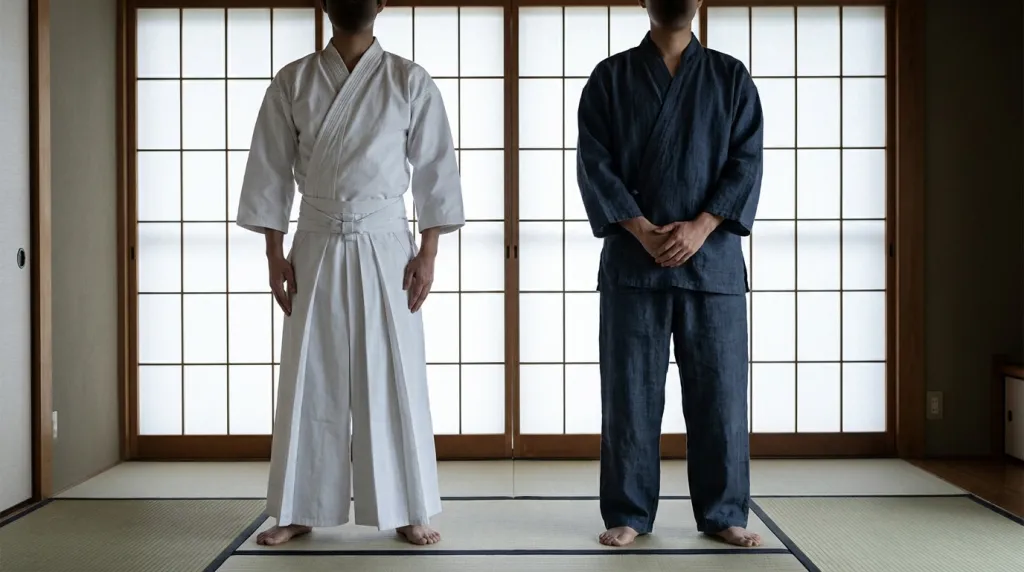
The seven pleats of the hakama symbolize the ancestral virtues of bushido, grounding every movement in a heritage of nobility and discipline. Join us as we explore how the Japanese uniform has shaped the identity of warriors and artisans throughout the centuries. This historical journey reveals the perfect balance between the technical craftsmanship of traditional fabrics and their timeless elegance.
The Keikogi's Legacy in Martial Arts
We often start with the image of the fighter, but the Japanese uniform tells a story that goes far beyond simple combat discipline. It's a story of skin and cotton.
The Durability of the Dogi for Judo and Karate
The dogi's technical design is built for efficiency. Thick "rice grain" weave cotton, or sashiko, is essential for absorbing the impact of throws. Without this flexible armor, the fabric would tear at the very first grip. It's a garment designed to withstand friction.
The white color carries strong symbolism. It evokes the practitioner's purity and lack of ego. On the tatami, everyone wears the same neutral shade. It's a sign of perfect equality among students.
A good dogi gains character over time. It develops a patina through years of practice, eventually becoming a true second skin.
The Technical Elegance of the Hakama in Aikido
The hakama's loose cut is strategic. This skirt-like pair of trousers hides the wearer's foot movements from an opponent's eyes, a tactical legacy from the samurai. The flowing fabric follows every turn with natural grace.
The hakama demands an upright posture, lending the silhouette a noble structure.
Folding this garment is a meditative ritual that requires great patience.
Workwear and Japan's Rural Roots
Let's leave the dojos for the fields, where clothing must above all serve hard labor without ever getting in the way.
The Monpe: Functional Farmwear
The monpe is an iconic pair of baggy trousers. It cinches at the ankles to prevent snagging, and its distinctive cut lets the wearer crouch comfortably during harvest work.
Made of indigo cotton, this garment holds up to repeated washing. It's the uniform of rural resilience. Kurumeori or Kasuri fabric often adds simple, elegant geometric patterns.
During the war, it became a symbol of national mobilization, worn by women working in factories.
Today, we wear it for gardening. It's a garment of total freedom.
The Samu-e: A Uniform of Zen Serenity
The samu-e consists of a wrap-front jacket and wide-leg trousers, making it easy to move from meditation to cleaning tasks.
Artisans and artists love it for its simplicity. It's the ideal uniform for creating without any physical constraints.
Wearing a samu-e means slowing down. The garment sets your pace.
Traditional Jackets for Festivals and Artisans
Work isn't always a quiet affair; it sometimes bursts into color during neighborhood festivals, or takes shelter in the warmth of a winter workshop.
The Happi and the Visual Energy of Matsuri
The happi is a short, straight-cut jacket. You can wear it open or belted. It remains inseparable from Japan's popular festivals, proudly worn by those carrying portable shrines.
This garment unites the group. The happi is essentially a banner worn directly on your back.
Its use is evolving today, and we now find it as a trendy urban fashion accessory.
The Hanten for Workers' Thermal Protection
The hanten is Japan's traditional padded jacket. Filled with cotton, it effectively retains body heat, making it an indispensable companion during harsh indoor winters. We love its protective softness.
Unlike the long kimono, the hanten stops at the hips, allowing free arm movement in everyday life.
Artisans wear it in their poorly heated workshops. It's a purely utilitarian garment.
Many Japanese people use it as a robe. It's a cocoon of softness for your home.
Wearing the Japanese Uniform in a Modern Home
But these historical pieces are not mere relics; today they find their way into our living rooms, creating a harmony between comfort and aesthetics.
The Jinbei and the Japanese Apron for Everyday Wear
The jinbei wins people over with its sheer lightness. This cotton or linen set is perfect for summer, with loose seams that let air circulate freely. It's the ultimate uniform for relaxation.
We especially appreciate these functional details:
These garments slip on in the blink of an eye. They simplify everyday life without sacrificing style.
Japandi Style offers designs suited to contemporary tastes, always prioritizing fabric quality.
Bringing Japanese Style into a Japandi Interior
Pair a hanten with a sofa featuring clean, simple lines. Natural textures like linen create a visual bridge. The idea is to blend Japanese comfort with Scandinavian design, creating a soothing retreat.
Favor organic fibers and earthy tones. This strengthens the authentic feel of your decor.
The Japanese uniform becomes a decorative element when displayed on a wall. It's a work of textile art.
Japandi style seeks the essential. These garments are its perfect embodiment.
The legacy of the Japanese uniform, from the martial keikogi to the zen samu-e, embodies a perfect balance between durability and serenity. Embrace these timeless cuts today to turn your everyday life into a haven of peace. Awaken your home to Japandi style: tomorrow's elegance is dressed in centuries-old tradition.
FAQ
What are the characteristics of a Japanese martial arts uniform?
The traditional uniform, known as the keikogi or dogi, is designed to combine durability with symbolism. For judo or karate, we favor thick cotton with a "rice grain" weave, able to withstand friction and repeated grips. Its immaculate white color is no accident: it embodies the practitioner's purity and humility on the tatami.
For disciplines like aikido, the uniform is completed with a hakama. This pleated skirt-like garment shapes your silhouette and conceals your footwork. Its seven pleats carry deep meaning, representing essential virtues of bushido such as benevolence (Jin), honor (Gi), and loyalty (Chu).
How do you tell the Samu-e and Jinbei apart for everyday wear?
Although both sets share a similar wrap-front aesthetic, their use differs by season. The jinbei is your summer ally; made up of a short-sleeved jacket and shorts, it features ventilation slits and linen blends to keep you cool. It's the ultimate relaxation outfit for downtime or summer festivals.
The samu-e, historically worn by Zen monks, consists of long trousers and a full-coverage jacket. More versatile, it can be worn year-round. Whether you're an artisan or a fan of men's Japandi style, the samu-e encourages a calmer pace and complete freedom of movement for your creative pursuits.
What is a Hanten jacket used for in winter?
The hanten is a true traditional padded jacket, essential for withstanding indoor temperature drops. Unlike the kimono, its cut stops at the hips to keep your movements free. Padded with cotton, this thermal jacket retains body heat and turns your outfit into a cocoon of warmth.
Today, we recommend adding the hanten to your modern wardrobe as an elegant alternative to the classic vest. Its authentic look and patch pockets make it a garment that's as practical as it is stylish, perfect for embracing a calm, cozy lifestyle.
Why choose a Japanese apron for cooking or DIY projects?
The Japanese apron, or Maekake, stands out for its minimalism and functionality. Its cross-front design lets you put it on without complicated fastenings, offering sturdy protection thanks to a thick fabric. It's a cornerstone piece of Japanese workwear that fits perfectly into contemporary interiors.
By choosing a Japanese apron, you're opting for a durable accessory that protects your clothes while showcasing a clean, understated style. It perfectly embodies the fusion of utility and beauty, a core value we share here at Japandi Style.
Where can you find quality Japanese uniforms?
To bring these historical pieces into your everyday life, we invite you to explore our collection dedicated to Japanese uniforms. You'll find designs selected for the quality of their fibers and their faithfulness to traditional cuts, all suited to a modern aesthetic.
Whether you're looking for an outfit for meditation, work, or simply to elevate your home, explore our full range at Japandi Style. We're committed to offering authentic textiles that promote well-being and harmony.