
Japanese Vase: How to Elevate Your Japandi Decor
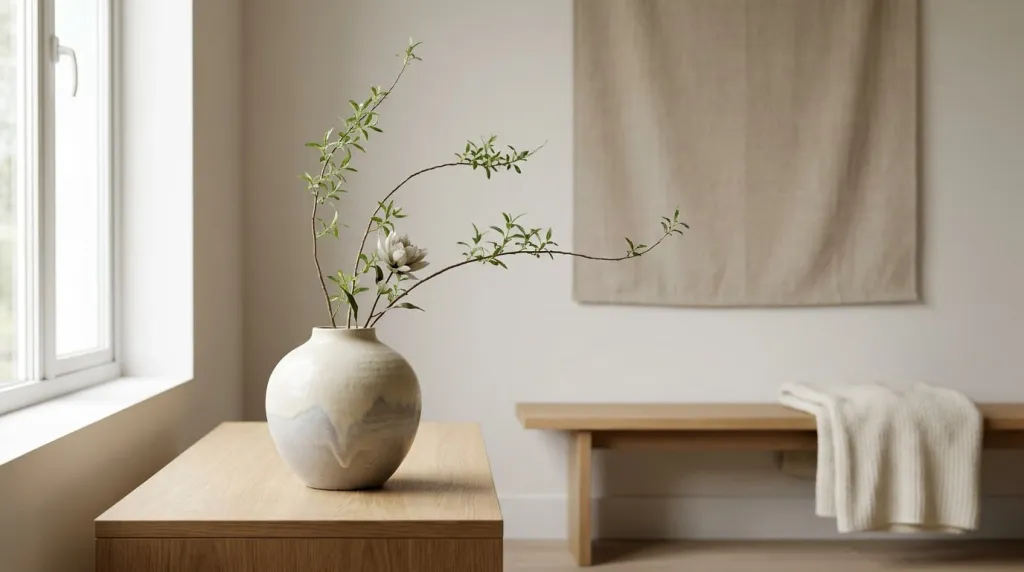
You want to turn your home into a haven of peace, where every object tells a story of balance and serenity. We'll help you choose the perfect ceramic or bamboo Japanese vase to elevate your decor, blending Japanese minimalism with Scandinavian comfort. Discover how our organically shaped vessels, starting at $24, become true functional works of art for your ikebana arrangements.
The art of the Japanese vase at the heart of Japandi style
Choosing a centerpiece, like a carefully selected vase, instantly sets the mood and soul of a living space.
Striking a balance between Japanese craftsmanship and Scandinavian simplicity
Japandi style blends Japanese minimalism with Scandinavian functionality. These two worlds meet on the essentials to create a pared-back interior. Here, we're after genuine, everyday visual serenity.
Raw materials play a foundational role in this aesthetic. Wood, stone, and clay ground your decor in the real world. These natural elements bring an authentic, reassuring texture.
At Japandi Style, our selection carefully honors this dual cultural influence. We favor pieces with high-quality, handcrafted finishes. Each item tells a story of skill and passion.
The result is a perfect visual harmony in your home. This unique fusion creates a lasting balance between elegance and comfort. That's the very essence of a well-designed interior.
Why choose ceramic for a serene atmosphere
Terracotta and stoneware offer a fascinating rough texture under the fingertips. Each piece celebrates the imperfect, one-of-a-kind quality central to the wabi-sabi concept. It's the beauty of pure authenticity.
Here's why this material remains a top choice for your Japanese vase:
Ceramic brings an immediate sense of calm to a room. This material breathes naturally and soothes the eye with its matte finish. It fits perfectly into a cozy reading nook.
These objects aren't just trinkets sitting on a shelf. They're living testaments to preserved, time-honored Japanese craftsmanship.
3 vessel shapes for visual variety
But beyond the material, it's often the vase's silhouette that sets the rhythm of your shelf.
The bud vase for a touch of radical minimalism
The narrow-necked vase stands out for its slender form. It holds a single stem with surgical precision. It's the elegant touch for a calm living room.
The empty space around the object plays a major role here. By limiting the number of elements, the eye catches every floral detail. We see it as a true lesson in pure design.
Matte stoneware models are especially compelling. They absorb light without any distracting glare. The atmosphere instantly feels more hushed and intimate.
Cylindrical vessels and textured amphorae
Straight-lined shapes echo the rigor of Nordic design. Amphorae, by contrast, evoke a more traditional Japanese earthiness. This contrast enriches your interior decor.
Beige, charcoal gray, and off-white are your best allies. These neutral tones pair beautifully with matte finishes. The final look emphasizes a highly sought-after organic quality.
These pieces carry real visual weight. They occupy the space with a quiet strength. That's the very essence of a style that fuses East and West.
To help you picture these options, here's a look at the moods you can create at home:
Whether ceramic or bamboo, every piece in our Japandi Style vase collection is built to last. Our vases start at $24 to transform your home.
How do you create an ikebana-style floral arrangement?
Once you've chosen your vessel, it's time to bring it to life without disturbing that precious harmony.
The basic principles for structuring your branches
The structure rests on three fundamental lines. They symbolize heaven, humanity, and earth. This asymmetrical arrangement breathes natural movement into the piece. Visual balance emerges from this philosophical triad.
To stabilize your stems, use a metal kenzan (flower frog). You can also work with the walls of the vase itself. Avoid overcrowding the available space. Lightness remains your best decorative ally.
Ikebana is akin to a true form of active meditation. Take time to observe each stem before placing it. The precision of the gesture matters as much as the final look. It's a moment of calm.
Respecting the plant is an absolute principle here. We're not trying to tame wild nature. We're simply accompanying its growth. In this way, the art form celebrates life itself.
Choosing the right plants for your pottery
Lilies and irises pair beautifully with ceramic. Ornamental grasses add a welcome delicacy. Play with contrasting textures. Raw pottery makes soft petals shine even more.
Incorporating driftwood or dry branches is a smart choice. It brings an authentic wabi-sabi mood into your home. These elements last a long time without changing. It's a lasting aesthetic choice.
Evergreen foliage, like eucalyptus, offers a stable, long-lasting look. Its muted green pairs perfectly with gray stoneware. It lends the whole arrangement a understated structure.
Seasonality should always guide your floral choices. Use what nature offers you on your outings. It remains the most reliable advisor. Your decor will then follow the rhythm of the seasons.
Showcasing your vases on Japandi furniture
Your arrangement is ready — now all that's left is to give it the place it deserves in your home.
Creating a focal point on a shelf or sideboard
Set your Japanese vase on a light wood sideboard for a natural effect. Don't always center the object. A slightly off-center placement often creates more interesting visual dynamism.
Leave empty space around your ceramic piece. Don't crowd it with other accessories placed too close to its surface. This open space lets the object breathe and truly stand out in the room.
Try a thoughtful grouping to add structure to your decor. You can cluster three vases of varying heights. This classic interior design technique creates a harmonious, deeply calming visual rhythm.
Japandi Style furniture is the perfect backdrop for these arrangements. Its natural simplicity enhances every detail of your compositions. Every line becomes an aesthetic statement.
Playing with light to highlight texture
Watch how shadows fall across the material. Side lighting precisely reveals the grain of the terracotta. The relief of your Japanese vase then becomes a captivating miniature landscape.
Favor a spot near a window. Natural light shifts throughout the day. Your vase will seem to evolve over time, moving through shades of beige and gray.
Avoid harsh or direct spotlights. Opt for a table lamp with a paper shade for soft, diffused light.
The overall mood of your home shapes your well-being. A beautiful vase is a genuine invitation to calm. Simply enjoy this everyday spectacle in your living room or bedroom.
Elevate your home by pairing the art of ikebana with the nobility of raw materials. Bring home a ceramic or bamboo Japanese vase now to ground your decor in lasting serenity. Your future Japandi space — balanced and calming — just needs this final artisanal touch.
FAQ
What defines a Japanese vase in Japandi style?
A Japanese vase fits perfectly into the Japandi aesthetic through its balance of Japanese craftsmanship and Scandinavian minimalism. These pieces favor raw materials like ceramic, stoneware, or bamboo, with often matte, organic finishes that evoke wabi-sabi philosophy.
At Japandi Style, we select vessels with clean lines and neutral tones, such as beige or charcoal gray. These objects aren't mere accessories — they're true testaments to time-honored craftsmanship that bring instant serenity.
How do I choose the shape of my vase for minimalist decor?
The choice of silhouette depends on the visual effect you want on your Japandi shelf. A bud vase is ideal for radical minimalism, showcasing just a single stem or cherry blossom branch. Its slender form lets the eye focus on one precise, elegant detail.
For more structured arrangements, cylindrical shapes echo Nordic functionality, while textured amphorae bring a more traditional, robust presence. The key is to let the object breathe by keeping space around it to highlight its unique shape.
What are the principles of ikebana for showcasing a ceramic vase?
Ikebana, or "the art of giving life to flowers," is based on the rule of three lines symbolizing heaven, humanity, and earth. Unlike Western bouquets, this art form favors asymmetry and the quality of the plants over quantity. The vase itself is considered an integral part of the work.
We recommend using a flower frog (kenzan) to stabilize your branches and create an airy sense of movement. By playing with contrasting textures, such as pairing driftwood with a lily, you'll create an arrangement that invites meditation and calm.
Where should I place my Japanese vase for the best display?
To create a harmonious focal point, place your vase on a light wood sideboard or shelf. Avoid centering it perfectly; a slight offset often adds more dynamism and a modern feel to your display.
Light is also a key factor. Place your ceramic piece near a window so natural light reveals the grain of the clay and the object's relief. In the evening, opt for soft lighting, like a paper lamp, to keep a hushed, calming atmosphere in your Japandi decor.