
Men's Kimono: How to Choose and Wear One
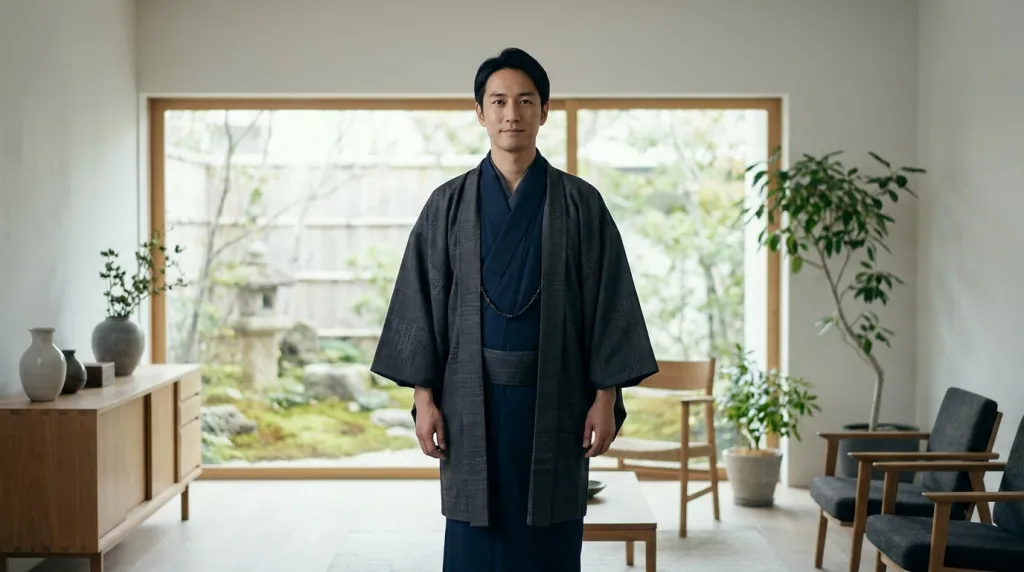
Picture yourself at the end of the day, looking for an outfit that finally combines total ease with natural elegance for relaxing at home. You often waver between the comfort of loungewear and the refinement of a statement piece. This guide will help you master the art of the men's kimono, a timeless solution that flatters your silhouette while honoring the codes of Japanese aesthetics.
Learning to Tell Apart the Different Cuts of Japanese Menswear
Having explored the world of Japandi Style, it's time to take a closer look at the key pieces that make up an authentic Japanese wardrobe.
The Yukata and Jinbei for Summer Comfort
The yukata is a lightweight cotton robe, ideal for summer festivals. It's a casual yet elegant piece, often worn to watch summer fireworks.
The jinbei is the ultimate alternative to pajamas or loungewear. It consists of a wrap top and matching shorts, and is worn mainly for relaxing at home.
Let's compare the structure of the two garments. The yukata requires a belt, while the jinbei simply ties with side cords. One is a single robe, the other a two-piece set.
Both fabrics breathe beautifully. They wick away moisture during hot spells.
The Formal Kimono and Haori Jacket for Elegance
The men's ceremonial kimono, often made of heavy silk, lends a noble, upright bearing. Colors stay understated, with navy, gray, or black favored above all.
The haori jacket is the equivalent of a Western blazer. It's worn over the kimono without being crossed shut. It's the height of refinement, giving structure to the male silhouette with real distinction.
Here are the standout occasions for wearing this outfit:
The haori can also be paired with modern jeans, creating a very of-the-moment hybrid look. This versatility makes it easy to bring Japanese elegance into an everyday urban style.
3 Guidelines for Choosing the Right Fabric for Your Needs
Once you've settled on a cut, the choice of fabric becomes essential to your everyday comfort.
Choosing Fine Materials Like Cotton or Silk
Natural Japanese fibers define the look. Cotton offers outstanding durability for frequent wear. Silk brings a subtle sheen and natural temperature regulation. These materials age beautifully over time.
Favor matte textures for everyday wear. Silk satin remains best reserved for major formal occasions. Japanese linen is also a sturdy, breathable option for warmer seasons.
The quality of a fabric is immediately apparent to the touch. A silky or slightly textured feel confirms the garment's authenticity.
Choosing Understated Colors and Subtle Patterns
We favor traditional men's colors for their timeless elegance. Navy and charcoal gray dominate the Japanese wardrobe by far. These shades convey maturity and inner calm.
Fine geometric patterns, such as Asanoha or Seigaiha, are the standard. Their subtlety outshines bold prints. Restraint remains the golden rule of masculine elegance.
Solid colors, however, remain your safest bet. They pair easily with a variety of accessories, making them a risk-free choice for your wardrobe.
Earthy brown is making a notable comeback in current collections. It pairs perfectly with the natural, pared-down aesthetic of Japandi style.
How to Structure Your Silhouette with a Men's Kimono
With the fabric chosen, the secret to a polished look lies in the art of fit and accessories.
Adjusting the Obi Belt for a Flawless Fit
Wrap the obi around twice, tie it at the back, then carefully center the knot. That's the foundation.
Position the belt low on the hips, unlike how women wear it. This highlights your natural center of gravity. Keep your back straight and firm. This posture embodies the masculine dignity of traditional Japanese style and ensures good balance.
Tension is a key factor in the overall look. A belt that's too loose ruins the silhouette. Too tight, and it restricts your breathing. Find the right balance for lasting comfort.
There are several types of knots for varying the style. The "Kaku-obi" knot is the most common. It takes a bit of practice to perfect, but it guarantees timeless elegance.
Completing the Look with Geta Sandals and Accessories
Wooden geta sandals are essential for finishing your outfit. They lift the foot and protect the hem of the kimono. The sound of footsteps in geta is distinctive and quite poetic.
Tabi socks are a must. They separate the big toe to accommodate the sandal strap, and they're indispensable for formal and ceremonial dress.
Here are the key elements for a complete look:
A traditional bag is both a practical and stylish addition. It lets you carry your keys and phone without misshaping the sleeves, preserving the clean line of your Japanese garment.
The Influence of Japandi Design on Modern Ready-to-Wear
Beyond pure tradition, these style codes are now finding their way into Western wardrobes with a modern twist.
Blending Nordic Functionality with Japanese Minimalism
At Japandi Style, we cultivate a distinctive vision, one that unites Scandinavian simplicity with Japanese craftsmanship. The garment becomes both functional and graceful.
Visual balance remains our top priority. Relaxed cuts ensure total comfort without sacrificing elegance. We strip away anything unnecessary. Quality always takes precedence over quantity.
Our neutral color palette is soothing. Beige and off-white meet deep blues, and the mood instantly turns serene.
This style flatters every body type. It frees up every movement while maintaining an impeccable look.
Wearing the Hanten Jacket as a Contemporary Urban Piece
Dare to pair a quilted hanten jacket with raw denim. It's a bold alternative to the classic cardigan, offering gentle warmth through winter.
This piece stands out for its versatility. It can be worn indoors or out, fitting seamlessly into 2026 city life.
Enjoy fast shipping from Japandi Style. Adopting this style has never been easier. It's a true invitation to travel without ever leaving home.
Elevate your look by mastering the art of the light yukata, the ceremonial kimono, or the haori jacket. Embrace these structured cuts and understated tones today to ground your wardrobe in timeless elegance. The refinement of an authentic men's kimono is waiting for your personal stylistic signature.
FAQ
What's the difference between a yukata and a jinbei for men?
The yukata is a long, one-piece robe made of lightweight cotton, closed with an obi belt. It's an elegant summer garment, traditionally worn at festivals or as refined loungewear.
The men's jinbei, on the other hand, consists of two pieces: a wrap top and matching shorts. With no belt, it simply ties with cords, offering complete freedom of movement and maximum comfort.
How do you wear a men's kimono formally?
For formal occasions like weddings or ceremonies, we recommend a silk or fine-fabric kimono in understated colors like black or gray. It should always be paired with a haori jacket, which functions as a ceremonial blazer, along with white tabi socks worn with traditional sandals.
The silhouette should be perfectly structured: the garment is held in place with a kaku-obi belt, positioned low on the hips to enhance posture and keep the back impeccably straight.
How do you tie a kaku-obi belt knot?
The most common knot for men is the "kai no kuchi." It involves wrapping the obi twice around the waist, then tying a flat, firm knot. For an authentic masculine touch, the trend is to rotate the belt so the knot sits slightly off-center at the back.
If you're looking for simplicity without sacrificing style, pre-tied tsuke obi are also available. These come with a hook-and-loop closure, letting you achieve a perfect knot in seconds.
Can a haori jacket be paired with modern jeans?
Absolutely — it's a bold pairing we're especially fond of at Japandi Style. Wearing a haori jacket over raw denim or chinos creates a hybrid look that blends Japanese refinement with urban ease.
For a well-balanced look, we recommend pairing the flowing haori with more structured pants. Complete the outfit with a clean, simple t-shirt or a mandarin-collar shirt for a contemporary, sophisticated feel.
What accessories are essential for a Japanese outfit?
To complete your silhouette, geta (wooden sandals) are essential — they protect the hem of your garment while giving you a distinctive gait. Don't forget a kinchaku bag to carry your belongings in style.
In winter, consider a men's hanten jacket. This quilted jacket offers gentle warmth and unmatched comfort, whether you're at home or heading out in the city.