
Modern Japanese-Style Bedroom: Japandi Decor Ideas
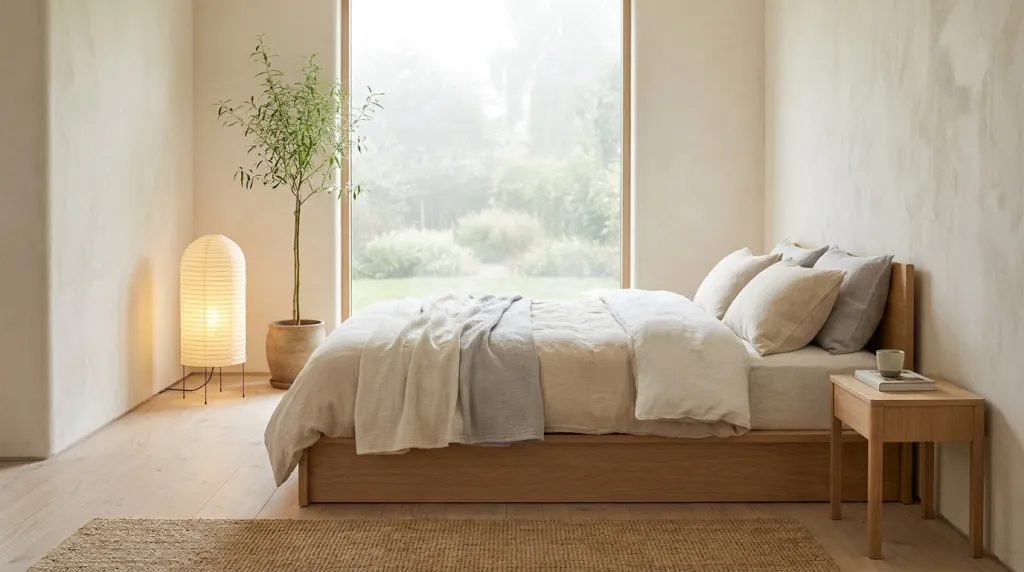
Did you know that a platform bed lowers your sleeping height by nearly eight inches compared to Western standards, encouraging a calm, grounded feel? This minimalist approach radically transforms how you perceive a space and is the foundation of a successful modern Japanese-style bedroom. We'll guide you through furnishing your personal sanctuary by pairing low furniture, natural textiles, and soft lighting for optimal rest. You'll discover how to bring these authentic elements together to create a pared-back atmosphere where every detail invites everyday well-being.
Why choose a low bed for your modern Japanese-style bedroom
People often start with the biggest piece, the bed, since it sets the tone for your rest and the look of the room.
Choosing a platform bed to open up the visual space
Sleeping closer to the floor radically changes how you perceive the ceiling. Fewer tall pieces of furniture means more breathing room. It's a simple trick for visually enlarging a small bedroom without knocking down walls.
A solid wood bed frame is essential. The lines should stay horizontal and clean. Wood brings the organic warmth needed to avoid a look that feels too cold.
The goal is absolute simplicity, with no imposing headboard. A low frame from Japandi Style helps keep your sightline clear toward the outdoors.
Choosing a functional Japandi nightstand
Japandi style calls for discreet storage as a counter to typical clutter. The idea is to hide the mess so your mind can stay calm before sleep.
Favor natural materials like oak or bamboo. The texture should feel pleasant to the touch. This detail adds to the authenticity of your bedside furniture.
Opt for wall-mounted or very low models. The idea is to stay in harmony with the height of your platform bed.
3 types of lighting for a warm, zen atmosphere
Once the furniture is in place, it's time to think about light, since that's what gives your cocoon its soul.
Diffusing soft light with paper pendant lights
Washi paper has unique properties. This material filters bulb light with unmatched softness. This way, you avoid any harsh visual glare in your resting area.
Favor generously sized fixtures for your ceiling. A pendant that's wide but light in feel fills the empty space above the bed beautifully. It's a statement piece that never visually weighs down the space.
These fixtures add an essential poetic touch. They evoke traditional Japanese lanterns while staying thoroughly modern.
Adding Japandi lamps to warm up the atmosphere
Wood or bamboo table lamps are essential. They serve as secondary light sources that are completely indispensable. They let you adjust the mood depending on the time of day or your need to unwind.
Strategic placement changes everything. Don't try to light everything evenly. Creating soothing pockets of shadow genuinely helps the brain prepare for deep sleep.
Also consider minimalist wall sconces. They free up valuable space on your nightstands. It's an elegant solution for a very clean, pared-back look.
How to dress your windows with Japanese curtains
But the atmosphere wouldn't be complete without managing the light that comes in from outside, the light that wakes us up in the morning.
Filtering natural light with sliding panels
Japanese panels stand out for their track-based sliding mechanism. They glide smoothly, giving you precise control over incoming light. You can fine-tune brightness effortlessly.
The look stays purely minimalist thanks to straight panels of fabric. Unlike traditional curtains, they avoid bulky folds. This choice visually opens up your windows.
These removable fabric panels are especially easy to maintain. A quick clean keeps the bedroom fresh. It's a practical solution for keeping things tidy over the long term.
Creating gentle privacy without fully blocking the view
Semi-sheer textiles are a major asset for your personal comfort. They act as a protective filter against outside eyes. Yet a soft, diffused glow continues to light your interior gently.
Favor understated colors to maintain consistent visual harmony. Beige or pearl gray blend seamlessly into your decor. These neutral tones ease the eye without ever overwhelming the restful space.
The movement of the fabric adds a unique sensory dimension to the room. Just a breath of air is enough to stir it gently. This fluidity instantly recalls the serenity of traditional homes in Kyoto.
Accessories and finishing touches for an authentic resting space
So there you have it, the structure is in place, and all that's left is to add the small details that make all the difference.
Incorporating natural textiles like linen or cotton
Linen plays a major role in your bedding. This breathable material naturally regulates temperature. You'll sleep better, summer and winter alike, in healthy sheets.
Next, add a short-pile jute or sisal rug. It defines the bed area without ever cluttering the walkway. Choose earthy tones to stay true to the Japandi Style spirit.
These raw materials add essential texture. They break up the overly smooth look of modern furniture for more character.
Decorating with handcrafted objects and minimalist frames
Choose handcrafted ceramic vases or bowls. Wabi-sabi style celebrates the imperfection of handmade objects. A small irregularity on a vase gives your shelf soul and a story.
Use frames with very thin light-wood borders. Display simple illustrations or Japanese Shodo calligraphy. Too many busy images would undermine the serenity you're after in a modern Japanese bedroom.
Finally, embrace the idea that "less is more." Every object should have its place and a real purpose. Don't overcrowd your surfaces, so energy can flow freely through the room.
Creating a modern Japanese-style bedroom opens up your space through low furniture, linen textiles, and soft lighting. Start incorporating these essential elements now to turn your rest into a daily zen experience. Your sanctuary of serenity awaits, begin your transformation tonight.
FAQ
Why choose a low bed for a modern Japanese-style bedroom?
Choosing a low platform bed considerably opens up the visual space. By sleeping closer to the floor, you increase the distance between your eyeline and the ceiling, which creates an immediate sense of volume and lightness. It's an essential design trick for visually enlarging your room while establishing a serene atmosphere.
In addition, using natural materials like solid wood for the bed frame brings essential organic warmth. This simplicity, a hallmark of Japandi Style design, fosters a pared-back resting environment, far from the clutter of bulky traditional furniture. You can explore our options on our dedicated Japandi furniture page.
What are the characteristics of a Japandi nightstand?
A Japandi nightstand stands out for its clean lines and understated functionality. Designed to avoid mental clutter, it favors modest dimensions, often between about 16 and 24 inches in height, to stay in perfect harmony with a low bed. It's typically made from light wood species like oak, ash, or bamboo.
The look of these pieces draws on a blend of Scandinavian minimalism and wabi-sabi spirit. Whether wall-mounted or featuring rattan fronts, the goal is to keep the space organized. To find the model that will complete your sanctuary, browse our Japandi nightstand collection.
How do you choose and care for Japanese curtains?
Japanese curtains, or sliding panels, are perfect for filtering light with elegance. They come in several textures, from natural linen to sheer, light-diffusing fabrics, giving you precise control over brightness. Their straight structure, held by an aluminum weighted rail, ensures a flawless drape and a minimalist finish.
To preserve the quality of the fibers, we recommend dry cleaning. For small stains, a simple spot clean with mild soap and lukewarm water is usually enough. Explore our range of fabrics and finishes in our Japanese curtain collection.
What type of lighting should you install for a zen atmosphere?
To create a warm atmosphere, we recommend layering multiple soft light sources. Washi paper pendant lights are ideal for diffusing gentle light that's easy on the eyes. In addition, installing a wood or bamboo Japandi lamp at key spots lets you adjust the mood to suit your need to relax.
The secret to great lighting lies in balancing bright areas with soothing pockets of shadow. Minimalist wall sconces can also be installed to free up floor space. Discover our lighting selection to elevate your interior on our Japandi lamp page.
Which textiles work best for modern Japanese decor?
We recommend using natural, breathable materials like linen or organic cotton for your bedding. Linen, in particular, is prized for its temperature-regulating properties, which ensure optimal comfort. These textiles add subtle texture and softness that contrast nicely with the crispness of wood furniture.
Adding a short-pile rug in bouclé wool or jute can also help define the resting area while reinforcing the room's organic feel. The idea is to favor neutral, earthy tones to maintain a calming, authentic visual harmony.