
Traditional Japanese Decor: Origins and Inspiration
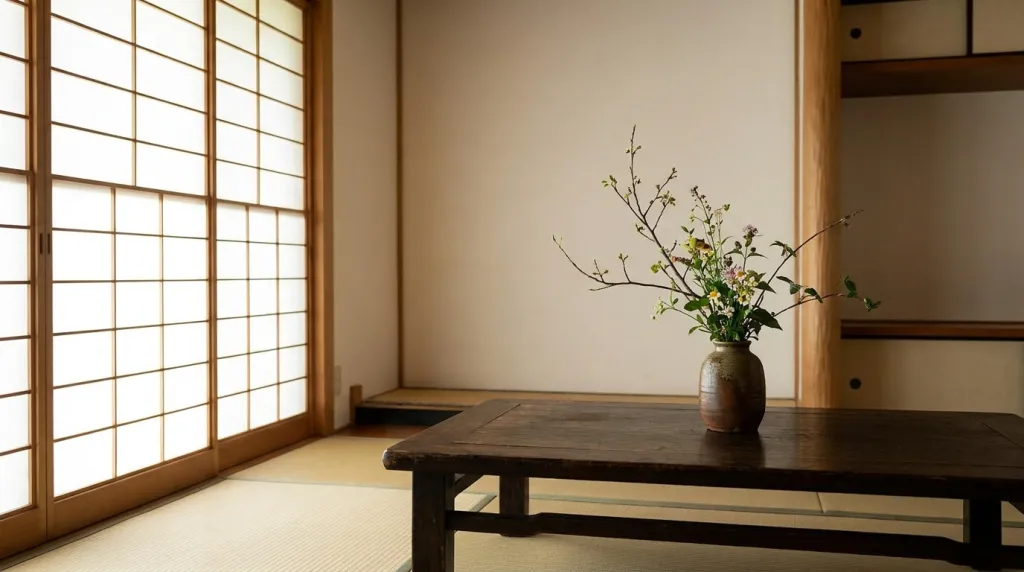
Did you know that the tatami mat serves as a traditional unit of measurement for balancing a room in Japan? Let's explore how traditional Japanese decor relies on structures like the shoji screen to shape light and elevate empty space. By embracing these age-old principles, you can turn your home into a sanctuary of calm where every raw material tells a story of authenticity.
The roots of traditional Japanese decor
Now that we've touched on the aesthetics of Japan, it's time to unpack the philosophical pillars that guide every decorating choice.
Understanding the philosophy of wabi-sabi
Wabi-sabi celebrates natural imperfection. This philosophy prizes the authenticity of objects marked by time. We love the patina of an old piece of furniture. Wear and age become a striking visual strength.
Favor raw, honest materials. Knotted wood or rough-hewn stone fit right in. Asymmetrical shapes echo the natural world. They evoke nature's untamed beauty.
The overall mood stays humble and calm. Artificial perfection has no place here. Your home becomes a living space. It tells a personal, meaningful story.
Mastering the concept of ma to free up space
The concept of ma defines space. Emptiness is never an absence. It's a necessary breathing room for serenity. It lets objects exist fully.
Avoid unnecessary clutter in your home. Every room should be able to breathe freely. Air flows more easily between the walls. Your mind gains immediate clarity as a result.
Japanese minimalism grows out of this sense of breathing room. An open space lets your furniture shine. A few carefully chosen pieces are enough. Quality wins out over quantity.
Signature structures and materials of Japanese style
This philosophy of space takes concrete form through specific materials and unique architectural structures.
Paper partitions and natural-fiber flooring
Sliding shoji screens divide a space with rare elegance. Their washi paper filters sunlight to create a soft glow. They preserve your privacy without ever darkening a room.
Tatami forms the foundation of interior comfort. This woven rush mat serves as the unit of measurement for Japanese architecture. Its scent of dried straw instantly sets a mood of absolute serenity.
The influence of wood and organic textures
We favor light woods like cedar or sturdy pine. Hinoki cypress brings durability and a subtle fragrance. Bamboo rounds out the mix with its natural lightness.
These plant fibers deliver an immediate sense of tactile warmth. Direct contact with raw wood strengthens your connection to nature. That sensory balance remains precious, even in an urban setting.
These organic textures have a way of aging with real elegance. They contrast with neutral walls for a balanced visual effect. Japanese craftsmanship celebrates the beauty of living materials this way.
Decorative objects and rituals of everyday living
Beyond structure, it's the everyday objects that give Japanese homes their soul and poetry.
Bringing in nature through plants and light
Ikebana stands out as a true living sculpture. It's not a simple bouquet, but a search for balance between branches and flowers. It serves as a strong focal point for your living room.
Next, favor soft, diffused lighting. We recommend washi paper lamps to set a serene mood. This helps you avoid overly harsh direct lighting in your rooms.
Finally, consider the importance of cast shadows. They actively add depth to a space. These subtle shifts foster the nighttime calm every home needs.
Choosing handcrafted accessories that balance function and beauty
Choose ceramic vases and bowls. We recommend favoring clean, understated lines. Craftsmanship shows through in the small, natural irregularities of the glaze.
Remember that every object serves a specific purpose. Aesthetics should never come at the expense of everyday usefulness. That's where the true essence of authentic Japanese craftsmanship lies.
Toward a contemporary, hybrid interpretation
To adapt these centuries-old principles to our modern apartments, a natural fusion of styles is called for.
Embracing Japandi style for a functional home
Japandi style brilliantly unites Scandinavian minimalism with Japanese aesthetics. This pairing strikes a perfect balance between Nordic comfort and Japanese restraint. It brings a fresh kind of serenity.
Favor low furniture for your living room. Adding coffee tables or floor cushions brings you closer to the ground. This choice transforms the perspective of your room. You instantly gain volume and clarity.
Choosing quality over quantity
We recommend investing in pieces built to last. Choose a solid wood sideboard over several disposable pieces of furniture. Durability is a core value here for your home.
The goal is to blend modern comfort with traditional serenity. Keep your cozy sofa, but surround it with zen touches. A natural-fiber rug or linen textiles are enough to calm the mood.
Decorating your home is a slow process. Every addition deserves careful thought. That's how you'll preserve your home's overall harmony over the long run.
By bringing together the pillars of wabi-sabi, the fluidity of ma, and the use of organic materials, you can turn your home into a haven of serenity. Start embracing traditional Japanese decor today by choosing lasting pieces like a vase or a minimalist mirror. Cultivate balance for a life rooted in calm and authenticity.
FAQ
What is the philosophy of wabi-sabi in Japanese decor?
Wabi-sabi is an aesthetic outlook rooted in Zen Buddhism that invites us to celebrate the beauty of imperfection and impermanence. In your home, this translates into a preference for authentic, raw materials and handcrafted objects whose patina reflects the passage of time.
This approach sets aside cold perfection in favor of a humble, sincere atmosphere. By embracing signs of wear and asymmetrical shapes, we create a more human, calming living space, in perfect harmony with nature.
How can the concept of ma help when designing your home?
The concept of "ma" represents the interval, the emptiness, or the pause needed to balance a room. Unlike a Western view that sees empty space as an absence, ma is an essential compositional element that lets the mind and the air move freely, fostering a sense of calm.
To bring it into your home, we recommend avoiding clutter and letting each object "breathe." By making room for this negative space, you highlight the few carefully chosen pieces of furniture you do have, creating a true sanctuary of calm.
What role do shoji screens and tatami flooring play?
Shoji screens are wood-and-washi-paper structures that let you shape a space while diffusing soft, natural light. They preserve your privacy without ever fully blocking out the outdoors, offering a smooth transition between your home and the surrounding natural world.
Tatami, made from rice straw and woven rush, forms the basis of Japanese comfort. Beyond its insulating properties, it sets the unit of measurement for a room and calls for a ritual of respect: you walk on it without shoes to preserve a clean, relaxing atmosphere.
How do you successfully bring Japandi style into your home?
Japandi style is the harmonious marriage of Scandinavian functional minimalism and traditional Japanese aesthetics. To adopt it, we suggest favoring low furniture, like a streamlined coffee table, to stay close to the ground and transform the perspective of your living space.
Lean into a neutral color palette, light woods, and quality accessories. You might, for example, round out your decor with a handcrafted Japandi vase or a Japandi mirror with clean lines to complete this fusion of modern comfort and Japanese restraint.
Why favor craftsmanship and natural materials?
Using organic materials like cedar, bamboo, or ceramic strengthens our vital connection to nature. In Japanese tradition, a handcrafted object must be both useful and beautiful, revealing the maker's hand through subtle irregularities that give it a unique soul.
Investing in durable, high-quality pieces is an eco-conscious approach rooted in a slow, thoughtful decorating process. To dig deeper into this approach, take a look at our tips on Japandi decor, where every piece is chosen for its ability to last and grow more beautiful with age.