
Women's Yukata: The Complete Guide to This Summer Essential
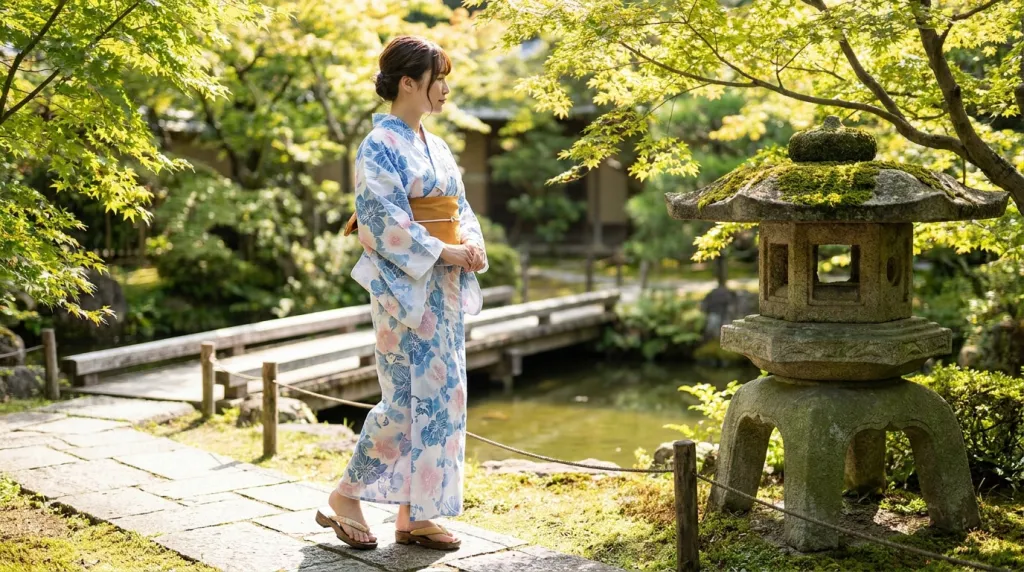
Lightweight cotton garments have become a major trend today, offering a way to balance elegance and comfort through the intense heat of summer. We put together this guide to help you master every nuance of the women's yukata, from choosing a quality weave to the delicate art of getting the fit just right. Once you understand the conventions of this breathable, unlined garment, you'll turn your moments of relaxation into a true ritual of serenity and refinement.
Why choose a women's yukata over a kimono?
While the kimono embodies the prestige of grand ceremonies, the yukata naturally stands out as the light, relaxed alternative for enjoying summer in style.
A difference in fabric, first and foremost
The traditional kimono usually favors heavy, luxurious silk. The women's yukata, by contrast, relies on breathable cotton. That textile choice guarantees immediate, lasting thermal comfort.
During festivals, cotton plays a crucial role. It efficiently absorbs ambient humidity and perspiration. It's a healthy fabric that's gentle on your skin through the summer heat.
Care also becomes effortless. Unlike delicate silk, cotton can handle much simpler washing. That means you get to enjoy an impeccable outfit without excessive fuss.
The simplicity of an unlined garment
The absence of a lining changes the experience entirely. There's no need for the complicated nagajuban undergarment. The yukata is worn directly against the skin or over a very thin tank top.
Adjusting the panels requires no special expertise. You save precious time every morning. Getting dressed becomes a smooth, quick, and relaxing moment.
This streamlined structure offers real, everyday benefits:
3 criteria for finding the perfect yukata
Once you understand how it's worn, the next step is knowing how to find a piece that will last for years in your wardrobe.
Identifying quality cotton weave
Look closely at the density of the grain. A tight weave prevents unwanted distortion after washing. Touch the fabric to feel its structure and natural softness.
Examine the precision of the pattern. The outlines should be perfectly crisp. The colors should never bleed into the white or solid background of the piece.
Check the finishing carefully. Clean seams guarantee an impeccable silhouette. That's the mark of an authentic, long-lasting product.
Matching the dimensions to your body shape
Choose the length based on your height. A yukata should ideally reach the ankles. Be sure to check the size guides carefully before finalizing your purchase.
Manage the fabric surplus known as ohashori. This fold beneath the belt lets you adjust the robe perfectly. It's a Japanese technique for achieving a custom fit.
Here are our recommendations for adjusting your outfit to your size:
Essential accessories for a balanced silhouette
The garment alone isn't enough; it's the accessories that shape the line and define the style.
The central role of the obi belt
Choosing the width of the obi sash is a key decision. A wide belt defines the waist and straightens the back. It also adds the finishing touch of color to your outfit.
For beginners, we recommend pre-tied models, known as tsukuri obi. The bow is already formed at the back. That saves time and stress when getting dressed.
Vary the materials of your belt. Rigid polyester holds its shape well. Cotton is softer and more understated for everyday wear.
Walking with elegance in geta sandals
Paulownia wood sandals are an excellent choice. They're remarkably lightweight despite their sturdy look. The wood naturally keeps your feet dry all summer long.
Coordinate the straps, called hanao, with the pattern of your women's yukata. A matching pop of color creates visual harmony. A wicker bag rounds out the look with elegance.
To perfect your look, here are the key elements to remember:
Wearing Japanese style every day
Beyond special outings, this garment naturally fits into a modern, serene lifestyle.
Turning the yukata into refined loungewear
Use the yukata as a luxurious bathrobe alternative. Its natural absorbency is ideal right after a shower. It leaves you feeling instantly soothed.
Wear this garment to relax peacefully at home. It's a great substitute for your usual bathrobe. Its loose cut lets you unwind without any uncomfortable restriction.
The elegance of the gesture matters here. Wearing this piece at home turns every simple moment into a true ritual of well-being.
The influence of minimalist Scandinavian design
Blending Japanese lines with Nordic comfort defines the very identity of the Japandi movement. Here, we're after absolute simplicity and everyday usefulness.
Create a visual connection between the textile and your light wood furniture. The natural tones of the yukata pair beautifully with pared-down interiors. The harmony becomes complete.
Here are the pillars of this aesthetic:
Choosing a women's yukata means choosing the lightness of cotton and the elegance of a silhouette shaped by the obi. Enjoy this breathable comfort now and turn your moments of relaxation into serene rituals. Radiate timeless, soothing beauty during your next summer evenings.
FAQ
What is the fundamental difference between a kimono and a women's yukata?
The main distinction lies in the fabric and the occasion. The kimono is a prestigious silk garment, often lined, reserved for formal ceremonies. The yukata, on the other hand, is an unlined summer garment made of lightweight cotton or polyester, offering ideal breathability for festivals or relaxed moments.
Practically speaking, the yukata is simpler to wear, without the nagajuban undergarment, which leaves a single collar visible. It embodies a relaxed elegance that's more accessible and easier to care for than its silk counterpart.
What accessories are essential to complete your outfit?
To shape your silhouette, the obi belt is the key piece. It defines the waist and adds an essential pop of color. For beginners, we recommend pre-tied models (tsukuri obi), which guarantee a perfect bow in an instant. You can browse our selection of kimonos and yukatas for women to find the set that suits you.
For footwear, traditional wooden sandals called geta are a must. They're typically worn barefoot with a yukata. To complete the look, don't forget a fabric kinchaku bag and an uchiwa fan to stay cool in style.
How do you properly wear and adjust your yukata throughout the day?
Since the yukata is made from a single piece of fabric, it can shift as you move. To keep a polished line, we recommend standing up straight and taking short steps with your feet turned slightly inward. That's the secret to a graceful walk and a garment that stays neatly in place.
If your collar loosens or the fold at the waist (ohashori) becomes uneven, don't worry. Simply pinch the ohashori under the belt and gently pull down to smooth the front. By adjusting the sides and then the back of the collar in turn, you'll instantly restore a polished look.
Can you wear a yukata as loungewear?
Absolutely, this is actually one of its most popular uses. Thanks to its absorbent cotton and loose cut, the yukata makes a luxurious alternative to a classic bathrobe. It's perfect as a robe after a skincare routine or for relaxing peacefully at home in true Japandi style.
This versatility lets you enjoy Japanese aesthetics every day, combining the comfort of a natural fabric with the elegance of a time-honored design. It's an invitation to well-being and disconnection right in your own living space.